The_Reginator
Active member
For the Vigil of Pentecost our parish (which celebrates the Novus Ordo rite only) used the Canon of the Mass (Eucharistic Prayer #1).
It was nice to hear the ancient Canon which for centuries was the one and only Eucharistic Prayer in the Roman Rite.
But ...
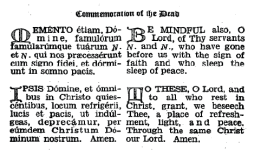
An old problem was brought back to my mind. From my 1962 Latin/English Missal:
I once looked up something called "soul sleep" which is a protestant idea that everyone's souls simply sleep until the resurrection. Many protestants do not seem to understand or accept the "resurrection of the body", but rather think that our souls, too, await Christ's second coming before they are resurrected, body and soul.
Why does the Church use the phrase "rest in the sleep of peace" rather than simply pray for the poor, holy souls in purgatory? How ancient is this??
Thanks for your input, Reg
It was nice to hear the ancient Canon which for centuries was the one and only Eucharistic Prayer in the Roman Rite.
But ...
An old problem was brought back to my mind. From my 1962 Latin/English Missal:
I was taught, or somehow came under the impression, that after death comes judgement, then heaven or hell. Most people who are destined for heaven pass through purgatory first -- "The Church Suffering". Purgatory is not "resting in the sleep of peace", but rather a time of suffering (hence the title "The Church Suffering"). We have no reason to pray for the souls who are damned to hell or those who are already in heaven.Remember also, O Lord, Thy servants and handmaids N. and N. who are gone before us with the sign of faith, and rest in the sleep of peace.
I once looked up something called "soul sleep" which is a protestant idea that everyone's souls simply sleep until the resurrection. Many protestants do not seem to understand or accept the "resurrection of the body", but rather think that our souls, too, await Christ's second coming before they are resurrected, body and soul.
Why does the Church use the phrase "rest in the sleep of peace" rather than simply pray for the poor, holy souls in purgatory? How ancient is this??
Thanks for your input, Reg