purgatory

  • Thread starter Thread starter durhamfire
  • Start date Start date
Status
Not open for further replies.
Protestants believe in Purgatory too, because we are in agreement that nothing unclean can enter heaven. Protestants don’t seem to give much thought as to how it will actually happen, but think if it as instantaneous “in a moment, in the twinkling of an eye, we shall all be changed”.
Protestants believe in purgatory??!! You completely misunderstand what Protestants actually believe about the complete atonement of Jesus Christ. Although nothing unclean can enter heaven, Christ’s blood cleanses us of all unrighteousness. Jesus paid the full penalty for our sins that there’s nothing man can do to add to it. Others have already said this but it bears repeating: there can be no remission of sins without the shedding of blood. All the purifying you believe you must endure after your death will never cleanse you. If we get to heaven, its because of what Jesus did. You are trying to do what Christ already did for you. That’s the one big difference between catholics and protestants.

Jesus said unless we believe in him and trust in him we will die in our sins. The catholic does not trust Christ alone for his salvation, but in a series of works in a sacrament system.

Where did the apostles ever teach that salvation is found in them or in a church? The fact is, the catholic has never dealt with his sins. He’s still working on it till he dies and even afterward. But the Christian knows that those sins were nailed to the Cross. And Christ’s gift of eternal salvation is free. We cannot buy, earn, work or clean ourselves up for it. He fully purifies the sinner who comes to him in repentance.(1 John 1:7) If you are truly trusting in Jesus Christ, then you will see the futility of purgatory, penance, indulgences and placing a trust in personal works and merits.

What must I do to be saved? Believe on the Lord Jesus Christ and you shall be saved. That’s what the apostles said to all who asked.

What shall we do, that we might work the works of God? Jesus answered and said unto them, This is the work of God, that ye believe on him whom he hath sent.
 
What must I do to be saved? Believe on the Lord Jesus Christ and you shall be saved. That’s what the apostles said to all who asked.

What shall we do, that we might work the works of God? Jesus answered and said unto them, This is the work of God, that ye believe on him whom he hath sent.
I’ll reply because its quiet now.

30 And bringing them out, he said: Masters, what must I do, that I may be saved?

31 But they said: Believe in the Lord Jesus, and thou shalt be saved, and thy house.

(I never get the use of believing ***on ***someone…)

…does believing in him mean, do this;

He answering, said: Thou shalt love the Lord thy God with thy whole heart, and with thy whole soul, and with all thy strength, and with all thy mind: and thy neighbour as thyself. 28 And he said to him: Thou hast answered right: this do, and thou shalt live.

…and this?

17 And when he was gone forth into the way, a certain man running up and kneeling before him, asked him, Good Master, what shall I do that I may receive life everlasting? 18 And Jesus said to him, Why callest thou me good? None is good but one, that is God. 19 Thou knowest the commandments: Do not commit adultery, do not kill, do not steal, bear not false witness, do no fraud, honour thy father and mother. 20 But he answering, said to him: Master, all these things I have observed from my youth.

21 And Jesus looking on him, loved him, and said to him: One thing is wanting unto thee: go, sell whatsoever thou hast, and give to the poor, and thou shalt have treasure in heaven; and come, follow me.

…or this?

16 And one of you say to them: Go in peace, be ye warmed and filled; yet give them not those things that are necessary for the body, what shall it profit? 17 So faith also, if it have not works, is dead in itself. 18 But some man will say: Thou hast faith, and I have works: shew me thy faith without works; and I will shew thee, by works, my faith. 19 Thou believest that there is one God. Thou dost well: the devils also **believe **and tremble.
 
Hello,

I disagree with a couple points on your post. I would reply to your post but it makes this post over 6000 words long.

The Catholic is not required, as you say, to believe all of the doctrines within its faith. For example, Marian Apparitions are not defined as dogma, so the Catholic is free to not accept them. Popes, Priests, lay people, and others can promote them, but it’s not dogma.

Don’t misunderstand me though, I’m not a “cafeteria Catholic.” I don’t just pick and choose my beliefs based on what I like or don’t like. In America, many Catholics are defined as such, not because they don’t believe a lot of the theological teachings of the church, but because they don’t accept the social teachings on abortion, euthanasia, birth control, end of life care, the celabicy of priests, homosexually, before marriage, divorce, etc. I find this to be shallow as most of these people really don’t reflect on their faith or these topics, but rather whatever the current age teaches, the spirit of the age.

You also say, “Unlike Protestantism, which teaches that Christ’s on the cross was sufficient, perfect and complete, the catholic believes that Jesus did not fully redeem the sinner, but man must expiate his own sins through a process of works that extend throughout one’s life and even after …”

Again, I disagree. According to the Catechism, "Justification has been merited for us by the Passion of Christ who offered himself on the cross as a living victim, holy and pleasing to God, and whose has become the instrument of atonement for the sins of min. 1992.

“Our justification comes from the grace of God. Grace is favor,** the free and undeserved **help that God gives us to respond to his call to become children of God, adoptive sons, partakers of the divine nature and of eternal life.” 1996

“Grace is first and foremost the gift of the Spirit who justifies and sanctifies us.” 2003

For us Christ is the starting point. We believe in grace and don’t think we can do anything to merit our own salvation. Of course we teach that you must serve Christ as well.

For me, this issue is hugely related to language and I don’t think Protestants and Catholics differ that much. It comes down to language and semantics. What would be the difference between a Catholic who believes in Faith and Works and a Protestant (even Evangelical) who believes we can lose our salvation? I don’t see any difference. A question for you: Is there any true faith without works? Although some Evangelicals don’t use the term “works” they do talk about “fruit.” They seem very similar.

Although we could go back and forth and write books on faith, works, justification, etc. many which have been already written (by smarter people than me), although I’ll make it personal again. My two biggest obstacles to believing in Sola Fide are the book of James and the dichotomy between what Jesus preached in the Gospels and that of some of Paul’s teachings.

James specifically says, “You see that a person is justified by works and not by faith alone.” And that’s a huge tough one for me!! Here we have it in black and white saying that it’s not by “faith alone” and this is the main Protestant doctrine. How can I accept this? I realize Paul does say the opposite and you could provide verses in your favor as well. For me the only way it really makes sense would have to be something closer to the Catholic understanding, it harmonizes the two teachings rather than leaving one out.

I talked to a Pastor about this and he said that “James is the theological punctuation mark to Paul” and that I needed to understand James in terms of Paul. This really seems like a lot of theological sophistry in order to make their position fit.

Also, Christ talked so much about loving others and your actions. And I’m not a liberal, hippy Christian either! But Christ never said that you just need to accept Him as your Savior. Of course you have to believe, but you also must repent (which is the action or works part.) Now, Christ did say that a person has to be born again. But when you control the language, you control the argument. Does born again really mean what modern Evangelicals teach? Maybe. I don’t know. A few versus later it does say you must be born of water and spirit, and this part is often left out. This verse seems to make a lot more sense in terms of other verses and an understanding of Baptism.

All of that being said, I “try” and often don’t do a good job to serve God. But I really actively make an effort to not think I’m earning my salvation but rather serving Christ. I can see how some people might see it that way or get stuck into a rut, but it’s just not what the church teaches.

I don’t know anything about the Catholic Church putting curses on anyone and have never heard or read about this. Could you provide examples or point us in to your source of information for this?

Thank you!
 
God does not “punish” those who belong to Him, He chastises, and there’s a big difference.
Can you explain what it is?
God chastises those whom He loves to help us be more like Christ which prepares us for heaven.
This is what purgatory is all about - preparation for heaven.
I think we punish ourselves when we don’t forgive ourselves for those sins we committed and repented for. Since God promised not to remember anymore our old repented sins, then we need to let them go after we’ve confessed and forgive ourselves. Our sins were nailed to the Cross.
Yes, I agree. God does not want us walking around in guilt.
. However, we can never clean ourselves up enough to fully satisfy God. Isaiah 64:6 says all our righteous acts are like filthy rags before God. God has ordained that man’s cleansing from sin should be made with blood- the blood of Christ.(Heb. 9:22)
Did you think Catholics believed otherwise?
Everybody sins, including Christians. We will continue to do so until we die.
I think one of the most damaging errors of the Reformation is the doctrine that we will all keep sinning.
When the born-again Christian, who has now been washed in the blood of Christ, sins, the Holy Spirit who indwells every born-again believer, convicts us of that sin. There’s no peace in our conscience until we repent. Why? Because sin affects our relationship with God and can keep Him from answering our prayers. God cannot just look the other way or condone sin in our lives. After we repent, it restores our daily walk with God.
👍 This is what the sacrament of reconciliation is all about.
In a Christian’s whole lifetime, God is transforming him into Christ-likeness. Whenever sins get in our way, we can go directly to God for help in resisting these temptations.
What makes you think He stops when we pass from this life?
 
For us, it is one and the same thing. If a persons actions (works) are not glorifying to God, they need to be purged. If one’s deeds are glorifying, they are purified with fire, any dross is burned out, so they can shine like the sun in the Kingdom of their father. 👍
1 Cor. 3:10-15 has to do with building upon the foundation Paul laid: Jesus Christ. It’s not about all the “actions” of a person, but how a believer builds upon the foundation (the gospel) of Jesus Christ. IOW, how his WORKS conform to the gospel of God’s GRACE toward us through the Person and sacrificial work of Jesus Christ.

The “fire” in this passage is figurative for the judgment of each believer’s works, and doesn’t purify anything, but instead reveals the worthiness or worthlessness of a man’s WORKS for sake of REWARD or loss of it.

Those conforming WORKS (with the Foundation Paul laid), that is, compatible with the gospel of Christ Paul preached, deemed “gold, silver, precious stones,” are valuable and, figuratively speaking, are noncombustible. IOW, they will withstand Divine scrutiny and a reward is rendered for those works to the believer.

Those non-conforming WORKS (not compatible with the gospel Paul preached), deemed* wood, hay, straw* are, figuratively speaking, combustible. And therefore under Divine scrutiny are judged worthless and the believer will receive no reward for those WORKS. You see, guanophore, an omniscient God judges even the motives of a man’s heart (1 Cor. 4:5).

Nothing or no one here is being “purified” of anything. There’s no “dross” being burnt off. The fire is purely figurative for the Divine judgment, Divine scrutiny, of a believer’s WORKS for the sake of receiving reward - not cleansing. The true believer has already been “washed,” “sanctified” and “justified” in Christ. It’s Christ who made him fit for heaven.
Protestants believe in Purgatory too, because we are in agreement that nothing unclean can enter heaven. Protestants don’t seem to give much thought as to how it will actually happen,
To the contrary. We fully understand this cleansing to have occurred at the time of true faith in the Person and sacrificial work of Jesus Christ, who Himself made purification of sins on the cross (Heb. 1:3b). We believe God’s Word which now describes all true believers as “saints,” made righteous in the risen Christ:1 Cor 6:11 Such were some of you; but you were washed, but you were sanctified, but you were justified in the name of the Lord Jesus Christ and in the Spirit of our God."No need for Catholic “Purgatory” when God Himself does the cleansing upon faith in Christ alone.
but think if it as instantaneous “in a moment, in the twinkling of an eye, we shall all be changed”.
This has to do only with the glorification of the body, not the cleansing of the soul.1 Cor 15:51-52 "Behold, I tell you a mystery; we will not all sleep (i.e., experience death of the body), but we will all be changed, in a moment, in the twinkling of an eye, at the last trumpet; for the trumpet will sound, and the dead will be raised imperishable, and we (who will not experience death) will be changed."There’s no suffering in the flames of Catholic Purgatory connected to this marvelous “mystery,” my friend. :extrahappy:
 
1 Cor. 3:10-15 has to do with building upon the foundation Paul laid: Jesus Christ. It’s not about all the “actions” of a person, but how a believer builds upon the foundation (the gospel) of Jesus Christ. IOW, how his WORKS conform to the gospel of God’s GRACE toward us through the Person and sacrificial work of Jesus Christ.

The “fire” in this passage is figurative for the judgment of each believer’s works, and doesn’t purify anything, but instead reveals the worthiness or worthlessness of a man’s WORKS for sake of REWARD or loss of it.

Those conforming WORKS (with the Foundation Paul laid), that is, compatible with the gospel of Christ Paul preached, deemed “gold, silver, precious stones,” are valuable and, figuratively speaking, are noncombustible. IOW, they will withstand Divine scrutiny and a reward is rendered for those works to the believer.

Those non-conforming WORKS (not compatible with the gospel Paul preached), deemed* wood, hay, straw* are, figuratively speaking, combustible. And therefore under Divine scrutiny are judged worthless and the believer will receive no reward for those WORKS. You see, guanophore, an omniscient God judges even the motives of a man’s heart (1 Cor. 4:5).

Nothing or no one here is being “purified” of anything. There’s no “dross” being burnt off. The fire is purely figurative for the Divine judgment, Divine scrutiny, of a believer’s WORKS for the sake of receiving reward - not cleansing. The true believer has already been “washed,” “sanctified” and “justified” in Christ. It’s Christ who made him fit for heaven.To the contrary. We fully understand this cleansing to have occurred at the time of true faith in the Person and sacrificial work of Jesus Christ, who Himself made purification of sins on the cross (Heb. 1:3b). We believe God’s Word which now describes all true believers as “saints,” made righteous in the risen Christ:1 Cor 6:11 Such were some of you; but you were washed, but you were sanctified, but you were justified in the name of the Lord Jesus Christ and in the Spirit of our God."No need for Catholic “Purgatory” when God Himself does the cleansing upon faith in Christ alone.This has to do only with the glorification of the body, not the cleansing of the soul.1 Cor 15:51-52 "Behold, I tell you a mystery; we will not all sleep (i.e., experience death of the body), but we will all be changed, in a moment, in the twinkling of an eye, at the last trumpet; for the trumpet will sound, and the dead will be raised imperishable, and we (who will not experience death) will be changed."There’s no suffering in the flames of Catholic Purgatory connected to this marvelous “mystery,” my friend. :extrahappy:


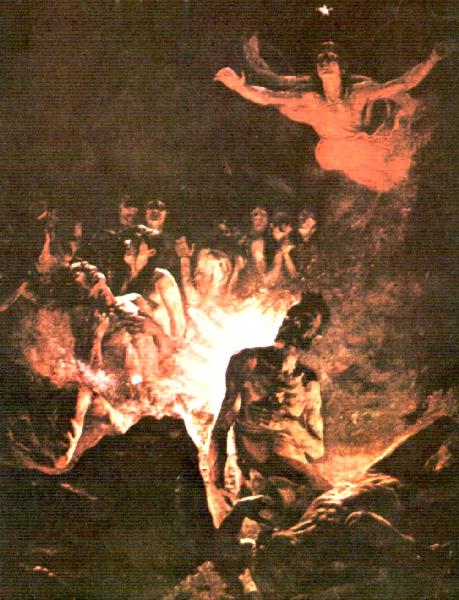
Heaven is above.
Hell is below.
The Purging fire, between, is portrayed; where the last farthing is repaid of what you owe before you can be released.

Matthew 5

26 Amen I say to thee, thou shalt not go out from thence till thou repay the last farthing.
 
Protestants believe in purgatory??!! You completely misunderstand what Protestants actually believe about the complete atonement of Jesus Christ. Although nothing unclean can enter heaven, Christ’s blood cleanses us of all unrighteousness. Jesus paid the full penalty for our sins that there’s nothing man can do to add to it. Others have already said this but it bears repeating: there can be no remission of sins without the shedding of blood. All the purifying you believe you must endure after your death will never cleanse you. If we get to heaven, its because of what Jesus did. You are trying to do what Christ already did for you. That’s the one big difference between catholics and protestants.
Jacob, You (and your Protestant breathren) have half the story right. Yes. Jesus died for our sins and without that we can’t be saved. This is the truth about salvation, but not the whole truth. The rest of the story, is that after being born again through Baptism, we are called to follow Christ’s lead, living lives of love and Faith. If we don’t do this, are we really born again, or did Christ’s sacrifice go for naught? When Jesus was asked in Matthew 19, what was needed for eternal life, He said, follow the commandments and if you want to be prerfect, sell what you have and follow me. when he discussed the final judgement in Matthew 25, the judgement was based on what people did, not what they said. We are called to be holy, truly holy, Not just legally defined as holy.
Jesus said unless we believe in him and trust in him we will die in our sins. The catholic does not trust Christ alone for his salvation, but in a series of works in a sacrament system.
wrong. the Catholic does believe in and trust in Jesus. And we believe that he wants us to follow him. Don’t you?
Where did the apostles ever teach that salvation is found in them or in a church? The fact is, the catholic has never dealt with his sins. He’s still working on it till he dies and even afterward. But the Christian knows that those sins were nailed to the Cross. And Christ’s gift of eternal salvation is free. We cannot buy, earn, work or clean ourselves up for it. He fully purifies the sinner who comes to him in repentance.(1 John 1:7) If you are truly trusting in Jesus Christ, then you will see the futility of purgatory, penance, indulgences and placing a trust in personal works and merits.
Jacob, you are so sure of yourself but that doesn’t make you right. Consider this, what theology do you think that Satan would prefer:
P) Trust in Jesus. Sin doesn’t matter, Jesus already paid your debt and declared you clean
C) Trust in Jesus, Strive for personal holiness, follow the teachings and example of Christ and avoid sin. . If you sin, reconcile with God through the sacraments he defined.

Which is consistent with what Jesus taught with the Sermon on the Mount?
What must I do to be saved? Believe on the Lord Jesus Christ and you shall be saved. That’s what the apostles said to all who asked.
They also said to love and to do good works and to be holy.

St. James said :Faith with out works is Dead".(James 2).

Paul said, By your stubbornness and impenitent heart, you are storing up wrath for yourself for the day of wrath and revelation of the just judgment of God, who will repay everyone according to his works: eternal life to those who seek glory, honor, and immortality through perseverance in good works, but wrath and fury to those who selfishly disobey the truth and obey wickedness. (Romans 2: 5-8) and if I have all faith so as to move mountains but do not have love, I am nothing (1Cor 13:3)

St Peter says in 1Peter 1:14-16: Like obedient children, do not act in compliance with the desires of your former ignorance but, as he who called you is holy, be holy yourselves in every aspect of your conduct, for it is written, “Be holy because I (am) holy.”

St John says in 1John 2:1-6 My children, I am writing this to you so that you may not commit sin. But if anyone does sin, we have an Advocate with the Father, Jesus Christ the righteous one. He is expiation for our sins, and not for our sins only but for those of the whole world. The way we may be sure that we know him is to keep his command ments. Whoever says, “I know him,” but does not keep his commandments is a liar, and the truth is not in him. But whoever keeps his word, the love of God is truly perfected in him. This is the way we may know that we are in union with him: whoever claims to abide in him ought to live (just) as he lived.
What shall we do, that we might work the works of God? Jesus answered and said unto them, This is the work of God, that ye believe on him whom he hath sent.
He also says in Matthew 19: 17-21
If you wish to enter into life, keep the commandments." He asked him, “Which ones?” And Jesus replied, " ‘You shall not kill; you shall not commit adultery; you shall not steal; you shall not bear false witness; honor your father and your mother’; and ‘you shall love your neighbor as yourself.’" The young man said to him, “All of these I have observed. What do I still lack?” Jesus said to him, “If you wish to be perfect, go, sell what you have and give to (the) poor, and you will have treasure in heaven. Then come, follow me.”

 
,
You say there are some Catholic teachings you do not agree with. Unlike protestantism, the catholic is required to believe all the teachings of his church or be guilty of mortal sin.
unlike protestantism, everything the Catholic Church teaches is the truth.
,
Unlike Protestantism, missing church on sunday for the catholic is a sin.
Unlike Protestantism, you can gain the grace of God by partaking of the eucharist at mass.
,
Unlike Protestantism, which teaches that Christ’s death on the cross was sufficient, perfect and complete, the catholic believes that Jesus did not fully redeem the sinner, but man must expiate his own sins through a process of works that extend throughout one’s life and even after death. Any hope of trusting in Christ’s atonement is nullified by what he (the sinner) must personally do to atone or expiate his own sin, such as penance, rosary, earthly suffering, gaining indulgences, many forms of prayers including those to saints and saying of masses and other good works.
unlike Protestantism, Catholics are expected to live holy lives after they have been born again in baptism. and unlike Protestantism, Catholics can be reconciled to God if they sin through the sacrament of Reconciliation. and unlike Protestantism, Catholics who die in the state of Grace can be purged of any remaining remnants of sin and become fully holy in Purgatory before meeting the Father in heaven.
,
Unlike Protestantism, the Catholic church curses those who believe what Paul said in Eph 2:8,9 “For by grace are ye saved through faith; and that not of yourselves: it is the gift of God: Not of works, lest any man should boast.”
unlike Protestantism, Catholics recognize a need to take personal responsibility and to follow Jesus’s example and do his will to be saved. This is not to boast or to avoid punishment but simply out of love for our creator and our redeemer.
,

Unlike Protestantism, the catholic church has placed many curses on those who believe differently, yet God said we are never to curse anyone.
unlike Protestantism, we feel no need to make spurious claims without support
,
So, for you to be a true catholic, you absolutely must believe all the teachings of your church which claims to have an infallible Magesterium and it alone can accurately interpret the Scriptures.
To be a true Catholic, you need to approach scripture with a mind open to the fact that the Church has more insight and knowledge about scripture than you do and that there is good reason to accept the Church interpretation of scriptures - after all, what motivation would they have to mislead anyone when the church’s entire reason to exist is to evangelize and administer the life giving sacraments.
 
Christians deny the doctrine of Purgatory because of their unbelief.

They do not believe the words of Jesus when He said that He would give His own authority to the Church that He would build upon Peter the rock. They do not believe that Jesus has protected that Church from error in its teaching. They do not believe that the Holy Spirit has led that Chruch into all truth. Thus, when the Church infallibly declares the existence of purgatory by virtue of its own God-given authority, they do not believe that it is true doctrine.

They also do not believe in one of two things: "1) the depth and destructiveness and dehumanization of sin in our souls (cf. 1 Jn 1:8) or 2) the perfection and purity of the soul that can endure the vision of God face to face. For the gap between these two things is enormous. That is why our God is a “consuming fire” (Heb. 12:29). If you really think that you, as you now are, can just sashay into full heaven at death, sit down at the banquet table with the saints and endure and enjoy conversation with Almighty God, the God whose own word says that no man can see His face and live, then you are either already a completed and perfected saint, or, more likely, you only think you are. In which case, you have almost no idea what a perfected saint is.

“But you’ll find out.”

Drawn from The Handbook of Catholic Apologetics, Peter Kreeft, p. 451-452.
This pretty much sums it up. If someone does not accept that Jesus gave authority to Men here on earth there is only one other option. You follow yourself. You feel that you have the power of the Holy SPirit within yourself and God guides you. You claim that there is only one Holy SPirit but you also must admit to yourself that the One HS divides us.

You must ignore scripture completely or take it out of context to do this. But it is what it is. You have to feel that God came here and became Man and picked out the 12 Apostles for no reason. You have to believe that. Because if you are given the Power of the Holy SPirit yourself why do you need them in the first place? Why did God pick the 12 Apostles, they are not needed. Or you must admit he did have a reason and you do not have the Power of the HS. ITs as simple as that. Sometimes it really is black and white, and grey really is the devils favorite color.
 
You see, here is the rub. You say that those you hang on to their sins and feel no remorse, do not belong to Christ. You also say you know a true Christian by his fruits (fruits are the results of what he does, can we agree on that?) . This is exactly what Catholics teach. You must do good works and reconcile your sins to be saved. This means YOU must cooperate with Christ and do his will. It does not fall all on Jesus here. YOU are saying that you have responsibilities too. this is not to say that Jesus can not save you if he chose to do so, he just chooses to have us come to him willingly.
A born-again Christian does good works because he is saved, not in order to get saved. When we are born-again, God transforms us from the inside and makes us more Christ-like. That’s when we start producing fruits of the Spirit.

The thing catholics seem not to understand is that Christ DID save us. He paid our sin debt in ** FULL**. Only His blood cleanses us completely. Otherwise why did He die on the Cross? Why not some other method? Because only with the shedding of blood can there be remission of sin.

Tell me, how can you fully cooperate with and obey Jesus Christ? God said all have fallen short. There’s no one righteous, no not one. Our righteous acts are like filthy rags before Him. Can you keep all of the 10 Commandments all the time? Break one and you’ve broken them all. Can you always obey the decrees of your church? Catholics say: “Christ redeemed us, but man still has to expiate his sins.” What does redeem mean? It means to pay off, clear by payment. In Theology. it means to deliver from sin and its consequences by means of a sacrifice offered for the sinner. Where do we read that redeem means only a partial payment?

How do you, as a catholic, reconcile your church’s teaching on this with the apostle Paul who wrote in Eph. 2:8,9 that we are saved by grace through faith, its the gift of God, and not of works lest anyone should boast? What catholics often do is instead of answering, they go to James 2. But James isn’t talking about good works saves the sinner. He does not contradict Paul. This is Holy Scripture. Its all unity. James is speaking to believers. They are already saved. James illustrates a point by saying that if we see a brother or sister is without clothing and in need of food, and one of you says to them: “Go in peace, be warmed and filled,” and yet do not give them what is necessary for their body, what use is it?
He attempts to demonstrate that this type of faith is of no use at all. In Romans, Ephesians and Galatians, when Paul talks about justification by faith alone, Paul’s subject matter is the nature of justification. James focuses on something different, the nature of faith. James does not tell us how to become a Christian, but what a genuine Christian looks like.

The person who claims Jesus Christ as their Savior but takes advantage of the poor, and does not show love to others, is not a true Christian and is not spiritually born-again. Not because they did not do good works, but because their own actions prove they don’t truly have faith in Jesus Christ. The point is you can’t have saving faith and not naturally have good works or fruits. That is what Jesus kept talking about when He would talk fruit: (Matt 7:16-17) By their fruit you will recognize them. Every good tree bears good fruit, but a bad tree bears bad fruit. This is why the man who claims to be a Christian but feels no remorse when he sins is not born from above. because there should be signs of spiritual growth and Christ-likeness.

I believe the Bible clearly tells us what it takes to obtain eternal life. (Acts 16:29-31) The jailer called for lights, rushed in and fell trembling before Paul and Silas. He then brought them out and asked, “Sirs, what must I do to be saved?” They replied, “Believe in the Lord Jesus, and you will be saved–you and your household.”
 
You send me to THAT? Everything said there (and it wasn’t much) we’ve already covered. NONE of those passage even imply Catholic purgatory. Like I said, you READ INTO those few passages your fully formed doctrine. Why don’t you just admit that it’s not Biblical? You’re taking Rome’s word for it.

Oh well. Here’s for trying. :flowers: :tiphat:
Okay md let me tell you what does apply to purgatory. The Magisterium of the Church offers belief in Purgatory. The same Church that in EPH 5:25-27 Christ made perfect and Holy.

The same Church, and same inspired Group that Canon is accepted from. Purgatory has been believed in long before the bible was written.

Personally I do not know why you even need a Bible. If you are being led by the Holy SPirit and you do not need the Church why do you need a bible. Paul surely didn’t need the bible. And he was led by the Holy SPirit was he not. But if I truely believed that I was given the Power of the Holy SPirit and didn’t need the Church I sure would not need the bible either. I mean what could the bible teach me that Power of the HOLY SPRIT couldn’t?
 
1 Cor. 3:10-15 has to do with building upon the foundation Paul laid: Jesus Christ. It’s not about all the “actions” of a person, but how a believer builds upon the foundation (the gospel) of Jesus Christ. IOW, how his WORKS conform to the gospel of God’s GRACE toward us through the Person and sacrificial work of Jesus Christ.
To build is an action word…it is something that you DO.
The “fire” in this passage is figurative for the judgment of each believer’s works, and doesn’t purify anything, but instead reveals the worthiness or worthlessness of a man’s WORKS for sake of REWARD or loss of it.
It may be figurative but it is figurative of the twin meanings of purifying and destroying. A flashlight and a fire both create light that REVEALS, but the fire can also consume.
Those conforming WORKS (with the Foundation Paul laid), that is, compatible with the gospel of Christ Paul preached, deemed “gold, silver, precious stones,” are valuable and, figuratively speaking, are noncombustible. IOW, they will withstand Divine scrutiny and a reward is rendered for those works to the believer.
Okay.
Those non-conforming WORKS (not compatible with the gospel Paul preached), deemed* wood, hay, straw* are, figuratively speaking, combustible. And therefore under Divine scrutiny are judged worthless and the believer will receive no reward for those WORKS. You see, guanophore, an omniscient God judges even the motives of a man’s heart (1 Cor. 4:5).
Fine. But the person LOSES what he or she has built in this process. The person began with a house of straw built upon the foundation of Jesus Christ and comes out of the process with NOTHING…except the foundation, of course. “To him who has much, even more will be added. To him who has little, what little he has will be taken away.”
Nothing or no one here is being “purified” of anything. There’s no “dross” being burnt off. The fire is purely figurative for the Divine judgment, Divine scrutiny, of a believer’s WORKS for the sake of receiving reward - not cleansing.
If what you have built is not worthy of heaven, then it will be removed - you will be cleansed of that which is not appropriate for the kingdom.
The true believer has already been “washed,” “sanctified” and “justified” in Christ. It’s Christ who made him fit for heaven.To the contrary. We fully understand this cleansing to have occurred at the time of true faith in the Person and sacrificial work of Jesus Christ, who Himself made purification of sins on the cross (Heb. 1:3b). We believe God’s Word which now describes all true believers as “saints,” made righteous in the risen Christ.
The rest of this is just repetition of your previous denials and statements of your unbelief that I pointed out previously.
 
A born-again Christian does good works because he is saved, not in order to get saved.
Catholics do not perform good works in order to get saved either.
The thing catholics seem not to understand is that Christ DID save us. He paid our sin debt in ** FULL**. Only His blood cleanses us completely. Otherwise why did He die on the Cross? Why not some other method? Because only with the shedding of blood can there be remission of sin.
yankee, you would not believe that were it not for the Catholic Church teaching you this.
How do you, as a catholic, reconcile your church’s teaching on this with the apostle Paul who wrote in Eph. 2:8,9 that we are saved by grace through faith, its the gift of God, and not of works lest anyone should boast?
What Catholics say to that is, “AMEN!”
I believe the Bible clearly tells us what it takes to obtain eternal life. (Acts 16:29-31) The jailer called for lights, rushed in and fell trembling before Paul and Silas. He then brought them out and asked, “Sirs, what must I do to be saved?” They replied, “Believe in the Lord Jesus, and you will be saved–you and your household.”
See what else the Bible clearly tells us what it takes to obtain eternal life:

See what else the Scriptures say are required for our salvation:

We are saved…

By believing in Christ (Jn 3:16; Acts 16:31)

By repentance (Acts 2:38; 2 Pet 3:9)

By baptism (Jn 3:5; 1 Pet 3:21; Titus 3:5)

By the work of the Spirit (Jn 3:5; 2 Cor 3:6)

By declaring with our mouths (Lk 12:8; Rom 10:9)

By coming to a knowledge of the truth (1 Tim 2:4; Heb 10:26)

By works (Rom 2:6-7; James 2:24)

By grace (Acts 15:11; Eph 2:8)

By his blood (Rom 5:9; Heb 9:22)

By his righteousness (Rom 5:17; 2 Pet 1:1)

By his Cross (Eph 2:16; Col 2:14)

Can we cut any one of these out of the list and proclaim it alone as the means of salvation? Can we be saved without faith? Without God’s grace? Without repentance? Without baptism? Without the Spirit?

The Answer:

These are all involved and necessary; not one of them can be dismissed as a means of obtaining eternal life. Neither can one be emphasized to the exclusion of another. They are all involved in salvation and entry into the Church. The Catholic Church does not divide these various elements of salvation up; overemphasizing some while ignoring others; rather, she holds them all in their fullness." cited from Steve Ray
 
[SIGN][/SIGN]
A born-again Christian does good works because he is saved, not in order to get saved. When we are born-again, God transforms us from the inside and makes us more Christ-like. That’s when we start producing fruits of the Spirit.

[SIGN]The thing catholics seem not to understand is that Christ DID save us[/SIGN]. He paid our sin debt in ** FULL**. Only His blood cleanses us completely. Otherwise why did He die on the Cross? Why not some other method? Because only with the shedding of blood can there be remission of sin.

Tell me, how can you fully cooperate with and obey Jesus Christ? God said all have fallen short. There’s no one righteous, no not one. Our righteous acts are like filthy rags before Him. Can you keep all of the 10 Commandments all the time? Break one and you’ve broken them all. Can you always obey the decrees of your church? Catholics say: “Christ redeemed us, but man still has to expiate his sins.” What does redeem mean? It means to pay off, clear by payment. In Theology. it means to deliver from sin and its consequences by means of a sacrifice offered for the sinner. Where do we read that redeem means only a partial payment?

How do you, as a catholic, reconcile your church’s teaching on this with the apostle Paul who wrote in Eph. 2:8,9 that we are saved by grace through faith, its the gift of God, and not of works lest anyone should boast? What catholics often do is instead of answering, they go to James 2. But James isn’t talking about good works saves the sinner. He does not contradict Paul. This is Holy Scripture. Its all unity. James is speaking to believers. They are already saved. James illustrates a point by saying that if we see a brother or sister is without clothing and in need of food, and one of you says to them: “Go in peace, be warmed and filled,” and yet do not give them what is necessary for their body, what use is it?
He attempts to demonstrate that this type of faith is of no use at all. In Romans, Ephesians and Galatians, when Paul talks about justification by faith alone, Paul’s subject matter is the nature of justification. James focuses on something different, the nature of faith. James does not tell us how to become a Christian, but what a genuine Christian looks like.

The person who claims Jesus Christ as their Savior but takes advantage of the poor, and does not show love to others, is not a true Christian and is not spiritually born-again. Not because they did not do good works, but because their own actions prove they don’t truly have faith in Jesus Christ. The point is you can’t have saving faith and not naturally have good works or fruits. That is what Jesus kept talking about when He would talk fruit: (Matt 7:16-17) By their fruit you will recognize them. Every good tree bears good fruit, but a bad tree bears bad fruit. This is why the man who claims to be a Christian but feels no remorse when he sins is not born from above. because there should be signs of spiritual growth and Christ-likeness.

I believe the Bible clearly tells us what it takes to obtain eternal life. (Acts 16:29-31) The jailer called for lights, rushed in and fell trembling before Paul and Silas. He then brought them out and asked, “Sirs, what must I do to be saved?” They replied, “Believe in the Lord Jesus, and you will be saved–you and your household.”
How do you figure that. If a Catholic does not believe that we were saved by the blood of Christ on the cross why do we acknowledge the forgiveness of original sin at Baptism. Why do we even have Baptism if it is not for the forgiveness of sins.

Could you please explain to me what you think the Sacrament of Baptism is according to the CC? Because either we are wrong or you are.
 
I believe the Bible clearly tells us what it takes to obtain eternal life. (Acts 16:29-31) The jailer called for lights, rushed in and fell trembling before Paul and Silas. He then brought them out and asked, “Sirs, what must I do to be saved?” They replied, “Believe in the Lord Jesus, and you will be saved–you and your household.”
And now…the REST of the story…

Acts 16:25-34 - The Philippian Jailer

The Philippian Jailer blew it. He missed a great chance to witness to Jesus. Well, here…let’s review the passage first:

Acts 16:25-34
25About midnight Paul and Silas were praying and singing hymns to God, and the other prisoners were listening to them. 26Suddenly there was such a violent earthquake that the foundations of the prison were shaken. At once all the prison doors flew open, and everybody’s chains came loose. 27The jailer woke up, and when he saw the prison doors open, he drew his sword and was about to kill himself because he thought the prisoners had escaped. 28But Paul shouted, “Don’t harm yourself! We are all here!”
29The jailer called for lights, rushed in and fell trembling before Paul and Silas. 30He then brought them out and asked, “Sirs, what must I do to be saved?” 31They replied, “Believe in the Lord Jesus, and you will be saved—you and your household.” 32Then they spoke the word of the Lord to him and to all the others in his house. 33At that hour of the night the jailer took them and washed their wounds; then immediately he and all his family were baptized. 34The jailer brought them into his house and set a meal before them; he was filled with joy because he had come to believe in God—he and his whole family.
As the scriptures clearly indicate, the Philippian jailer and the adult members of his household who were old enough to accept Jesus as their personal Lord and savior were already saved by their faith alone. (Regrettfully, Luke was sloppy in his recounting of this incident and was not more careful to avoid giving the impression that minors had been baptized, also.)

Getting baptized “immediately”, “at that hour of the night”, that is, “about midnight”, was a missed opportunity. The jailer should have waited a few weeks or until the next meeting of the local assembly when he could have been baptized in front of the entire congregation as a symbol of his salvation. This ceremony would have been more edifying for those who were already members of the Church.

I mean, why the rush? There was no time to witness to his friends with the exact date that he “got saved” or to invite them to attend the ceremony, no time to have his name printed in the bulletin, no party afterward…just a quick slam-dunk and it was over.

This whole, distasteful episode is at odds with how things would be done in the typical Bible church today. Moreover, the conversion of such an important official as the administrator of the local correctional facility would be quite a feather in the cap of any modern evangelist and quite a springboard to other ministry work in the region…what was Paul thinking?

Maybe he was thinking of his own conversion and how important it is to have one’s sins washed away in the waters of baptism. Maybe he was thinking of the words of the Apostle Peter with whom he had conferred twice concerning the gospel message; the words that Peter used to clearly state “Baptism now saves you.”

Paul Harvey…Good day!
 
The accounts of the Ethiopian and the Philippian Jailer also suggest the urgency about water baptism. Why? As best I can tell, the Philippian Jailer blew it. He missed a great chance to witness to Jesus. Well, here…let’s review the passage first:

Acts 16:25-34
25About midnight Paul and Silas were praying and singing hymns to God, and the other prisoners were listening to them. 26Suddenly there was such a violent earthquake that the foundations of the prison were shaken. At once all the prison doors flew open, and everybody’s chains came loose. 27The jailer woke up, and when he saw the prison doors open, he drew his sword and was about to kill himself because he thought the prisoners had escaped. 28But Paul shouted, “Don’t harm yourself! We are all here!”
29The jailer called for lights, rushed in and fell trembling before Paul and Silas. 30He then brought them out and asked, “Sirs, what must I do to be saved?” 31They replied, “Believe in the Lord Jesus, and you will be saved—you and your household.” 32Then they spoke the word of the Lord to him and to all the others in his house. 33At that hour of the night the jailer took them and washed their wounds; then immediately he and all his family were baptized. 34The jailer brought them into his house and set a meal before them; he was filled with joy because he had come to believe in God—he and his whole family.
As the scriptures clearly indicate, the Philippian jailer and the adult members of his household who were old enough to accept Jesus as their personal Lord and savior were already saved by their faith alone. (Regrettfully, Luke was sloppy in his recounting of this incident and was not more careful to avoid giving the impression that minors had been baptized, also. I have read that into the passage to make it more obvious.)

Getting baptized “immediately”, “at that hour of the night”, that is, “about midnight”, was a missed opportunity. The jailer should have waited a few weeks or until the next meeting of the local assembly when he could have been baptized in front of the entire congregation as a symbol of his salvation. This ceremony would have been more edifying for those who were already members of the Church.

I mean, why the rush? There was no time to witness to his friends with the exact date that he “got saved” or to invite them to attend the ceremony, no time to have his name printed in the bulletin, no party afterward…just a quick slam-dunk and it was over.

This whole, distasteful episode is at odds with how things would be done in the typical Bible church today. Moreover, the conversion of such an important official as the administrator of the local correctional facility would be quite a feather in the cap of any modern evangelist and quite a springboard to other ministry work in the region…what was Paul thinking?

Maybe he was thinking of his own conversion and how important it is to have one’s sins washed away in the waters of baptism.

Paul Harvey…Good day!
 
A born-again Christian does good works because he is saved, not in order to get saved. When we are born-again, God transforms us from the inside and makes us more Christ-like. That’s when we start producing fruits of the Spirit.
That’s great. Just like Catholics. But what happens if the born-again, Non-Catholic Christian doesn’t do good works. Does that mean he was not really saved? It does to the Catholic.
The thing catholics seem not to understand is that Christ DID save us. He paid our sin debt in ** FULL**. Only His blood cleanses us completely. Otherwise why did He die on the Cross? Why not some other method? Because only with the shedding of blood can there be remission of sin.
Of course Catholics beleive that Jesus saved us, just as surely as if we were drowning at sea and were pulled onto a boat by Christ. However, in the same way, if we jump back into the sea, we would need to be saved again (this time through confession), just as you would if you sinned again.
Tell me, how can you fully cooperate with and obey Jesus Christ? God said all have fallen short. There’s no one righteous, no not one. Our righteous acts are like filthy rags before Him. Can you keep all of the 10 Commandments all the time? Break one and you’ve broken them all. Can you always obey the decrees of your church? Catholics say: “Christ redeemed us, but man still has to expiate his sins.” What does redeem mean? It means to pay off, clear by payment. In Theology. it means to deliver from sin and its consequences by means of a sacrifice offered for the sinner. Where do we read that redeem means only a partial payment?
Why are you willing to accept sin in your personal life? Have you not been born again and now live following Christ’s example? You told me above that born agains to good works because they have been saved. So do they or don’t they?
How do you, as a catholic, reconcile your church’s teaching on this with the apostle Paul who wrote in Eph. 2:8,9 that we are saved by grace through faith, its the gift of God, and not of works lest anyone should boast? What catholics often do is instead of answering, they go to James 2. But James isn’t talking about good works saves the sinner. He does not contradict Paul. This is Holy Scripture. Its all unity. James is speaking to believers. They are already saved. James illustrates a point by saying that if we see a brother or sister is without clothing and in need of food, and one of you says to them: “Go in peace, be warmed and filled,” and yet do not give them what is necessary for their body, what use is it? He attempts to demonstrate that this type of faith is of no use at all. In Romans, Ephesians and Galatians, when Paul talks about justification by faith alone, Paul’s subject matter is the nature of justification. James focuses on something different, the nature of faith. James does not tell us how to become a Christian, but what a genuine Christian looks like.
.
You are so in denial. Paul says we should not boast because without Faith Christ we can’t be saved. This doesn’t mean that that Faith alone saves us. You say that Paul talks about justification by Faith alone. This is in error. He never, EVER, says that we are justified by FAITH ALONE. You claim that he says this in Romans, Ephesians and Galations. Well this is what he says in Romans 2: 5-8: By your stubbornness and impenitent heart, you are storing up wrath for yourself for the day of wrath and revelation of the just judgment of God, who will repay everyone according to his works: eternal life to those who seek glory, honor, and immortality through perseverance in good works, but wrath and fury to those who selfishly disobey the truth and obey wickedness. In Ephesians 5;5, St. Paul warns: Be sure of this, that no immoral or impure or greedy person, that is, an idolater, has any inheritance in the kingdom of Christ and of God . And in fact, Ephesians is mostly an exhortation on how to live the Christian life. Now the major point of Galatians is to ensure that the Galatians understand that they do not need to folllow the Jewish laws to be Christian. He does not say in this letter that salvatian is by Faith alone. In fact, he notes in chapter 5: 19-21" Now the works of the flesh are obvious: immorality, impurity, licentiousness, idolatry, sorcery, hatreds, rivalry, jealousy, outbursts of fury, acts of selfishness, dissensions, factions, occasions of envy, drinking bouts, orgies, and the like. I warn you, as I warned you before, that those who do such things will not inherit the kingdom of God So faith will not save you if you do these things.

So you see, James is completely consistent with Paul. They both recognize that you need both Faith and works to be saved.
 
The person who claims Jesus Christ as their Savior but takes advantage of the poor, and does not show love to others, is not a true Christian and is not spiritually born-again. Not because they did not do good works, but because their own actions prove they don’t truly have faith in Jesus Christ. The point is you can’t have saving faith and not naturally have good works or fruits. That is what Jesus kept talking about when He would talk fruit: (Matt 7:16-17) By their fruit you will recognize them. Every good tree bears good fruit, but a bad tree bears bad fruit. This is why the man who claims to be a Christian but feels no remorse when he sins is not born from above. because there should be signs of spiritual growth and Christ-likeness.
I have no problem with this . faith and good works complete each other. If you wnt to describe this as works demonstrating Faith instead of works completing faith, so be it Its a semantics argment. The fact is, you can’t really have one without the other.
I believe the Bible clearly tells us what it takes to obtain eternal life. (Acts 16:29-31) The jailer called for lights, rushed in and fell trembling before Paul and Silas. He then brought them out and asked, “Sirs, what must I do to be saved?” They replied, “Believe in the Lord Jesus, and you will be saved–you and your household.”
yes: it does. You need Faith and you need good works. Note matthew 19:16-21:
Now someone approached him and said, “Teacher, what good must I do to gain eternal life?” He answered him, “Why do you ask me about the good? There is only One who is good. If you wish to enter into life, keep the commandments.” He asked him, “Which ones?” And Jesus replied, " ‘You shall not kill; you shall not commit adultery; you shall not steal; you shall not bear false witness; honor your father and your mother’; and ‘you shall love your neighbor as yourself.’" 15 The young man said to him, “All of these I have observed. What do I still lack?” Jesus said to him, “If you wish to be perfect, go, sell what you have and give to (the) poor, and you will have treasure in heaven. Then come, follow me.”
 
Jacob, You (and your Protestant breathren) have half the story right. Yes. Jesus died for our sins and without that we can’t be saved. This is the truth about salvation, but not the whole truth. The rest of the story, is that after being born again through Baptism, we are called to follow Christ’s lead, living lives of love and Faith. If we don’t do this, are we really born again, or did Christ’s sacrifice go for naught? When Jesus was asked in Matthew 19, what was needed for eternal life, He said, follow the commandments and if you want to be prerfect, sell what you have and follow me. when he discussed the final judgement in Matthew 25, the judgement was based on what people did, not what they said. We are called to be holy, truly holy, Not just legally defined as holy.

Jacob, you are so sure of yourself but that doesn’t make you right. Consider this, what theology do you think that Satan would prefer:
P) Trust in Jesus. Sin doesn’t matter, Jesus already paid your debt and declared you clean
C) Trust in Jesus, Strive for personal holiness, follow the teachings and example of Christ and avoid sin. . If you sin, reconcile with God through the sacraments he defined.
Where in Scriptures does it teach that infants must be baptized to erase original sin? We find no infant baptisms in all of the N.T. We read a couple of examples where whole households were saved, but we cannot make the claim that: “well, there probably was infants in these households.” You can’t make a doctrine out of silence, vague or ambiguous passages. In all of the NT we see that preaching was always the medium used. By the hearing of the Gospel people responded. They confessed Christ as Lord and Savior and then they got baptized… One never gets baptized first. Unsaved people see no need for baptism, only those who belong to Christ. In every case we see adults were totally immersed. What was Christ’s lead? Jesus, as our primary example, did not get baptized while an infant but while an adult.

What theology would satan prefer? To usurp Christ.To turn man away from Christ and onto man himself. According to 2 Cor. 4:4, the “god of this world has blinded the minds of unbelievers, so that they cannot see the light of the gospel of the glory of Christ.” Satan’s agenda is pushing a false philosophy onto the unbelieving world, a false philosophy that man can earn God’s favor by a certain act or acts. In fact, earning eternal life is a predominate theme among the cults… Earning God’s favor by works, however, is contrary to biblical revelation. Man cannot work to earn God’s favor; eternal life is a free gift ( Eph 2:8-9). And that free gift is available through Jesus Christ and Him alone (John 3:16; 14:6). Satan’s agenda is: do not trust Jesus. But I trust in Jesus alone for my salvation, not in myself or any good works. And, yes, sin does matter.

Paul, can you avoid sinning? Can you be sinless for an entire day? A week? You are caught up in a never ending cycle where you believe you must do countless penances, rosary repetitions and many other works all through your life. How can you be sure you’ve done enough to satisfy God? How many Hail Marys and Our Fathers will appease Him? How much works of charity? Catholics do these things believing it will make them right with God.Then comes the suffering of an unknown length of time after death for purification!

Born-again Christians do good works because they are already right with God because of what Christ did. It has nothing to do with one’s own righteousness, but the righteousness of Christ in us that God approves of.
 
bmw8901,

You say there are some Catholic teachings you do not agree with. Unlike protestantism, the catholic is required to believe all the teachings of his church or be guilty of mortal sin.

Unlike Protestantism, missing church on sunday for the catholic is a sin.

Unlike Protestantism, which teaches that Christ’s death on the cross was sufficient, perfect and complete, the catholic believes that Jesus did not fully redeem the sinner, but man must expiate his own sins through a process of works that extend throughout one’s life and even after death. Any hope of trusting in Christ’s atonement is nullified by what he (the sinner) must personally do to atone or expiate his own sin, such as penance, rosary, earthly suffering, gaining indulgences, many forms of prayers including those to saints and saying of masses and other good works.

Unlike Protestantism, the Catholic church curses those who believe what Paul said in Eph 2:8,9 "For by grace are ye saved through faith; and that not of yourselves: it is the gift of God: Not of works, lest any man should boast."

Unlike Protestantism, the catholic church has placed many curses on those who believe differently, yet God said we are never to curse anyone.


So, for you to be a true catholic, you absolutely must believe all the teachings of your church which claims to have an infallible Magesterium and it alone can accurately interpret the Scriptures.
I give, what do all of the erroneous opinions have to do with the first and last sentences, which I guess were the point of the post?

What does any of this have to do with purgatory?

Chuck
 
Status
Not open for further replies.
Back
Top