
Revisiting morality of campfires

  • Thread starter Thread starter Loud-living-dogma
  • Start date Start date
Status
Not open for further replies.
L

Loud-living-dogma

Guest
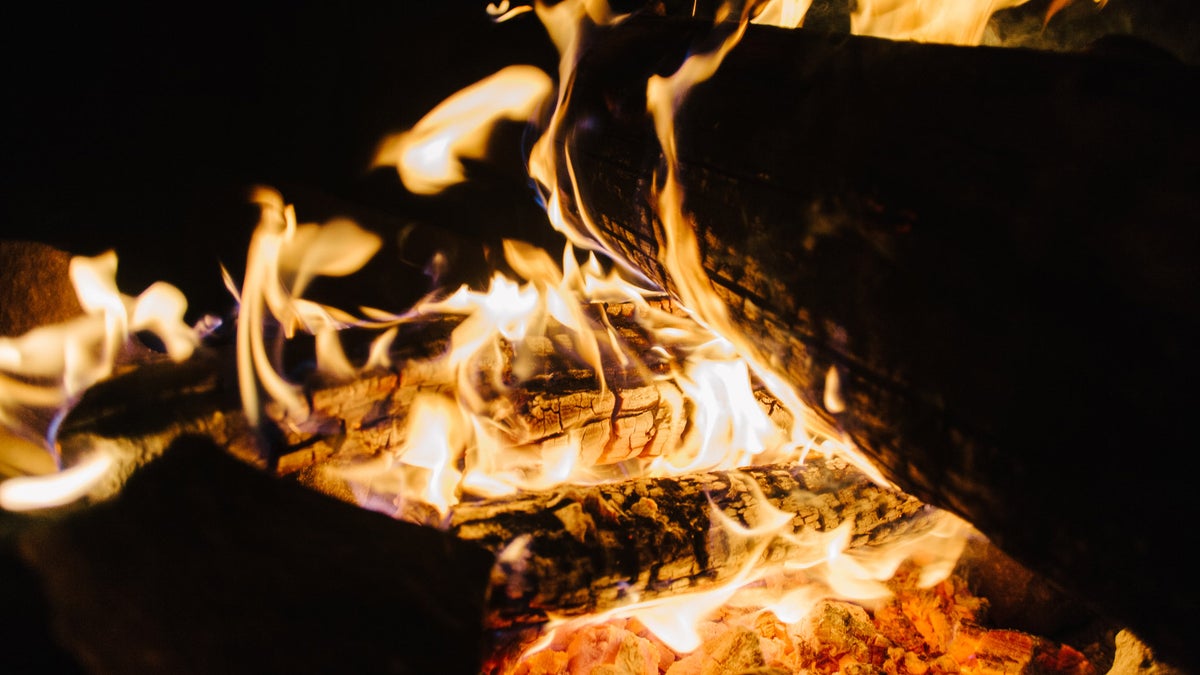
We’ve had this discussion before, but since I saw this article, I wondered what people thought. Is it in line with Catholic social teaching to encourage not using campfires, fire pits, etc?

 
Last edited:
The amount of pollution produced by campfires is less than a drop in the bucket. Just don’t be reckless with fire and you should be good
 
Don’t we use a big fire to light the Easter candle during Easter Vigil?
 
Uh, this is a thing. I’d give up my plastic straws before anyone ever touches my precious campfires. 🤨
 
We’ve had this discussion before, but since I saw this article, I wondered what people thought. Is it in line with Catholic social teaching to encourage not using campfires, fire pits, etc?
I’m sorry, this is just going too far.

True, you need to have means in place to arrest a fire if it gets out of hand — shovels, water, perhaps even a fire extinguisher — but unless it is in an extremely dry area where there is a real fire hazard, campfires are harmless fun. Infrequent exposure to fire smoke isn’t enough of a danger to worry about. I seriously have to question that figure from the state of Washington.

Car exhaust, reckless driving, and the mindless consumption of vast quantities of carbohydrates and corn syrup derivatives is far more of a public health hazard.
 
Last edited:
The United States is a country full of tree-huggers compared to the likes of China and India.
 
Yes, I love me an outdoor fire too. But how to answer this - - do they cause or contribute to deaths?

Health Problems​

As nice as we all think wood smoke smells, inhaling all of the above isn’t good for you. The list of effects wood smoke has on your health: irritated eyes, throat, sinus, and lungs; headaches; reduced lung function; lung inflammation and swelling; increased risk of respiratory disease; more severe and frequent symptoms from existing lung diseases; increased risk of heart attack and stroke; chronic bronchitis and emphysema; cancer.

Washington estimates that fine-particle pollution, which again is 51 percent wood smoke, causes 1,100 deaths per year in that state alone. The health problems it causes cost the state $190 million annually.
 
I’m sorry, but this article is not about the morality of campfires.

It’s really about irresponsibility. A real Campfire does not cause a forest fires. What causes forest fires is when people don’t practice fire safety, take short cuts, and are frankly irresponsible.

However, unfortunately not enough people today were in {what used to be called} Boy Scouts, and never learned how to create a correct & responsible campfire.

Because people don’t need campfires for their everyday lives, far too many hunters and people out in the wilderness don’t know what they are doing.

It’s not a reason though to ban them outright, but you can hold them criminally responsible if they were negligent.

NOTE: one thing from the article that I thought was a little crazy (to be fair, there was a lot of crazy in there)… the article said the person responsible for the CA fire was fined 9 figures. That’s over $100 Million. Unless he was a billionaire or just shy of it, I don’t see how a 9 figure fine is reasonable, just, & realistic.
 
Okay - - I can certainly agree that wildfires are just a responsibility problem - - but what about the health effects?
(Please Note: This uploaded content is no longer available.)
 
Last edited:
40.png
Loud-living-dogma:
good doc. A lot of people don’t know how to properly burn wood.
Yes - - can we just ignore the health hazards, though?
 

Wood Smoke vs. Cigarette Smoke​

People who would never dream of smoking a cigarette choose to burn wood. Yet wood smoke contains many of the same toxic and carcinogenic substances as cigarette smoke, including benzene, benzo(a)pyrene, and dibenz(a,h)anthracene.

And wood smoke produces far more particulate pollution than cigarette smoke does.

EPA researchers estimate the lifetime cancer risk from wood smoke to be 12 times greater than from a similar amount of cigarette smoke.

In a laboratory study at Louisiana State University, researchers found that hazardous free radicals in wood smoke are chemically active 40 times longer than those from cigarette smoke—so once inhaled, they will harm the body for far longer.

Other EPA estimates suggest that a single fireplace operating for an hour and burning 10 pounds of wood will generate 4,300 times more carcinogenic polyaromatic hydrocarbons than 30 cigarettes.

http://www.familiesforcleanair.org/health/health4/
 
“How wood smoke harms your health”
Understood. But note as well that, according to the pie chart, only 6 percent of fine particle pollution is caused by outdoor burning or “other” sources. Assuming that those in Washington state who are exposed to campfires are also exposed to other sources (wood stoves, etc.), the danger attributable to campfires alone is very negligible.

In my part of the country, heating with wood stoves is uncommon — it’s not needed, some years, short sleeves and pants are possible on Christmas Day. I do like the smell of a fireplace burning in the dead of winter, but here it’s a rare treat, not at all frequent. Not many people use it.
 
The article discusses “fine particle pollution, including wood smoke.” It fails to cite what percent of FPP is DUE to wood smoke. Maybe if that 5th grader who did the “study “ that is resulting in the demise of plastic straws has some time, he could tackle campfires. Not that I really want him to.

I wonder how many campfires it takes to equal the FPP caused by one tree-hugging celebrity’s trip in their private jet.
 
I think this is a pretty silly way to combat climate change. The amount of pollution a campfire generates is minuscule in comparison to what cars and mass factory farming generates. I don’t really think anything within Catholic social teaching would have much to say on this because it’s not an issue. Obviously scripture talks about taking care of the land, but I don’t think the occasional use of a campfire or fire pit would be a blatant violation of the land around us
 
Of all the hills to die on, how in the world did you select this one?
 
CAF is home to many who choose to die on really strange hills
 
Status
Not open for further replies.
Back
Top