
Should Latin mass be brought back?

  • Thread starter Thread starter jas84173
  • Start date Start date
Status
Not open for further replies.
From the First Apology of St. Justin Martyr, c. 155 AD

“ No one may share the Eucharist with us unless he believes that what we teach is true, unless he is washed in the regenerating waters of baptism for the remission of his sins, and unless he lives in accordance with the principles given us by Christ.

We do not consume the eucharistic bread and wine as if it were ordinary food and drink, for we have been taught that as Jesus Christ our Savior became a man of flesh and blood by the power of the Word of God, so also the food that our flesh and blood assimilates for its nourishment becomes the flesh and blood of the incarnate Jesus by the power of his own words contained in the prayer of thanksgiving.

The apostles, in their recollections, which are called gospels, handed down to us what Jesus commanded them to do. They tell us that he took bread, gave thanks and said: Do this in memory of me. This is my body. In the same way he took the cup, he gave thanks and said: This is my blood. The Lord gave this command to them alone. Ever since then we have constantly reminded one another of these things. The rich among us help the poor and we are always united. For all that we receive we praise the Creator of the universe through his Son Jesus Christ and through the Holy Spirit.

On Sunday we have a common assembly of all our members, whether they live in the city or the outlying districts. The recollections of the apostles or the writings of the prophets are read, as long as there is time. When the reader has finished, the president of the assembly speaks to us; he urges everyone to imitate the examples of virtue we have heard in the readings. Then we all stand up together and pray.

On the conclusion of our prayer, bread and wine and water are brought forward. The president offers prayers and gives thanks to the best of his ability, and the people give assent by saying, “Amen”. The eucharist is distributed, everyone present communicates, and the deacons take it to those who are absent.

The wealthy, if they wish, may make a contribution, and they themselves decide the amount. The collection is placed in the custody of the president, who uses it to help the orphans and widows and all who for any reason are in distress, whether because they are sick, in prison, or away from home. In a word, he takes care of all who are in need.

We hold our common assembly on Sunday because it is the first day of the week, the day on which God put darkness and chaos to flight and created the world, and because on that same day our savior Jesus Christ rose from the dead. For he was crucified on Friday and on Sunday he appeared to his apostles and disciples and taught them the things that we have passed on for your consideration.“
 
Continued. I feel like the Second Vatican Council basically read this from Justin Martyrs First Apology and said " Okay 155 A.D. is when Mass was most true, cut everything else out. Don’t get me wrong Justin Martyr is very important to the Church History but he lived in the early persecuted church and sacred tradition was still being made. The additions over the centuries weren’t put in just for hahas, it was a further reverance to the Church which grew into Christ’s Church. When Justin was defending the Faith, people were still arguing over Christ’s true nature , there was no New Testament or Creed.
 
It would appear you are very young. the vast majority of adults took to the OF like ducks take to water. Fair choice? More like great joy.

And why is it that the parishes which have the Ef once a week - on weekdays - and some once every two months - are not overflowing with attendees, all voicing their desire for more! More! More!

Because even where it is established, there are few who truly want and desire it. There are some parishes which have become Ef parishes, but there are more which simply add in an EF wherever they can, for the minority who desire it.

Unless you have done a survey of the 17,200+ parishes in the US, I challenge you to make such a statement as “Communion in the hand… has almost univerally been presented as the ony option”. I seriously doubt you or anyone has made any such survey. I have taught RCIA for the better part of 25 years, and have always taught both methods of reception, and the vast majority of those I have taught follow CITH. That is only my parish, but I would suspect that it leans toward most people receiving that way even when taught both.

You saw one film. I have never seen it, so I cannot comment on its content; but it certainly does not follow the Magisterium.

I have never stated that the EF has faulty theology, so I will prsume you are speaking to the film. It is also wrong to continue to agitate for women’s ordinations, but a small segment of those calling themselves Catholic do so. Just as therre are people in the conservative end of the spectrum who cannot or will not accpet what the Church has done, so there are those on the liberal end with the same problem. Nither are particularly relevant to the issue at hand.

However, I do stand on what I have said,. In 10 years after SP, the EF is about at stasis; and Pope Benedict in his letter accompanying SP said as much. I stand by my comments.

And I have no problem with anyone learning about their heritage. And an honest presentation of it, glory, warts and all, is the honest presentation. Skewing it to either the liberal or the conserbvative end is not being totally honest.

Again, I do not challenge that young adults in your area have chosen the EF. And I am pleased it is available to them. What I object to are overblown statements, as others have made in this thread, that imply that a majority of young adults prefer it. That simply ignores the 97%+ of parishes which do not have the EF, and which parishes many young adults attend.

It is called perspective.
 
This seems to represent the attitude that “if anything was added, it was meant for the remainder of time”. The bishops of the world obviously saw things differently than this; they saw that some things were time and place specific, and they challenged the attitude that “if it was done 500 years ago, then obviously it was meant to last until the Second Coming”.

Perspective occasionally helps. When the organ was first introduced, it created quite a stir, with objections that it did not belong in the Mass. Those who now appreciate the organ often are not aware of the tumult of its introduction; and interestingly, we have a parallel tumult over other instruments, with what appears to be the same angst and dislike.

History doesn’t repeat itself, but it certainly is good at rhyming.

And by the way - there was a New Testament; the canon had not yet been formed, but already it was spread throughout the Church.
 
Thank you for the link. It’s late here (EST), but I will finish this tomorrow. I love listening to Fr. Ripperger and Fr. Wolfe over at Sensus Fidelium…all of them actually. Such a wealth of information for this newbie Catholic.
 
I find it not surprising, but rather sad, that we still insist that ‘our personal experiences’ must translate into ‘how everybody feels or felt.’

Now I personally did not feel ‘great joy’ (neither did I feel ‘great sorrow’) when the OF came into force.

Apparently some people feel that because they themselves felt one way or the other ‘the majority of people felt that too’.

I’m not going to say that 'the majority of people did NOT take to the OF 'like ducks to water as one person put it. Neither will I say (for it is not true) that the majority of people DID do so.

Many, many people did not particularly like the changes, but with time accepted them.

Many, many people left over them.

Many, many people did like them from the start.’
Many, many people did not like them, accepted them in the spirit of obedience, grew to the comfort of ‘long years’ reinforcement’, but found that the newer translation was ‘better’ than the old.

Of these people, many found that the better translation made them remember the EF and either be grateful it is now more available, or wish it were available for them and hope some day it would be–without in any way disparaging the OF.

Now I am not condoning the actions of those who, when the change came in the 1970s, tried to accept and either went to the SSPX or stopped attending altogether. But that was a fairly sizeable number of Catholic adults.

And there is an equally sizeable, or even greater, number of Catholic adults who went from the OF to a Protestant service (finding the services similar but the ‘fellowship’ more exciting). and even more, especially of late, who go from the OF to NOTHING.

It’s a nuanced situation.
 
It would appear you are very young.
68 years old
the vast majority of adults took to the OF like ducks take to water. Fair choice? More like great joy.
As we can see by the significant rise in Mass attendance since the 1960s. The ducks are bursting our churches at the seams.
I have never stated that the EF has faulty theology
True. I heard a film, and some sisters in campus ministry, say that in the 1970s.
And I have no problem with anyone learning about their heritage.
I suggest an explanation, and the EF itself, once a year, in parochial schools. That would be a huge improvement.
Suppose that, perhaps, 5 out of 1000 church goers born after the Council go to the EF, that would be a tiny percentage. But suppose that 5 out of 10 of the few post-Council Catholics who were taught about the EF, and exposed to it as children or young adults, choose to go there now some of the time as young adults.

You seem to be focusing on the 5 out of 1000, whereas I am focusing on the 5 out of 10.
(Actually, after me posting on countless threads you have posted on, I am surprised you see me as “very young”.)
 
Last edited:
I really wasn’t questioning removal of John I. I was more interested in the reasons behind the removal of “Introibo ad altare Deo,” “in tabernaculam tuam”, “ad Sancta sanctorum,” “hanc immaculatam hostiam,” “Deus qui humanae,” “calicem salutaris,” “ut placeat tibi,” “Veni, Sanctificator,” “Suscipe, sancta Trinitas,” “quid retribuam Domino,” “quod ore sumpsimus,” “corpus tuam,” “placeat tibi” and the communion formula. I just picked some examples but it seems that’s quite a lot of theology removed right there.
 
If you are 68, you should know more of the Church’s history.

The loss of Mass attendance is a red herring in this conversation. There never was the major exodus the Traditionalists have posited repeatedly; and actually, Mass attendance started to decline in the late 1950’s and has been on a gradual decline since.

A number of people said a number of things in the 1970’s on both sides of the discussion. last I checked, it is now 2017…

You are far more likely to get 5 out of 1,000 who are baptized than out of church goers at that age group, given that 80%+ don’t go to Mass on a regular basis.

The stumbling block of all stumbling blocks, however, is IMHO language. anyone can wax eloquent about Latin, but even when I was in high school taking Latin (as a translated language, not as a spoken one) extremely few people were conversant in it. And given that Latin for a long period pretty much disappeared from high school curriculum, even fewer are now.

Yes, I know all about missals, having had one in the 50’s and 60’s. Most didn’t; they were expensive then and they are still expensive now. I have been to the EF, and the attendance rate is impressive only in how few of a parish attend.
And it is well known that often the EF survives not because of demand within the parish, but because it draws from a number of nearby parishes - and even then, is small.

I am well aware of the difference in the rubrics between the two, and frankly, among my age group and older, I have found precious few who can tell me much more than that the Mass is in English (not a rubric) and the priest faces the people. and that includes those into their 90’s.

So take the comment as a compliment; I think I mistook you for one of the other posters.

As an aside, for a period of about 10 to 12 years, I was the assistant to the parish priest who did RCIA, After Easter, I would take the group into the city on a Saturday night to attend the OF, which was celebrated in Latin, ad orientem, and had a schola which had toured Europe and won accolades. I would later always ask, with enthusiasm, how ow people liked it. There were always a few who talked about how beautiful it was; some who were somewhat neutral, and a few who didn’t like it. I always encouraged those who liked it to return there, at least periodically. And as far as I could ascertain, not a single one did. I did not pry for answers, but my guess is that a) it was inconvenient (about a 20 to 25 minute drive, mostly freeway), b) Latin, and c) they became involved with the parish, and that was more important than going to that Mass. And as an aside, the church was never half full over the years, and as a city parish, drew from beyond its geographical boundaries.
 
I don’t think theology has been removed. I think that a number of prayers have, some of which was repetitious. And getting to the bottom of the changes would require far more than simply studying notes from the actual process, as it relied on work already done by liturgy scholars well before the Start of Vatican 2.

I have no doubt that the OF was modeled on the Mass prior to Trent, as by then, there had been 1500 years of additions and subtractions. But going back to @150 is not real likely.

I agree, however, that I have had a long time of curiosity. Sadly, the two years I spent in college seminary did not cover that, and I am not even sure how much of that might have been covered in Theology.
 
Vatican 2 was infiltrated by Freemasonry with Illuminati ties. Notice the seal on the back of United States currency also says “Norvus Ordo”? New Order. The Masons succeeded in destroying the Church and we defend it.
 
“So strong is tradition that later generations will dream of what they have never seen.” - G.K. Chesterton
 
The bias against Latin is part of the dumbing-down phenomenon in the United States … it applies to reading and to math, as well.

This is not rocket science, but it is part of the effort to control people.
 
The bias against Latin is part of the dumbing-down phenomenon in the United States … it applies to reading and to math, as well.

This is not rocket science, but it is part of the effort to control people.
Do you read Latin?
 
Last edited:
Used to when I studied it.

Still remember some of my prayers in Latin.

When there was a Catholic Answers sponsored seminar, they had a Latin Mass and almost everyone was able to join in with Latin responses and prayers.

Recently, I was studying for a masters and in the college library I found a huge section of St. Thomas Aquinas and there were books in Latin-English and I was able to “critique” the poor translations.
 
Last edited:
But that is not really knowing Latin. I dont think “dumbing down” is the issue at all. Even when Mass in Latin was common and people followed along in a missal, that was nort knowing anything special. the average person could not conjugate a verb. Since Vatican II we have in fact been encouraged to study scripture more and to read more. Coming into the church does not require simplistic responses from the Baltimore Catechism but rather a formative reflective journey through RCIA.
 
Last edited:
Even in English, the average person cannot write the Great American Novel.

You do what you can.

What you CAN do is to read from the Catholic Catechism … the thick one.

But the Baltimore Catechism is not SIMPLISTIC. It is a summary of all of the Church teachings. If you want more, then read from the Catechism of the Catholic Church.

If you want still MORE, then look up the scriptural references contained in the Catechism of the Catholic Church.

Look up the tracts listed in Catholic Answers Web site.


Read, read, read.

Never stop reading.

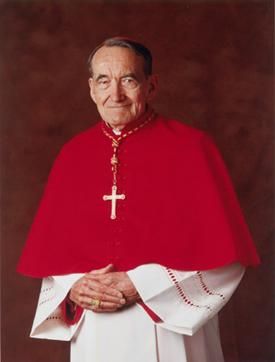
Read Avery Dulles … he was a protestant who became a Catholic Cardinal.


Read, read, read.

Never stop reading.

Cardinal Dulles was very very critical of the bureaucratic Catholic Church’s efforts at evangelization. He said they wasted millions of dollars and had nothing to show for it.

Very critical.

Eventually, he connected up with Karl Keating, who founded Catholic Answers and they collaborated on at least one book together.
 
Last edited:
Status
Not open for further replies.
Back
Top