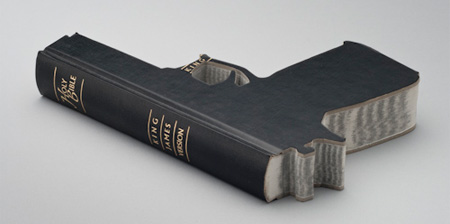
Sola Scriptura...

  • Thread starter Thread starter Truth_Faith13
  • Start date Start date
Status
Not open for further replies.
Personal interpretation is NOT Sola Scriptura. That’s where Catholics get it wrong. Mormons are definitely not Sola Scriptura, rather, they are like the catholics in that The Church Educational System and the Bretheren interpret scripture. (Catholics-magisterium) Jehovah’s Witnesses are also not Sola Scriptura, they have the Watchtower interpret scripture for them. The JW’s also have perverted scripture to fit their theology, rather than allowing Scripture to shape their theology.
I disagree in that any interpretation other than from The Church Jesus Christ founded and gave authority to, IS private interpretation. Mormons may not be sola scriptura nor JWS, and I know this. What about oneness Pentecostals? What is so different from “The Watchtower” interpreting scripture for the Jehova’s Witnesses and The Bible college that some “Bible only” church pastor went to, who taught him something completely different? Now, this preacher will preach to his congregation what he learned at his particular “Bible college” or “Seminary”
 
I don’t know about that, it’s an interesting thought though. But, we would both agree that we can indeed find the teaching that God is triune in scripture.

I’m talking literally; at least here in the U.S. people are free to interpret any way they want.

No, or else it wouldn’t be absolute truth. Their opinions on the truth vary, but that does not make truth vary, it makes them wrong. Look at it this way; there are those that believe Peter was the first Pope and that gave him absolute primacy and he then passed that to his successors insuring that all who follow him in the position of the bishop of Rome are infallible and hold the same primacy over all other bishops. Now, some say that is true, some say that is false. Absolute truth dictates they can’t both be right; hence, one of them is wrong. God is the authority behind truth, as Jesus is Truth and the Holy Spirit guides us into truth… and Truth.
Oh, you kind of mean “Religious freedom?” Well, if that is what you mean, then yeah anyone can interpret scripture any way they wish here in the usa 🙂 Who’s interpretation is right, is something completely different.

Yeah, that is exactly what I meant. The opinions on what is the absolute truth is varies. Your reasoning about how if two groups say believe something different (like in the case of Peter being the rock and the pope having primacy) One must be wrong and one must be right. Now, there are apparently thousands of different protestant denominations that all claim to be “Sola Scriptura” but believe different doctrines and read the same bible but come to different conclusions of what some parts of it mean. So multiply your “One must be wrong and one must be right” reasoning several thousand different times over.

Is there a difference in meanings when you wrote “Truth” uppercase T and “truth” lowercase t, in your post? If so, can you explain? Or am I seeing something that is not there?

Love how this discussion between everyone has been pretty charitable and mellow even with our varying opinions 🙂
 
No. The canon is not closed.
I thought CC and early fathers testify that it is (no new books to the bible)/ Actually, here is article that says God is not adding to it, but he could, but probably won’t. reclaimingthemind.org/blog/2013/05/why-i-believe-the-canon-is-theoretically-open-and-am-fine-with-it/
Well, duh. Every generation passes on the faith to the next, so oral transmission of the gospel continues.
"Is there new oral transmission ? " was my question, not is there oral transmission. I suppose if you continue to develop doctrine, so does oral transmission develop.
Scripture alone is itself a new heresy.
Ironic. I did not mean, “we have 1900 years of heresy to sift thru”, but meant, " 1900 years of hearsay to sift thru." Maybe a Freudian slip misprint.
 
Well good point. No one is denying role of the church. It receives and evaluates testimony down thru the ages. A copy of an original transcript is still better than a passed on oral testimony. Further, no other ancient writing(s) is better documented to be accurate than the OT or NT.
You are still missing the point.

Without the originals the copies are not accepted without the testimony of a credible witness. In this case your copies would not be corroborated without the credible witness: the Church. There is obviously a reason why Christ left us a Church.
 
=LaughingBoy1503;11500792]Oh, you kind of mean “Religious freedom?” Well, if that is what you mean, then yeah anyone can interpret scripture any way they wish here in the usa 🙂 Who’s interpretation is right, is something completely different.
Yeah, that is exactly what I meant. The opinions on what is the absolute truth is varies. Your reasoning about how if two groups say believe something different (like in the case of Peter being the rock and the pope having primacy) One must be wrong and one must be right. Now, there are apparently thousands of different protestant denominations that all claim to be “Sola Scriptura” but believe different doctrines and read the same bible but come to different conclusions of what some parts of it mean. So multiply your “One must be wrong and one must be right” reasoning several thousand different times over.
2nd. Peter 3: 14-17 “Therefore, beloved, since you wait for these, be zealous to be found by him without spot or blemish, and at peace. And count the forbearance of our Lord as salvation. So also our beloved brother Paul wrote to you according to the wisdom given him, speaking of this as he does in all his letters.** There are some things in them hard to understand, which the ignorant and unstable twist to their own destruction, as they do the other scriptures. You therefore, beloved, knowing this beforehand, beware lest you be carried away with the error of lawless men and lose your own stability**

2nd. Peter 1: 16-21 “You will do well to pay attention to this as to a lamp shining in a dark place, until the day dawns and the morning star rises in your hearts. First of all you must understand this, that no prophecy of scripture is a matter of one’s own interpretation, because no prophecy ever came by the impulse of man, but men moved by the Holy Spirit spoke from God.”

John 5: 37 “And the Father who sent me has himself borne witness to me. His voice you have never heard, his form you have never seen; and you do not have his word abiding in you, for you do not believe him whom he has sent. You search the scriptures, because you think that in them you have eternal life; and it is they that bear witness to me; yet you refuse to come to me that you may have life [Speaking of accepting the entire WORD of GOD]. I do not receive glory from men .[Meaning disobedience is rampant!] But I know that you have not the love of God within you. I have come in my Father’s name, and you do not receive me” [Obey Me!]
 
You are still missing the point.

Without the originals the copies are not accepted without the testimony of a credible witness. In this case your copies would not be corroborated without the credible witness: the Church. There is obviously a reason why Christ left us a Church.
Perhaps you are missing my point. If the Church is authoritative by herself, why have scripture at all? Why was it so important to receive, transmit, copy and pass scripture on ? SS does not deny role of the church and it’s giftings and offices as stated earlier…Further it is disingenuous to say if we had originals CC doctrine would be different on this matter. Disingenuous because the CC does not doubt our scriptures to be in error to the originals. Again why did she bother to say so?
 
=Kliska;11500220]Sola Scriptura advocates don’t ignore or reject all tradition. Also, just because something is not contained in scripture doesn’t mean we can’t do it. TV wasn’t around but just because scripture doesn’t mention it doesn’t mean I can’t watch it.
As for interpretations; freedom in Christ doesn’t have to do with scriptural interpretation. Man is “free” to interpret however they want, but that doesn’t make their interpretation correct. Sola Scriptura advocates don’t deny absolute truth.
Dear friend:)

Its truly not complicated.

We hold to One TRUE God [Triune]

One God [Good and Perfect] Can and DOES have ONLY ONE set of faith beliefs
[Eph 4:4-8]

NOTHING ELSE IS LOGICAL OR POSSIBLE

God did not wait for the Protestant revolution to make His True Faith Known

Christ; following OT Tradition of Only One Chosen People followed suit [Mt 16:18] “” MY CHURCH"" singular founded, guides and guards only The Church and Faith He Taught and passed on to the Apostles [Mt. 28:16-20 and John 17:14-20]👍

So ANY and ALL interpretations that FULLY-align with Christ CC are right; any that do not are wrong. My friend this is not a “slam.” It’s precisely WHY Christ choose to Found ONLY “One.” That way their could not be any REAL arguments about what He, God desires.👍

God Bless you,
patrick
 
Perhaps you are missing my point. If the Church is authoritative by herself, why have scripture at all? Why was it so important to receive, transmit, copy and pass scripture on ? SS does not deny role of the church and it’s giftings and offices as stated earlier.
Easy, They go together, Not separated, Not alone.

*Matthew 28:16 Now the eleven disciples went to Galilee, to the mountain to which Jesus had directed them. 17 And when they saw him they worshiped him; but some doubted. 18 And Jesus came and said to them, “All authority in heaven and on earth has been given to me. 19 Go therefore and make disciples of all nations, baptizing them in the name of the Father and of the Son and of the Holy Spirit, 20 teaching them to observe all that I have commanded you; and lo, I am with you always, to the close of the age.”
*
What are Christ’s orders here, after clearly establishing His authority:
  1. Go and make disciples.
  2. Baptize them
    a) In the name of the Father, the Son and the Holy Spirit​
  3. Teach these disciples
    a) To observe all that He has commanded them.​
  4. He will be with the disciples and the disciples’ disciples - always.
You see - Christ left us what:

A Teaching Office.

What is another name for teaching office?

Magisterium.

There is no way this can be Scriptural 😉

Indeed it is.

And yet some will kick and cry that this is not possible or that it means something else.
 
Oh, you kind of mean “Religious freedom?” Well, if that is what you mean, then yeah anyone can interpret scripture any way they wish here in the usa 🙂 Who’s interpretation is right, is something completely different.
Yep, we agree! lol
Yeah, that is exactly what I meant. The opinions on what is the absolute truth is varies. Your reasoning about how if two groups say believe something different (like in the case of Peter being the rock and the pope having primacy) One must be wrong and one must be right. Now, there are apparently thousands of different protestant denominations that all claim to be “Sola Scriptura” but believe different doctrines and read the same bible but come to different conclusions of what some parts of it mean. So multiply your “One must be wrong and one must be right” reasoning several thousand different times over.
Yes, and as everything in life this is true. In effect, the RCC tries to sidestep this by proclaiming that only the magisterium can interpret correctly. So, the answer is just once removed; you have to trust them to interpret accurately. Even with the idea that God’s Spirit guides the magisterium, then you have to have believed that idea on your own at some point. Further, just having the label RCC obviously does not actually insure people are all believing the same thing, nor even preaching/teaching the same.

To be clear, protestants, by and large, don’t differ from one another “several thousand times over.” Yes, you absolutely will find different interpretations amongst the congregants, as you do in the RCC, and Orthodox. In short, not everyone can be right, but that doesn’t somehow negate sola scriptura, as we all believe the Bible to be inspired. The flaw in the system is humankind, not God.
Is there a difference in meanings when you wrote “Truth” uppercase T and “truth” lowercase t, in your post? If so, can you explain? Or am I seeing something that is not there?
No, you noticed correctly! I write Truth in reference to Jesus. So, the Holy Spirit guides us to Him, as Truth, and also guides us into truth (spiritual/religious truth) as well.
Love how this discussion between everyone has been pretty charitable and mellow even with our varying opinions 🙂
I’m not very good at that bit sometimes, but I really do try. 😛
 
Ironic. I did not mean, “we have 1900 years of heresy to sift thru”, but meant, " 1900 years of hearsay to sift thru." Maybe a Freudian slip misprint.
Ha! In another thread, in my haste I’ve put “cannon” instead of canon… I’m still trying to figure out what “the scriptural cannon” might be. This is even more interesting when typing with auto-correct as the phone I’m on often tries to pick what word it thinks you mean instead of what you really want to say… So, maybe the canon of scripture contains a cannon that is hearsay heresy? :eek:
 
Ha! In another thread, in my haste I’ve put “cannon” instead of canon… I’m still trying to figure out what “the scriptural cannon” might be. This is even more interesting when typing with auto-correct as the phone I’m on often tries to pick what word it thinks you mean instead of what you really want to say… So, maybe the canon of scripture contains a cannon that is hearsay heresy? :eek:
Some call this the Bible Cannon

 
I disagree in that any interpretation other than from The Church Jesus Christ founded and gave authority to, IS private interpretation. Mormons may not be sola scriptura nor JWS, and I know this. What about oneness Pentecostals? What is so different from “The Watchtower” interpreting scripture for the Jehova’s Witnesses and The Bible college that some “Bible only” church pastor went to, who taught him something completely different? Now, this preacher will preach to his congregation what he learned at his particular “Bible college” or “Seminary”
As it’s been pointed out by me and others, personal interpretation is not sola scriptura. Why is this concept so hard to grasp? The point of comparing the RCC, the Mormons and the JWs is that each respected faith listed don’t trust the individual to interpret God’s Word. I’ve looked at doctrinal statements of many different Protestant faiths, and I see a major unity of all: That Jesus Christ is Lord, that we are all sinners in need of a savior,that it is by Grace through Faith that saves you, that the Holy Bible is the true Word of God, and is the final authority on matters of faith and doctrine. Those are the core basics of the Holy Gospel. Now, as a Lutheran, obviously I don’t agree with the Baptist on the Holy Eucharist being symbolic, but that has to do with interpretation. The Bible says that we are to take Holy Communion, which both the Baptist and myself do. I may disagree on the saving nature of baptism with the Baptist, but both communions baptize. Why? Because it’s scriptural.
 
You have failed to demonstrate the invalidity of my argument.

Just because you keep throwing our name with those born of your seed - does not make it so.

Where is this Protestant Council led by the Holy Spirit to demonstrate Sola Scriptura being a mandate of the Holy Spirit?

Where in Scriptures you see this men made doctrine (plural because there are many definitions)?

Luther was a man, so was Melanchton. Christ chose 12 men, and from those 12 the Church has had a hierarchy. Where is your line of succession to Christ?

You are avoiding my other question:

Who determines how Scriptures are interpreted?
First off, an apology is warranted. I did re-read my posts, and I did come across as uncharitable.
  1. I wasn’t aware there had to be a council.
  2. Let’s see: Mariology, prayers to the dead, the rosary, Purgatory, indulgences, Tradition over scripture, the list goes on.
  3. You already made my point: Christ chose 12 men, as He chose Luther and Melanchton. Our line of succession comes from Martin himself. (However, more learned Lutherans than myself could answer this better than I.)
  4. The Holy Spirit. Yeah, the HS does talk to all believers, not just Roman Catholics.
Jesus said it best:""For where two or three are gathered together in My name, there am I in the midst of them.” (Matt. 18:20 KJV)He didn’t say where 2 or 3 are gathered in communion with the Bishop of Rome, there I am.
 
As it’s been pointed out by me and others, personal interpretation is not sola scriptura. Why is this concept so hard to grasp? The point of comparing the RCC, the Mormons and the JWs is that each respected faith listed don’t trust the individual to interpret God’s Word. I’ve looked at doctrinal statements of many different Protestant faiths, and I see a major unity of all: That Jesus Christ is Lord, that we are all sinners in need of a savior,that it is by Grace through Faith that saves you, that the Holy Bible is the true Word of God, and is the final authority on matters of faith and doctrine. Those are the core basics of the Holy Gospel. Now, as a Lutheran, obviously I don’t agree with the Baptist on the Holy Eucharist being symbolic, but that has to do with interpretation. The Bible says that we are to take Holy Communion, which both the Baptist and myself do. I may disagree on the saving nature of baptism with the Baptist, but both communions baptize. Why? Because it’s scriptural.
Well the fact that Lutherans and Baptists disagree on whether The Eucharist is symbolic or The Actual Body and Blood of Christ is proof enough for me the Sola Scriptura does not work. They are both using The Bible, but coming out with different interpretations. And

Hey I just though of a question. This is not to make a point, and I am not setting you up for anything to refute your answer either. Sincerely. I am curious. Do you believe the adherence to “Sola Scriptura” is necessary for salvation?
 
A Quick Ten-Step Refutation of Sola Scriptura
By Dave Armstrong
catholic.com/thisrock/2004/0409fea3.asp

1. Sola Scriptura Is Not Taught in the Bible

Catholics agree with Protestants that Scripture is a “standard of truth”—even the preeminent one—but not in a sense that rules out the binding authority of authentic apostolic Tradition and the Church. The Bible doesn’t teach that. Catholics agree that Scripture is materially sufficient. In other words, on this view, every true doctrine can be found in the Bible, if only implicitly and indirectly by deduction. But no biblical passage teaches that Scripture is the formal authority or rule of faith in isolation from the Church and Tradition. Sola scriptura can’t even be deduced from implicit passages.

2. The “Word of God” Refers to Oral Teaching Also


“Word” in Holy Scripture often refers to a proclaimed, oral teaching of prophets or apostles. What the prophets spoke was the word of God regardless of whether or not their utterances were recorded later as written Scripture. So for example, we read in Jeremiah:

“For twenty-three years . . . the word of the Lord has come to me and I have spoken to you again and again . . . ‘But you did not listen to me,’ declares the Lord. . . . Therefore the Lord Almighty says this: ‘Because you have not listened to my words. . . .’” (Jer. 25:3, 7-8 [NIV]).

This was the word of God even though some of it was not recorded in writing. It had equal authority as writing or proclamation-never-reduced-to-writing. This was true also of apostolic preaching. When the phrases “word of God” or “word of the Lord” appear in Acts and the epistles, they almost always refer to oral preaching, not to Scripture. For example:

“When you received the word of God which you heard from us, you accepted it not as the word of men but as what it really is, the word of God” (1 Thess. 2:13).

If we compare this passage with another, written to the same church, Paul appears to regard oral teaching and the word of God as synonymous:

“Keep away from any brother who is living in idleness and not in accord with the tradition that you received from us” (2 Thess. 3:6).

3. Tradition Is Not a Dirty Word

Protestants often quote the verses in the Bible where corrupt traditions of men are condemned (e.g., Matt. 15:2–6; Mark 7:8–13; Col. 2:8). Of course, Catholics agree with this. But it’s not the whole truth. True, apostolic Tradition also is endorsed positively. This Tradition is in total harmony with and consistent with Scripture.

4. Jesus and Paul Accepted Non-Biblical Oral and Written Traditions

Protestants defending sola scriptura will claim that Jesus and Paul accepted the authority of the Old Testament. This is true, but they also appealed to other authority outside of written revelation. For example:

a. The reference to “He shall be called a Nazarene” cannot be found in the Old Testament, yet it was “spoken by the prophets” (Matt. 2:23). Therefore, this prophecy, which is considered to be “God’s word,” was passed down orally rather than through Scripture.

b. In Matthew 23:2–3, Jesus teaches that the scribes and Pharisees have a legitimate, binding authority based “on Moses’ seat,” but this phrase or idea cannot be found anywhere in the Old Testament. It is found in the (originally oral) Mishnah, which teaches a sort of “teaching succession” from Moses on down.

c. In 1 Corinthians 10:4, Paul refers to a rock that “followed” the Jews through the Sinai wilderness. The Old Testament says nothing about such miraculous movement. But rabbinic tradition does.

d. “As Jannes and Jambres opposed Moses” (2 Tim. 3:8). These two men cannot be found in the related Old Testament passage (Ex. 7:8ff.) or anywhere else in the Old Testament.

5. The Apostles Exercised Authority at the Council of Jerusalem

In the Council of Jerusalem (Acts 15:6–30), we see Peter and James speaking with authority. This Council makes an authoritative pronouncement (citing the Holy Spirit) that was binding on all Christians:

“For it has seemed good to the Holy Spirit and to us to lay upon you no greater burden than these necessary things: that you abstain from what has been sacrificed to idols and from blood and from what is strangled and from unchastity” (Acts 15:28–29).

In the next chapter, we read that Paul, Timothy, and Silas were traveling around “through the cities,” and Scripture says that “they delivered to them for observance the decisions which had been reached by the apostles and elders who were at Jerusalem” (Acts 16:4).

(cont.)

 
6. Pharisees, Sadducees, and Oral, Extrabiblical Tradition

Christianity was derived in many ways from the Pharisaical tradition of Judaism. The Sadducees, on the other hand, rejected the future resurrection of the soul, the afterlife, rewards and retribution, demons and angels, and predestinarianism. The Sadducees also rejected all authoritative oral teaching and essentially believed in sola scriptura. They were the theological liberals of that time. Christian Pharisees are referred to in Acts 15:5 and Philippians 3:5, but the Bible never mentions Christian Sadducees.

The Pharisees, despite their corruptions and excesses, were the mainstream Jewish tradition, and both Jesus and Paul acknowledge this. So neither the orthodox Old Testament Jews nor the early Church was guided by the principle of sola scriptura.

**7. Old Testament Jews Did Not Believe in Sola Scriptura **

To give two examples from the Old Testament itself:

a. Ezra, a priest and scribe, studied the Jewish law and taught it to Israel, and his authority was binding under pain of imprisonment, banishment, loss of goods, and even death (cf. Ezra 7:26).

b. In Nehemiah 8:3, Ezra reads the Law of Moses to the people in Jerusalem. In verse 7 we find thirteen Levites who assisted Ezra and helped the people to understand the law. Much earlier, we find Levites exercising the same function (cf. 2 Chr. 17:8–9).

So the people did indeed understand the law (cf. Neh. 8:8, 12), but not without much assistance—not merely upon hearing. Likewise, the Bible is not altogether clear in and of itself but requires the aid of teachers who are more familiar with biblical styles and Hebrew idiom, background, context, exegesis and cross-reference, hermeneutical principles, original languages, etc. The Old Testament, then, teaches about a binding Tradition and need for authoritative interpreters, as does the New Testament (cf. Mark 4:33–34; Acts 8:30–31; 2 Pet. 1:20; 3:16).

8. Ephesians 4 Refutes the Protestant "Proof Text"

“All scripture is inspired by God and profitable for teaching, for reproof, for correction, and for training in righteousness, that the man of God may be complete, equipped for every good work” (2 Tim. 3:16–17).

This passage doesn’t teach formal sufficiency, which excludes a binding, authoritative role for Tradition and Church. Protestants extrapolate onto the text what isn’t there. If we look at the overall context of this passage, we can see that Paul makes reference to oral Tradition three times (cf. 2 Tim. 1:13–14; 2:2; 3:14). And to use an analogy, let’s examine a similar passage:

“And his gifts were that some should be apostles, some prophets, some evangelists, some pastors and teachers, to equip the saints for the work of ministry, for building up the body of Christ, until we all attain to the unity of the faith and of the knowledge of the Son of God, to mature manhood, to the measure of the stature of the fullness of Christ; so that we may no longer be children, tossed to and fro and carried about with every wind of doctrine, by the cunning of men, by their craftiness in deceitful wiles. Rather, speaking the truth in love, we are to grow up in every way into him who is the head, into Christ” (Eph. 4:11–15).

If 2 Timothy 3 proves the sole sufficiency of Scripture, then, by analogy, Ephesians 4 would likewise prove the sufficiency of pastors and teachers for the attainment of Christian perfection. In Ephesians 4, the Christian believer is equipped, built up, brought into unity and mature manhood, and even preserved from doctrinal confusion by means of the teaching function of the Church. This is a far stronger statement of the perfecting of the saints than 2 Timothy 3, yet it does not even mention Scripture.

So if all non-scriptural elements are excluded in 2 Timothy, then, by analogy, Scripture would logically have to be excluded in Ephesians. It is far more reasonable to recognize that the absence of one or more elements in one passage does not mean that they are nonexistent. The Church and Scripture are both equally necessary and important for teaching.

9. Paul Casually Assumes That His Passed-Down Tradition Is Infallible and Binding

If Paul wasn’t assuming that, he would have been commanding his followers to adhere to a mistaken doctrine. He writes:

“If any one refuses to obey what we say in this letter, note that man, and have nothing to do with him, that he may be ashamed” (2 Thess. 3:14).

“Take note of those who create dissensions and difficulties, in opposition to the doctrine which you have been taught; avoid them” (Rom. 16:17).

He didn’t write about “the pretty-much, mostly, largely true but not infallible doctrine which you have been taught.”

(cont.)
 
10. Sola Scriptura Is a Circular Position

When all is said and done, Protestants who accept sola scriptura as their rule of faith appeal to the Bible. If they are asked why one should believe in their particular denominational teaching rather than another, each will appeal to “the Bible’s clear teaching.” Often they act as if they have no tradition that guides their own interpretation.

This is similar to people on two sides of a constitutional debate both saying, “Well, we go by what the Constitution says, whereas you guys don’t.” The U.S. Constitution, like the Bible, is not sufficient in and of itself to resolve differing interpretations. Judges and courts are necessary, and their decrees are legally binding. Supreme Court rulings cannot be overturned except by a future ruling or constitutional amendment. In any event, there is always a final appeal that settles the matter.

But Protestantism lacks this because it appeals to a logically self-defeating principle and a book that must be interpreted by human beings. Obviously, given the divisions in Protestantism, simply “going to the Bible” hasn’t worked. In the end, a person has no assurance or certainty in the Protestant system. They can only “go to the Bible” themselves and perhaps come up with another doctrinal version of some disputed doctrine to add to the list. One either believes there is one truth in any given theological dispute (whatever it is) or adopts a relativist or indifferentist position, where contradictions are fine or the doctrine is so “minor” that differences “don’t matter.”

But the Bible doesn’t teach that whole categories of doctrines are “minor” and that Christians freely and joyfully can disagree in such a fashion. Denominationalism and divisions are vigorously condemned. The only conclusion we can reach from the Bible is what we call the “three-legged stool”: Bible, Church, and Tradition are all necessary to arrive at truth. If you knock out any leg of a three-legged stool, it collapses.
 
First off, an apology is warranted. I did re-read my posts, and I did come across as uncharitable.
Thank you. I hope I didn’t come uncharitable as well, my apologies if I did.
  1. I wasn’t aware there had to be a council.
  2. You already made my point: Christ chose 12 men, as He chose Luther and Melanchton. Our line of succession comes from Martin himself. (However, more learned Lutherans than myself could answer this better than I.)
  3. The Holy Spirit. Yeah, the HS does talk to all believers, not just Roman Catholics.
Jesus said it best:""For where two or three are gathered together in My name, there am I in the midst of them.” (Matt. 18:20 KJV)He didn’t say where 2 or 3 are gathered in communion with the Bishop of Rome, there I am.
Here is the problem with your proposal and how it actually supports what I have been saying:

If there wasn’t a council - then the Church didn’t get together to determine the best course of action. See where your verse (Matt 18:20) is coming around?

Look at the Church’s Councils throughout the ages. The Church - not individuals making their single determination.

The Holy Spirit talks to whom He wills. But what happens when you see the Holy Spirit contradicting each interpretation of the same principle (Sola Scriptura)? A principle that has no history or support from the Church that received and discern the very Scriptures that are supposed to be alone!

The Bishops, Priests and Deacon are also Scriptural and delineated by St. Paul. A Tradition (Capital T) preserved by the Catholic Church. Holy Orders come from The laying of the hands, Not from the grabbing of a Bible.
  1. Let’s see: Mariology, prayers to the dead, the rosary, Purgatory, indulgences, Tradition over scripture (Strawman), the list goes on.
Tradition is not over Scripture, they are both together - not alone. But you are still missing a part: The Teaching Office. See my post above in regards to the Great Commission and what Christ **actually **gave us with the Scriptures.

As to the other things - Where does it say in Scriptures that all measures of Faith are to be found in Scriptures only?

When Christ said: “Whatever you bind on earth will be bound in heaven and whatever you lose on earth, will be loosed in heaven”. Whatever means whatever. This Church, with Christ’s authority bound what Scriptures is. This book you hold in your hand, you would not have without the Church, this Church Christ commanded in Matthew 28 and whose rock is in Matthew 18.
 
Status
Not open for further replies.
Back
Top