**
Also, under Judaism, boys could marry or make religious vows at 14-years-old and girls at 12-years-old, both only with parental permission,(McClintock and Strong Encyclopaedia)
prb.org/Publications/Articles/2004/MarriedasChildrenWomenWithObstetricFistulasHaveNoFuture.aspx
Married as Children, Women With Obstetric Fistulas Have No Future
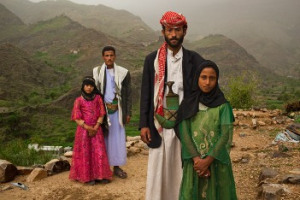
(March 2004) Wobete Falaga, who is from a village in the northern Gojam province in Ethiopia’s Amhara region, was only 13 when she became pregnant. Married at 11, just before her first menstrual period, her small underdeveloped body was not ready for the stress of childbirth. After five days of grueling labor at home, her child was finally born, but it was dead.
As a result of the long, strenuous labor, Wobete suffered crippling injuries. There was a hole, or fistula, between her bladder and vagina and another between her vagina and rectum. The damage left her body unable to control its normal excretory functions, and urine and feces were constantly dripping down her legs. Her husband quickly rejected her, sending her home to her family.
Wobete’s mother took her to the government health clinic in the province’s main town, Bahir Dar, but the nurses there said they were unable to treat the girl. They advised Wobete’s mother to take the girl to the capital Addis Ababa as soon as possible and said if her condition remained untreated, she would face death from infection and kidney failure. The family sold a cow to pay for the three-day bus journey and arrived penniless at the gates of the Addis Ababa Fistula Hospital with Wobete.
These are common tales for the hospital’s founder, Dr. Catherine Hamlin, an Australian gynecologist who has spent the last 44 years in Addis Ababa and is a pioneer in performing surgery for women with obstetric fistula.
“All the women who reach the gates of the hospital feel that their lives have been ruined” says Hamlin. “They have no self-worth and have become social outcasts from their community at a very young age through no fault of their own. They’ve suffered all this injury unnecessarily because they haven’t got enough obstetric care in the provinces.”
Defining the Problem
Reliable data on obstetric fistula are hard to come by because of the stigma associated with the condition. Describing it as the most devastating of all pregnancy-related disabilities,
the United Nations Population Fund (UNFPA) says obstetric fistula affects an estimated 50,000 to 100,000 women around the world every year and is particularly common in sub-Saharan Africa, where populations face challenges to obtaining quality health care. The World Health Organization estimates that at least 8,000 Ethiopian women develop new fistulas every year.
The condition occurs when a woman — usually one who is young and poor — has an obstructed labor and, lacking a skilled birth attendant and emergency obstetric care, does not get a Caesarean section when she needs it. The obstruction may occur because her pelvis is too small, the baby is badly positioned, or its head is too big. Underlying causes include childbearing at too early an age, poverty, malnutrition, and lack of education.
In an effort to prevent and treat the condition worldwide, UNFPA is spearheading a global campaign whose partners include governments, health care providers, and organizations such as the Addis Ababa Fistula Hospital, EngenderHealth, Columbia University’s Averting Maternal Death and Disability Program, the International Federation of Gynecology and Obstetrics, and the World Health Organization (WHO).
Getting Help
“The success rate of surgery to mend a woman’s fistula injuries is actually quite high,” says Hamlin. “In about 92 percent of the cases, we can close the hole in the bladder and in the rectum.” However, about 10 percent of the women who have been operated on come back for further surgery to correct a condition known as stress incontinence.
“After we have closed the fistula, although there is no urine leaking from the hole, it is still leaking from the normal channel because their muscles have all been damaged due to the stress of labor. If they cough or laugh, the urine runs out,” notes Hamlin.
Before you say that this doesn’t happen to Jewish women, keep in mind that the laws were very similar to other developing nations when the Bible was written.
.
The story of the woman with the hemorrage was included in all three synoptic gospels, which includes the Gospel of Mark.
When was Gospel of Mark written?
Dating and Origins of Mark’s Gospel. When Was the Gospel According to Mark Written? Because of the reference to the destruction of the Temple in Jerusalem in 70 CE (Mark 13:2), most scholars believe that Mark was written some time during the war between Rome and the Jews (66-74).
I think we can agree that this probably happened a great deal back in the year 70 CE and that the woman mentioned was probably living as an outcast as there was no medical intervention back then.
Thank all of you who contributed to this thread. In looking all this up I have a much better picture of what could have happened to that poor woman, all those years ago!

**



