the study of philosophy

  • Thread starter Thread starter jpjd
  • Start date Start date
Status
Not open for further replies.
J

jpjd

Guest
I’m feeling lately like I want to study philosophy for the purpose of understanding the truths of our faith better. As someone who has never studied philosophy before, how would I go about this?

Is it better to buy a book that overviews the major philosophers from antiquity to the present and their thought? Or is there a particular philosopher(s) that I should focus on that is in line with Catholic theology?

Also, what do you think of philosophy courses that are taught at college? I remember (way back when!) when my sister took a philosophy course in college (can’t remember if she took just one course or more than one, or what exactly they studied) but she practically became an atheist as a result. I have heard of this happening to other people too. Is this the nature of philosophy, or is it a result of bias in the way it’s taught?

I should clarify that my study of philosophy will not include taking college courses, it will be just my own reading.
 
Philosophy is a great subject for Catholics to be involved in, it is fascinating!

There are many many many branches of Philosophy, and most Religious or Non-Religious groups have made significant contribution - suggestions for where to start however do depend upon your knowlege or ability… But the “classic” Catholic theologian/philosopher was St Thomas Aquinas, and Alexander of Hales - these make a Great starting point!

Philosophy itself does not make one either atheist or theist (infact there are philosophies for proving God’s existence) - and it has some great ideas in it…

However, if you are an absolute beginner, and arn’t too confident, Socrates (recorded by Plato) is a great starter for all philosophers - because he uses day-to-day language and reads like a play rather than an essay - he even argues for monotheism, although not Catholosism, as he died about 400 BC 😛
 
Since you are a beginner, I recommend reading Copleston’s A History of Philosophy (see here). Just start at volume 1 and keep on going.
 
Considering that seminary formation for priests has philosophy as a foundation, yes it is a good idea to study philosophy! The Latin Church in particular builds from Plato and Aristotle to the Scholastics, and Thomistics (the philosophy of St. Thomas Aquinas) is considered the pinnacle.
 
Read Aquinas. Pick up the Summa Theologica to start. Follow that up with anything else you can pick up. Once you have aquinas under your belt you will have a LOT of logic in your thought patterns so you can better judge the truth of other arguments.

My .02

FSC.

And FTR, I am one of those weirdos who read Aquinas for bedtime reading. And it keeps me awake… Go figure…
 
Read Aquinas. Pick up the Summa Theologica to start. Follow that up with anything else you can pick up. Once you have aquinas under your belt you will have a LOT of logic in your thought patterns so you can better judge the truth of other arguments.

My .02

FSC.

And FTR, I am one of those weirdos who read Aquinas for bedtime reading. And it keeps me awake… Go figure…
As a Catholic and a professional historian, I would NOT start with Aquinas. Although he is wonderful, and I WOULD put him very early on the list, a beginner should probably start with Socrates/Plato/Aristotle, simply for the understanding of how philosophy develops, and because so many other philosophers refer to them. An overview book on some of the other Greek philosophies, especially the pre-Socratics and Sophists, would be helpful too.

Aquinas is a challenging read. The Platonic Dialogues are not. Let’s let him get his feet wet first. After the early Greek philosophers, I’d consider Aquinas next. Then, maybe something like Utopia by St. Thomas More, which is good because it incorporates elements of everyone I just mentioned. It’s a good test to see how much he can recognize.
 
As a Catholic and a professional historian, I would NOT start with Aquinas. Although he is wonderful, and I WOULD put him very early on the list, a beginner should probably start with Socrates/Plato/Aristotle, simply for the understanding of how philosophy develops, and because so many other philosophers refer to them. An overview book on some of the other Greek philosophies, especially the pre-Socratics and Sophists, would be helpful too.

Aquinas is a challenging read. The Platonic Dialogues are not. Let’s let him get his feet wet first. After the early Greek philosophers,** I’d consider Aquinas next.** Then, maybe something like Utopia by St. Thomas More, which is good because it incorporates elements of everyone I just mentioned. It’s a good test to see how much he can recognize.
It’s great advice, but I think if you jump into Aquinas without first engaging the Alexander of Hales, Abelard, Albertus Magnus and Augustine it would be hard to place his work in a clear context – and especially, like you say - Plato/Socrates/Aristotle.

👍
 
It’s great advice, but I think if you jump into Aquinas without first engaging the Alexander of Hales, Abelard, Albertus Magnus and Augustine it would be hard to place his work in a clear context – and especially, like you say - Plato/Socrates/Aristotle.

👍
You’re right about Augustine, I had simply forgotten about him. I would study him before St. Thomas Aquinas. You can get away with coming back to Alexander of Hales and Abelard. I know, because I have to teach some basics of philosophy in my Western Civilization course. I do spend a lot of time on Augustine, I skip Alexander of Hales completely, and Abelard gets about a 5 minute mention.
 
I’m feeling lately like I want to study philosophy for the purpose of understanding the truths of our faith better. As someone who has never studied philosophy before, how would I go about this?

Is it better to buy a book that overviews the major philosophers from antiquity to the present and their thought? Or is there a particular philosopher(s) that I should focus on that is in line with Catholic theology?

Also, what do you think of philosophy courses that are taught at college? I remember (way back when!) when my sister took a philosophy course in college (can’t remember if she took just one course or more than one, or what exactly they studied) but she practically became an atheist as a result. I have heard of this happening to other people too. Is this the nature of philosophy, or is it a result of bias in the way it’s taught?

I should clarify that my study of philosophy will not include taking college courses, it will be just my own reading.
Once i have finished writing my ebook i will email it to you free of charge;). In the mean time, i suggest that you read Edward Fesser’s “Aquinas/Beginners Guides”. Google his name.

You can download Aquinas’s summa theologica for free. But you might find it hard going.
 
Once i have finished writing my ebook i will email it to you free of charge;). In the mean time, i suggest that you read Edward Fesser’s “Aquinas/Beginners Guides”. Google his name.

You can download Aquinas’s summa theologica for free. But you might find it hard going.
Starting with Aquinas “Summa Theologia” without first reading Augustine, Aristotle and Alexander-of-Hales Summa fratris Alexandri is pretty much a recipie for failure for a new philosophy student.

And as an aside; MindOverMatter2 you seem a certainly capable thinker, I wouldn’t “settle for” an eBook when you could get it on paper - if an unqualified person like I can do it, you can 👍
 
Let’s let him get his feet wet first.
Oops, Rolltide, I think you meant, “Let’s let her get her feet wet first.” 😉

I am, of course, familiar with the names of Socrates, Plato, Aristotle, Augustine, and Aquinas, and I know a tiny bit about the Summa. But the Scholastics, Sophists, Alexander of Hales, Abelard, and Albertus Magnus are completely unknown to me.

As I read the posts of all of you discussing this, I am realizing that if I delve into the writings of one philosopher or another is, there is a problem. I don’t understand these people in the context of anything, i.e, what time period they lived in and in what order I should study these people, what other philosophers are there, why are there so many philosophers/philosophies, etc.

I need some kind of big picture, an overview, that puts all this into some kind of relationship or perspective. Can you recommend a book that approaches the subject this way?
 
I need some kind of big picture, an overview, that puts all this into some kind of relationship or perspective. Can you recommend a book that approaches the subject this way?
Each of the major philosophers and theologians works flow into eachother’s, either in agreement or disagreement… To try and reflect that in any single book would nessecarily compromise the material - each of the major works is in the hundreds or even thosands of pages!

The only way to approach it properly is chronologically:
  1. Plato / Socrates d347 BC/d399BC- The most accessible of the lot, does wonders for developing and demonstrating dialectical reasoning.
  2. Aristotle d322bc - Worked on Logic, the Physical sciences and many other areas - along with Plato and Socrates he is one of the major Greek influences on western thought.
  3. St Augustine d430ad - Developed Just war theory, talked about original sin and took an allegorical interpretation of Genesis. One of 33 Doctors of the Church.
  4. Abelard d1142 - Major Early figure in Scholasticism, he is responsible for the doctrine of Limbo, and it became a pracitice in later Scholastics to comment on his Sentances (book)
  5. Alexander of Hales d1245 - An important figure for the acciduous student of philosophy - he was the first to write a magesterial commentary on Abelards sentances, as well as promoting the re-discovered works of Aristotle; he promoted Anselm of Canterbury etc. Alexander’s “summa” became the basis for Aquinas’ later one, as well as being instumental in Bonaventure’s works.
  6. St Thomas Aquinas d1274 - Founded the school of Thomism, an approach to scholastic thought. Made extensive and thorough use of Logic, Metaphysics and Theology in his Summa Theoligica and other works - is Regarded as the best example for teaching Priests. One of 33 Doctors of the Church.
  7. St. Bonaventure d1274 - Represents an contrast to Thomism, offering philosophical and metaphysical claims that guarentee him a place in the list of most important philosophers. One of 33 Doctors of the Church.
  8. Saint Albertus Magnus d1280 - Advocates the coexistence of science and religion, covers areas from Botany to Logic, and is one of 33 Doctors of the Church.
  9. Roger Bacon d1294 - Helped crystalise Islamic, and Aristotelian thought into what resembles our current Scientific Method - Deserves a mention specifically for the philosophy of Science.
  10. Bl John Duns Scotus d1308 - Founded the school of Scotism, which opposes Thomism on some key points and doctrines such as univocity of being. A strong advocate of Realism.
  11. William of Ockham d1348 - A student of Scotus works, rejected many of the teachings of Scotism and especially Realism - He strongly advocated Nominalism / Conceptualism - he is most well known for his “Ockhams Razor” which is a logical principal “entities must not be multiplied beyond necessity”. Arguably the last major scholastic.
Other than those; The Islamic philosophers Averroes d1198 and Avicenna d1037 who were both polymaths and philosophers who’s work was highly influential.

If you read probably the core texts of those 13 or so Philosophers you will have a formidable grounding in the History of Philosophy; and will be well equipped to tackle (from a Catholic perspective) later philosophers in the Enlightenment who might be somewhat less religious.

It would only be dangerous if you jumped into Philosophy with someone like Nietzsche that you might be prone to questioning your faith - getting a solid ground in Christian philosophy first is highly reccomended!

👍
 
I’m feeling lately like I want to study philosophy for the purpose of understanding the truths of our faith better. As someone who has never studied philosophy before, how would I go about this?

Is it better to buy a book that overviews the major philosophers from antiquity to the present and their thought? Or is there a particular philosopher(s) that I should focus on that is in line with Catholic theology?

Also, what do you think of philosophy courses that are taught at college? I remember (way back when!) when my sister took a philosophy course in college (can’t remember if she took just one course or more than one, or what exactly they studied) but she practically became an atheist as a result. I have heard of this happening to other people too. Is this the nature of philosophy, or is it a result of bias in the way it’s taught?

I should clarify that my study of philosophy will not include taking college courses, it will be just my own reading.
You might enjoy listening to some .mp3 talks by Dr. Peter Kreeft, who teaches philosophy at Boston College, and is an excellent Catholic apologist from a philosophical standpoint.

Here’s my website, where you can download several of Dr. Kreeft’s talks (for free, of course):

alabamacatholicresources.com/dr_peter_kreeft.html
 
Starting with Aquinas “Summa Theologia” without first reading Augustine, Aristotle and Alexander-of-Hales Summa fratris Alexandri is pretty much a recipie for failure for a new philosophy student.

And as an aside; MindOverMatter2 you seem a certainly capable thinker, I wouldn’t “settle for” an eBook when you could get it on paper - if an unqualified person like I can do it, you can 👍
Thanks for the encouragement.🙂 I wouldn’t know the first thing about getting a book published on paper. For the time being i am just working with the resources available. Unfortunately I am poor at the moment. I will have to write the book first and then hope that its good enough for somebody to sponsor me. But thanks for the kind words. Watch out for trolls;).
 
Thank you JohnDamien for that runthrough of the major philosophers, and Scooby for the website link. I will check that out. My self-study of philosophy should be an interesting adventure!
 
I found several of the works of Mortimer J. Adler to be useful to me. These books:
The 4 Dimensions of Philosophy
Aristotle for Everybody
Ten Philosophical Mistakes

are 3 introductory works that are oriented towards the general reader rather than philosophy students (although I think that a lot of philosophy students might benefit from them also). He wrote many other books about philosophy, but these are a good introduction.

Adler was a Thomist/Aristotelian philosopher who converted to the Catholic faith shortly before his death, another example of someone reasoning his way into the Church.
 
There is some good advice here. I would add to your self study list Michael Sandel’s Justice. Here is a link to this legendary teacher’s book and PBS series. justiceharvard.org/ You might also take a look at Leo Strauss’ essay Jerusalem and Athens. Strauss was a major figure in 20th century philosophy who was on the scholars who make Ancient and Medieval thought relevent again to the challenges post by modern and post modern thoughtl. Susan Orr has a book length study of the J & A essay Jerusalem and Athens: Reason and Revelation in the Thought of Leo Strauss… You should also take a look at a collection of Strauss’ writing What is Polititical Philosophy ?
 
Ditto on starting with Plato.

He is the master and the foundation others built upon.
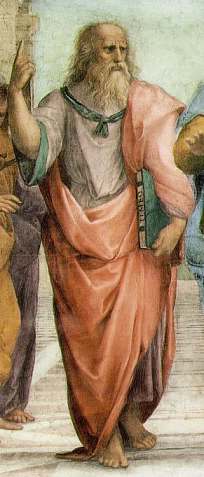


Someone once said something like: Philosophical writings after Plato are mere footnotes on his writings. I agree.

I would say to start, as Rolltide said, with the dialogues. The dialogues are simple to read, yet, profound. They will inniciate you in philosophical thought. They are simple but, they are not mere dialogues, you have to sip it like fine wine and savor and enjoy the taste. That is, to think about what each person is saying and compare their thoughts and evaluate them in the light of all the thoughts you may consider. Then, I would suggest The Republic. You may want to indulge with Plato for a while, before moving on to Aristotle. It will be time well invested for your journey into the world of philosophy.

One of the things that you will get out of it all is a refined ability to think and analyze. It’s like a gym for the brain. The only thing is that, after you have those muscles, you have them. It’s like learning to walk, once you learn and you walk, you are not going to crawl. Similarly, one of the products of the study of philosophical thinking is that you yourself become a thinker. As a thinker, your brain is always working and you cannot shut it off. You become an analytical thinker.

After Plato, I would suggest Aristotle. You probably already know that Aristotle was a student of Plato and Plato was a student of Socrates. Aristotle was more interested in the material world and I think he can safely be called the father of scientific thought.

Now, you asked about philosophy(Love of Wisdom) not theology. They finally do meet in two areas. For one, ultimately, the theologians continued to develop their ‘thinking’ using Platonic thought as a spring board or processes and ideas to reflect and consider. Secondly, I would say that theology is the crowning glory of pure philosophy. But, people after Plato continued to ‘philosophize’ so I think that it is interesting to get an overview of all the branches not just those of the christians.

One purchase I daydream of buying when I have the money and blessed with the time to enjoy reading philosophical writings (long after I have read a lot of Catholic writings which is my current interest), probably twenty or thirty years from now if I am not blind and not running a project or two, as I said, I daydream, is the Routledger Encyclopedia of Philosophy. I recommend it. Here is the online version. I just do not have the time nor the peace of mind nor interest right now, but, maybe someday. I can’t read for long on the computer either, my eyes get tired… rep.routledge.com/LOGIN?sessionid=ba93768f865f107a08a71174183a4d01&authstatuscode=400

I was looking for a copy of the Complete works of Plato by Oxford University Press but, did not find one. I recommend that you get a copy of the Complete Works of Plato ( one volume) The Complete Works of Aristotle (two volumes) this way you can skim the writings and get an overview of the selection and choose what pleases you to read next. Also, the Oxford translation is very good and has excellents notes. I would say to start with Nicomachean Ethics with Aristotle it is simple and short yet profound and it will pleasantly introduce you to his way of thinking.

While searching for the Complete works, I ran into this website and it has that quote I was thinking of and offers a nice little introduction to Plato.

“The safest general characterization of the European philosophical tradition is that it consists of a series of footnotes to Plato.” – Alfred North Whitehead, Process and Reality, 1929

mlahanas.de/Greeks/Bios/Plato.html

I hope this helps.

Peace,

Abba

 
After reading an introductory text on philosophy (several were already recommended in this post), you should read Mortimer’s Adler “How to Read a Book.” Afterwards, you should read through the philosophers/theologians that Adler recommends in the appendix to his book (also contained in the comprehensive “Great Books of the Western World” set).

Here are the list of philosophers/theologians in alphabetical order:
Plato
Aristotle
Lucretius
Epictetus
Marcus Aurelius
Plotinus
Augustine
Aquinas
Calvin
Bacon
Descartes
Spinoza
Pascal
Locke
Berkeley
Hume
Kant
Hegel
Kierkegaard
Nietzsche
William James
Bergson
Dewey
Whitehead
Russell
Heidegger
Wittgenstein
Barth

I am currently reading through the 10-year reading plan that was compiled by Adler and Hutchins at the end of the introductory collection of essays included in the “Great Books of the Western World” set published by Britannica Encyclopedia. It includes works of philosophy, religion, science, math, social science (history, economics, anthropology, sociology), and imaginative literature.

I’m almost finished with a Bachelor’s degree in Philosophy and Religion from Harrison Middleton University. If you are seeking to obtain a degree in this field, I recommend this school. URL: hmu.edu

In Christ,

Jacob
 
Status
Not open for further replies.
Back
Top