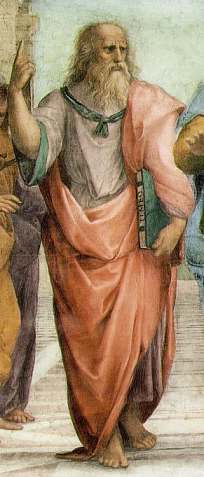
Ditto on starting with Plato.
He is the master and the foundation others built upon.
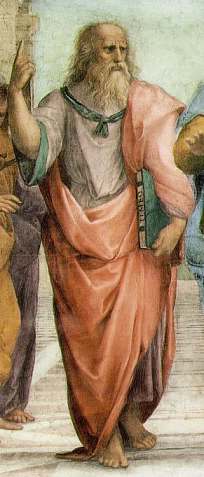
Someone once said something like: Philosophical writings after Plato are mere footnotes on his writings. I agree.
I would say to start, as Rolltide said, with the dialogues. The dialogues are simple to read, yet, profound. They will inniciate you in philosophical thought. They are simple but, they are not mere dialogues, you have to sip it like fine wine and savor and enjoy the taste. That is, to think about what each person is saying and compare their thoughts and evaluate them in the light of all the thoughts you may consider. Then, I would suggest The Republic. You may want to indulge with Plato for a while, before moving on to Aristotle. It will be time well invested for your journey into the world of philosophy.
One of the things that you will get out of it all is a refined ability to think and analyze. It’s like a gym for the brain. The only thing is that, after you have those muscles, you have them. It’s like learning to walk, once you learn and you walk, you are not going to crawl. Similarly, one of the products of the study of philosophical thinking is that you yourself become a thinker. As a thinker, your brain is always working and you cannot shut it off. You become an analytical thinker.
After Plato, I would suggest Aristotle. You probably already know that Aristotle was a student of Plato and Plato was a student of Socrates. Aristotle was more interested in the material world and I think he can safely be called the father of scientific thought.
Now, you asked about philosophy(Love of Wisdom) not theology. They finally do meet in two areas. For one, ultimately, the theologians continued to develop their ‘thinking’ using Platonic thought as a spring board or processes and ideas to reflect and consider. Secondly, I would say that theology is the crowning glory of pure philosophy. But, people after Plato continued to ‘philosophize’ so I think that it is interesting to get an overview of all the branches not just those of the christians.
One purchase I daydream of buying when I have the money and blessed with the time to enjoy reading philosophical writings (long after I have read a lot of Catholic writings which is my current interest), probably twenty or thirty years from now if I am not blind and not running a project or two, as I said, I daydream, is the Routledger Encyclopedia of Philosophy. I recommend it. Here is the online version. I just do not have the time nor the peace of mind nor interest right now, but, maybe someday. I can’t read for long on the computer either, my eyes get tired…
rep.routledge.com/LOGIN?sessionid=ba93768f865f107a08a71174183a4d01&authstatuscode=400
I was looking for a copy of the Complete works of Plato by Oxford University Press but, did not find one. I recommend that you get a copy of the Complete Works of Plato ( one volume) The Complete Works of Aristotle (two volumes) this way you can skim the writings and get an overview of the selection and choose what pleases you to read next. Also, the Oxford translation is very good and has excellents notes. I would say to start with Nicomachean Ethics with Aristotle it is simple and short yet profound and it will pleasantly introduce you to his way of thinking.
While searching for the Complete works, I ran into this website and it has that quote I was thinking of and offers a nice little introduction to Plato.
“The safest general characterization of the European philosophical tradition is that it consists of a series of footnotes to Plato.” – Alfred North Whitehead, Process and Reality, 1929
mlahanas.de/Greeks/Bios/Plato.html
I hope this helps.
Peace,
Abba



 . In the mean time, i suggest that you read Edward Fesser’s “Aquinas/Beginners Guides”. Google his name.
 I wouldn’t know the first thing about getting a book published on paper. For the time being i am just working with the resources available. Unfortunately I am poor at the moment. I will have to write the book first and then hope that its good enough for somebody to sponsor me. But thanks for the kind words. Watch out for trolls