"Death is swallowed up in victory.
Where, O death, is your victory?
Where, O death, is your sting?”
1Corinthians 15: 54-55
Unfortunately, for many people, Easter comes and goes.
There is the Resurrection connection to Genesis 2:15-17, the True Creation Story.
Unfortunately, what can happen when readers are so intent about this or that science in the first section of the first three sacred chapters of Genesis – they often miss the fact that the animal world includes death. Years back, on CAF, there was an interesting proposal that humans belong in the Animal Kingdom because they have a material decomposing anatomy which does not skip the dying process.
Unfortunately, the this or that about science in the true beginning of Genesis slides by the most essential truth of all time. “
In the beginning, when God created the heavens and the earth,” Genesis 1: 1, followed by Genesis 1: 27. When people are so occupied by that metaphor and this metaphor, there is the chance that they will slide by the dramatic shift from Genesis 1: 25 to Genesis 1: 26.
First, God is almighty present and then we learn His almighty action in creating our first real human ancestor Adam. Genesis 1: 27. We know Adam is first because of the additional info in Genesis 2:18.
Instead of going with the crowd which either ignores or tampers simple Catholic teachings flowing from the basic first three chapters of Genesis, this Easter look at what Genesis 2:15-17 is teaching about eternal joy. One may have to stand on one’s head to get this message because it is the “reverse side” which is important.
Where is the eternal death that belongs naturally to our material animal blood and bones, skin and guts? It is displaced by our participation in God’s loving friendship seen in Genesis 3: 9. It is God, not Adam, Who, in Genesis 1: 27, makes it possible for us to have eternal joy in God’s loving presence following bodily death.
In those first loving chapters of Sacred Scripture, we find the human Adam giving up his original friendship relationship with his Creator. With intellective free choice, Adam disobeys and loses the original victory over death. He ignored Genesis 2:17. Victory is swallowed up by the first human’s free yielding to temptation.
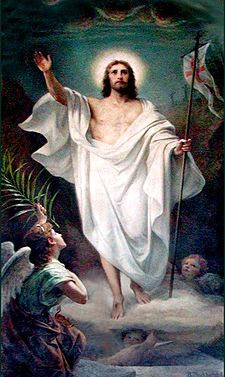
Easter reminds us that Jesus, assuming human nature, stepped into Adam’s sandals in order to repair the broken original relationship between Divinity and humanity.
Long ago, we would say that the Resurrection opened the gates of heaven.