K
KatholikosMercy
Guest
Vulgate
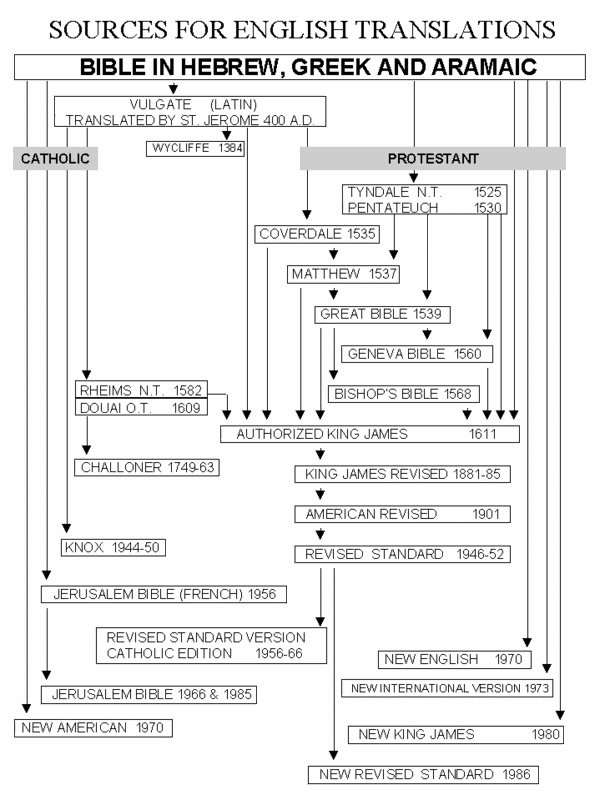
The Vulgate is the Latin version of the Bible prepared by St. Jerome (382-404), at the request of Pope St. Damasus I.
He translated the Old Testament directly from the original Hebrew, Aramaic and Greek, and revised the existing Latin text of the New Testament.
“Vulgate” means “common” or “popular”, since Latin was the popular language in Europe at the time. This translation was done in a language they could understand. Very few knew how to read.
The Vulgate was used through the centuries and was declared the official Latin text of the Bible for Catholics by the Council of Trent (1545-63).
It was from the Vulgate that almost all English Catholic translations were made until the middle of the 20th century, when scholars began to use original sources.
It remained the official Latin text of the Bible for the Catholic Church until Pope John Paul II replaced it with the New Vulgate in 1979.
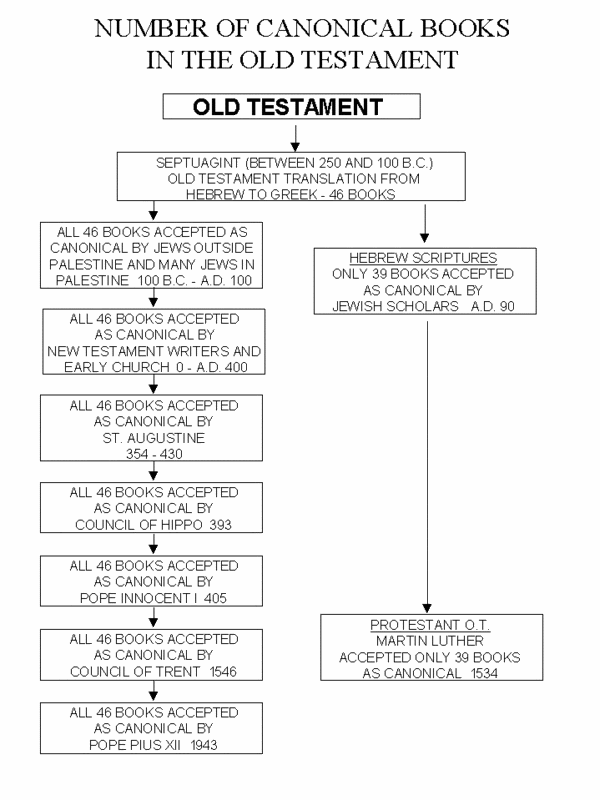
Catholic Christians and non-Catholic Christians believe that the Bible is the inspired Word of God. This belief is based on their acceptance of the fact that the Catholic Church had the authority to declare which books were inspired and should be included in the list of sacred books or “Canon”, and which should not be included.
The Catholic Church knew it had this authority and guidance because:
Jesus gave His Apostles and Church the gift of the Holy Spirit when He said. “… ‘Receive the Holy Spirit.’” (John 20:22).
Jesus also said, “However, when He, the Spirit of truth, has come, He will guide you into all truth” (John 16:13).
It is impossible that the Holy Spirit, the Spirit of Truth, would lead the Church in an error for 1900 years. Such a promise was made to the Church alone.
Martin Luther decided to reject that and to accept the Hebrew Bible since it did not have the 2nd Book of Maccabees which says, “It is a holy and wholesome thought to pray for the dead that they may be loosed from their sin.” (2 Maccabees 12:46 NAB).
Luther did not agree with praying for the dead. He did not accept seven books of the Old Testament, and also did not accept these New Testament books: Hebrews, 2 John, 3 John, James, Jude, 2 Peter and Revelation. These books contained teachings which did not agree with his teaching.
By the year 1700, however, Lutheran scholars had restored these books to the New Testament. We must remember that Jesus promised that His Spirit would be with His Church (John 14:11-12) and that the Spirit of Truth would guide the Church into all truth (John 16:13). Paul said, “… which is the church of the living God, the pillar and ground of the truth” (1 Timothy 3:15).
So the Spirit of Truth guides the Church in all truth, not an individual person.
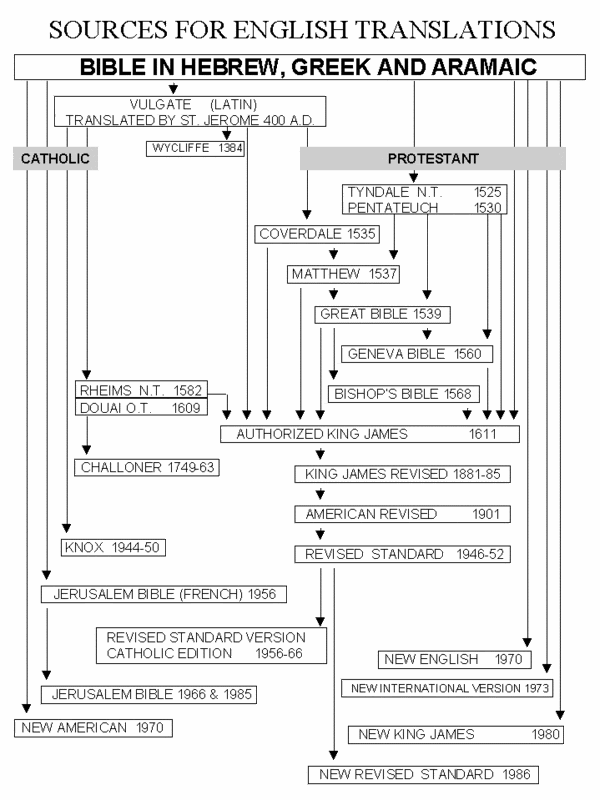


The Vulgate is the Latin version of the Bible prepared by St. Jerome (382-404), at the request of Pope St. Damasus I.
He translated the Old Testament directly from the original Hebrew, Aramaic and Greek, and revised the existing Latin text of the New Testament.
“Vulgate” means “common” or “popular”, since Latin was the popular language in Europe at the time. This translation was done in a language they could understand. Very few knew how to read.
The Vulgate was used through the centuries and was declared the official Latin text of the Bible for Catholics by the Council of Trent (1545-63).
It was from the Vulgate that almost all English Catholic translations were made until the middle of the 20th century, when scholars began to use original sources.
It remained the official Latin text of the Bible for the Catholic Church until Pope John Paul II replaced it with the New Vulgate in 1979.
Catholic Christians and non-Catholic Christians believe that the Bible is the inspired Word of God. This belief is based on their acceptance of the fact that the Catholic Church had the authority to declare which books were inspired and should be included in the list of sacred books or “Canon”, and which should not be included.
The Catholic Church knew it had this authority and guidance because:
- “And I will pray the Father, and He will give you another Helper, that He may abide with you forever - the Spirit of truth” (John 14:16-17)
- “However, when He, the Spirit of Truth, as come, He will guide you into all truth” (John 16:13)
- “… I am with you always, even to the end of the age” (Matthew 28:20)
- “Whatever you bind on earth will be bound in heaven, and whatever you loose on earth will be loosed in heaven” (Matthew 16:19)
- “… it has now been revealed by the Spirit to His holy apostles and prophets” (Ephesians 3:5)
- “… the church of the living God, the pillar and ground of the truth” (1 Timothy 3:15)
Jesus gave His Apostles and Church the gift of the Holy Spirit when He said. “… ‘Receive the Holy Spirit.’” (John 20:22).
Jesus also said, “However, when He, the Spirit of truth, has come, He will guide you into all truth” (John 16:13).
It is impossible that the Holy Spirit, the Spirit of Truth, would lead the Church in an error for 1900 years. Such a promise was made to the Church alone.
Martin Luther decided to reject that and to accept the Hebrew Bible since it did not have the 2nd Book of Maccabees which says, “It is a holy and wholesome thought to pray for the dead that they may be loosed from their sin.” (2 Maccabees 12:46 NAB).
Luther did not agree with praying for the dead. He did not accept seven books of the Old Testament, and also did not accept these New Testament books: Hebrews, 2 John, 3 John, James, Jude, 2 Peter and Revelation. These books contained teachings which did not agree with his teaching.
By the year 1700, however, Lutheran scholars had restored these books to the New Testament. We must remember that Jesus promised that His Spirit would be with His Church (John 14:11-12) and that the Spirit of Truth would guide the Church into all truth (John 16:13). Paul said, “… which is the church of the living God, the pillar and ground of the truth” (1 Timothy 3:15).
So the Spirit of Truth guides the Church in all truth, not an individual person.