Ultramontanism was/is a faction in the church.
It represents an idea that really (surprisingly) is not traditional. The early church ecclesiology was not Ultramontanist. I think that the earliest hints of it can be traced to the Gregorian Reformation, in the eleventh century, and the ideas developed from that point onward.
As has been pointed out in this thread, the full Ultramontanist agenda was not adopted at Vatican I, but I might add that by succeeding in making Papal universal jurisdiction a dogma instead of a discipline or a theologoumena (or pious opinion), the Ultramontanists of the day effectively put a lock on the church position which cannot be reversed. It (albeit a truncated form) is the formal official position of the church. Although recent Popes have been loosening the reins quite a bit as a matter of preference, they cannot actually let them go and future Popes could govern more closely if they so choose, just by exercising their prerogatives.
So yes, it is relevant.
Wow.
A very strong case can be made that he ordered the murder of Saint Celestine. That topic could be another thread in itself.
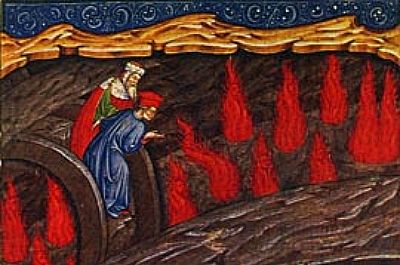
Not for nothing did Dante feature him prominently in the hell of the Simoniacs. That would be good for a third thread.
http://davelafferty.com/wp-content/uploads/2008/08/guido.jpg
Pax et Bonum,

 But you should know that decisions to call councils are not fallible or infallible. They are just decisions, and therefore not concerned with infallibility.