Ultramontanism

  • Thread starter Thread starter Young_Thinker
  • Start date Start date
Status
Not open for further replies.
Y

Young_Thinker

Guest
Hello to all. I was curious as to what others feel about the ideology of Ultramontanism(literally beyond the mountains, in reference to the Alps), which emphasizes the supremacy of papal authority? From what I know, there have been two schools of this thought, one originating in the Middle Ages and another after the First Vatican Council. I would appreciate any thoughts upon this interesting perspective.
 
As I have mentioned in another discussion, as a priest, I would be an ultramontane Traditionalist. Does anyone else see this concept as being at all relevant today?
 
As I have mentioned in another discussion, as a priest, I would be an ultramontane Traditionalist. Does anyone else see this concept as being at all relevant today?
I think it is still relevant, but an ultramontane is not a compliment IMHO. It refers to someone that is extreme in his position. For example you still have ultramontane opinions on papal infallibility. It was detrimental during Vatican I, and it still is today.
 
Hi Thinker, Ambrose.

I thought that as it applied to Vatican I and papal infallibility, the Ultramontanes wanted a wider sweep than was given for when the pope is teaching infallibly. If I am correct in this, I have to agree with Ambrose. I do not believe that every public utterance of the popes rises to that level of certainty. I think I would have taken much longer to become Catholic if I were bound to accept every public teaching of every pope. I would be troubled about it now if the Church were to move in that direction.

It was interesting though to hear how the term came into being. Ordinarily, “ultra-anything” is bad before you even unpack the arguments. If I a mistaken in this Young Thinker, please share more about what you mean in considering yourself ultramontanist.

Thanks,

Rory
 
I think it is still relevant, but an ultramontane is not a compliment IMHO. It refers to someone that is extreme in his position. For example you still have ultramontane opinions on papal infallibility. It was detrimental during Vatican I, and it still is today.
All right.
 
Hi Thinker, Ambrose.

I thought that as it applied to Vatican I and papal infallibility, the Ultramontanes wanted a wider sweep than was given for when the pope is teaching infallibly. If I am correct in this, I have to agree with Ambrose. I do not believe that every public utterance of the popes rises to that level of certainty. I think I would have taken much longer to become Catholic if I were bound to accept every public teaching of every pope. I would be troubled about it now if the Church were to move in that direction.

It was interesting though to hear how the term came into being. Ordinarily, “ultra-anything” is bad before you even unpack the arguments. If I a mistaken in this Young Thinker, please share more about what you mean in considering yourself ultramontanist.

Thanks,

Rory
You are welcome. As for myself, I was talking about espousing ultramontanism more akin to that before 1870; that is, adamantly supporting the Pope’s ecclesiastical and temporal pregoratives(e.g. even though he was a little ruthless, one of my favorite Popes is Boniface VIII) rather than taking an extreme position upon papal infallibility. Obviously, since I dislike the effects of Vatican II, I would say that that was an infallible decision upon the part of John XXIII(and subsequent ones by Paul VI).
 
I think it is still relevant, but an ultramontane is not a compliment IMHO. It refers to someone that is extreme in his position. For example you still have ultramontane opinions on papal infallibility. It was detrimental during Vatican I, and it still is today.
I agree with AmbroseSJ here.
 
I have always compared neomontanism to Pentecostalism. I’ve never heard of ultramontanism before.
 
You are welcome. As for myself, I was talking about espousing ultramontanism more akin to that before 1870; that is, adamantly supporting the Pope’s ecclesiastical and temporal pregoratives(e.g. even though he was a little ruthless, one of my favorite Popes is Boniface VIII) rather than taking an extreme position upon papal infallibility. Obviously, since I dislike the effects of Vatican II, I would say that that was an infallible decision upon the part of John XXIII(and subsequent ones by Paul VI).
The Church has never taught that the popes may not have temporal power too, and has taken actions in the past that would imply that it is perfectly compatible with the office.

Maybe you could expand on what you mean by ecclesiastical prerogatives? I have often wished the modern popes would exercise their prerogatives to discipline those in his flock who he speaks out against in encyclicals and sermons. Its like they think they are the “Holy Advisers” instead of Holy Fathers. Here we live in a world of instant communication with a monarchical hierarchy pertfectly established by Christ for needed reforms and actions, and yet, the modern popes give an appearance of being hog-tied, at least I hear all the time how the pope would like to do this and like to do that but he can’t. Why not?

Why not? I am a father. Am I going to be able to claim on the day of judgment that I wanted to discipline my child but couldn’t? No. I have the authority and I have to have the courage to exercise it, wisely, lovingly, and prudently. I think the popes have authority that they have ceded to others. I see them like a parent entrusting their child to the public schools, and then hoping to be blameless when the children emerge uneducated, faithless, and social misfits. No. I needed the courage to not be cowed into doing what everybody else does. We homeschooled. We have been since 1987 and our last one looks like he is heading to a Traditional seminary next year. But when it comes to Catholic education, the bishops and pope act like they believe in separation of church and academics. Whose in charge? Not Barack Obama. Not the educators. Its somebody’s fault.

I toot my horn and preach. I could tell where I have failed too. But it is/was MY fault. I lacked courage and lacked charity when I failed. I’ll have to answer for that someday too. Hopefully I can do penance. In any case, we need priests and popes of courage and charity and parents with courage to use their God-given authority to do things that the world despises! If that is Ultramontanism, I’m on board too.

Rory

PS: There are circumstances where the only option for various reasons might be to use public schooling. Sure. I don’t even want the discussion to go that way. Just anticipating the storm. Parents have the authority. No matter what we do, we have to be overseers.
 
I guess it depends on how you want to define ultramontansim. It was used to refer to so many ideas that I can’t seem to pin down a good, general definition to form enough of an opinion of it other than I can support it insofar as it refers to papal primacy as opposed to Gallicanism and infallibility as defined by VI. The attitude I’ve mostly come across though, is a sort of disturbing neo-ultramontanism that ultimately boils down to papolatry and which no Catholic should adhere to.
 
As I have mentioned in another discussion, as a priest, I would be an ultramontane Traditionalist. Does anyone else see this concept as being at all relevant today?
Ultramontanism was/is a faction in the church.

It represents an idea that really (surprisingly) is not traditional. The early church ecclesiology was not Ultramontanist. I think that the earliest hints of it can be traced to the Gregorian Reformation, in the eleventh century, and the ideas developed from that point onward.

As has been pointed out in this thread, the full Ultramontanist agenda was not adopted at Vatican I, but I might add that by succeeding in making Papal universal jurisdiction a dogma instead of a discipline or a theologoumena (or pious opinion), the Ultramontanists of the day effectively put a lock on the church position which cannot be reversed. It (albeit a truncated form) is the formal official position of the church. Although recent Popes have been loosening the reins quite a bit as a matter of preference, they cannot actually let them go and future Popes could govern more closely if they so choose, just by exercising their prerogatives.

So yes, it is relevant.
… even though he was a little ruthless, one of my favorite Popes is Boniface VIII …
Wow.

A very strong case can be made that he ordered the murder of Saint Celestine. That topic could be another thread in itself.

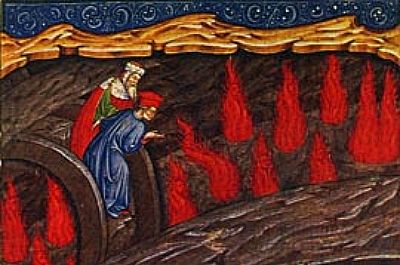
Not for nothing did Dante feature him prominently in the hell of the Simoniacs. That would be good for a third thread.


Pax et Bonum,
 
As I have great respect for the papacy and so deeply love our present Holy Father, I used to think I’d favor the Ultramontanes (here I’m speaking of the 1860-70s group), but when I looked into it, I could not. I was shocked at how extreme they were. And how extremely they reacted against those who did not agree with them, as if I would not be a good Catholic if I didn’t feel the same as they. They were seeking a far more powerful definition than what resulted. The times also added to the fervor, with the nationalists spreading over Italy. I can certainly understand how the threat to the Papal States would intensify emotions; it makes me angry over what happened and I’m living a hundred-plus years after. I’ve read of the Venerable John Henry calling the Holy Father’s enemies “sacrilegious robbers” and stamping his foot in anger, and his was a gentle soul.

BTW, AmbroseSJ, I was so pleased to see your profile name; last night’s reading of Ward’s Life of Newman concerned the sad episode of dear Father Ambrose’s death. As always it was difficult for me to read – God gave Father Newman such a gift in him.

Anyway, to return. I could not group myself with the Ultramontanes of the 19th century, but Our Lord gave us a shepherd to guide us and so he should. It is as the popes walk and while some may ease the authority, some may tighten, but they can never fully let go until He who gave the keys comes again.
 
Young Thinker:
Obviously, since I dislike the effects of Vatican II, I would say that that was an infallible decision upon the part of John XXIII(and subsequent ones by Paul VI).
You do have an ultramontane streak in you already! 😉 But you should know that decisions to call councils are not fallible or infallible. They are just decisions, and therefore not concerned with infallibility.

amsjj: I enjoyed Ward’s life of Newman as well! Have you read Ian Kerr’s? I believe his biography surpasses even Ward’s! 🙂
 
Ultramontanism was/is a faction in the church.

It represents an idea that really (surprisingly) is not traditional. The early church ecclesiology was not Ultramontanist. I think that the earliest hints of it can be traced to the Gregorian Reformation, in the eleventh century, and the ideas developed from that point onward.

As has been pointed out in this thread, the full Ultramontanist agenda was not adopted at Vatican I, but I might add that by succeeding in making Papal universal jurisdiction a dogma instead of a discipline or a theologoumena (or pious opinion), the Ultramontanists of the day effectively put a lock on the church position which cannot be reversed. It (albeit a truncated form) is the formal official position of the church. Although recent Popes have been loosening the reins quite a bit as a matter of preference, they cannot actually let them go and future Popes could govern more closely if they so choose, just by exercising their prerogatives.

So yes, it is relevant.

Wow.

A very strong case can be made that he ordered the murder of Saint Celestine. That topic could be another thread in itself.

Not for nothing did Dante feature him prominently in the hell of the Simoniacs. That would be good for a third thread.

http://davelafferty.com/wp-content/uploads/2008/08/guido.jpg

Pax et Bonum,

All right. As for my interest in Boniface VIII, I am usually attracted to very strong personalities.When I said Traditionalism, I meant in the miodern sense(i.e. disliking Vatican II).
 
You do have an ultramontane streak in you already! 😉 But you should know that decisions to call councils are not fallible or infallible. They are just decisions, and therefore not concerned with infallibility.

amsjj: I enjoyed Ward’s life of Newman as well! Have you read Ian Kerr’s? I believe his biography surpasses even Ward’s! 🙂
Oh, I meant that their decisions were not infallible. I am sorry. I, myself, have not read the biography by Ian Kerr. Thank you for speaking of it.
 
As I have great respect for the papacy and so deeply love our present Holy Father, I used to think I’d favor the Ultramontanes (here I’m speaking of the 1860-70s group), but when I looked into it, I could not. I was shocked at how extreme they were. And how extremely they reacted against those who did not agree with them, as if I would not be a good Catholic if I didn’t feel the same as they. They were seeking a far more powerful definition than what resulted. The times also added to the fervor, with the nationalists spreading over Italy. I can certainly understand how the threat to the Papal States would intensify emotions; it makes me angry over what happened and I’m living a hundred-plus years after. I’ve read of the Venerable John Henry calling the Holy Father’s enemies “sacrilegious robbers” and stamping his foot in anger, and his was a gentle soul.

BTW, AmbroseSJ, I was so pleased to see your profile name; last night’s reading of Ward’s Life of Newman concerned the sad episode of dear Father Ambrose’s death. As always it was difficult for me to read – God gave Father Newman such a gift in him.

Anyway, to return. I could not group myself with the Ultramontanes of the 19th century, but Our Lord gave us a shepherd to guide us and so he should. It is as the popes walk and while some may ease the authority, some may tighten, but they can never fully let go until He who gave the keys comes again.
Interesting!
 
Status
Not open for further replies.
Back
Top