C
Contarini
Guest
Again, you like big resounding terms which you don’t bother to define. I assure you that I do believe some things are always true and good and others are always bad and false. Your misuse of language and your willingness to make uninformed and unjust remarks about other religions is the kind of behavior that is always bad and false. So no, I’m not a relativist and you’re just starting one more false trail to distract from the indefensibility of your position.Edwin,
Your argument seems to be of a relativistic nature
It has nothing to do with relativism. It has to do with precise use of language.as is obvious with your objections to terms such as “objective Truth” “false religions” etc.
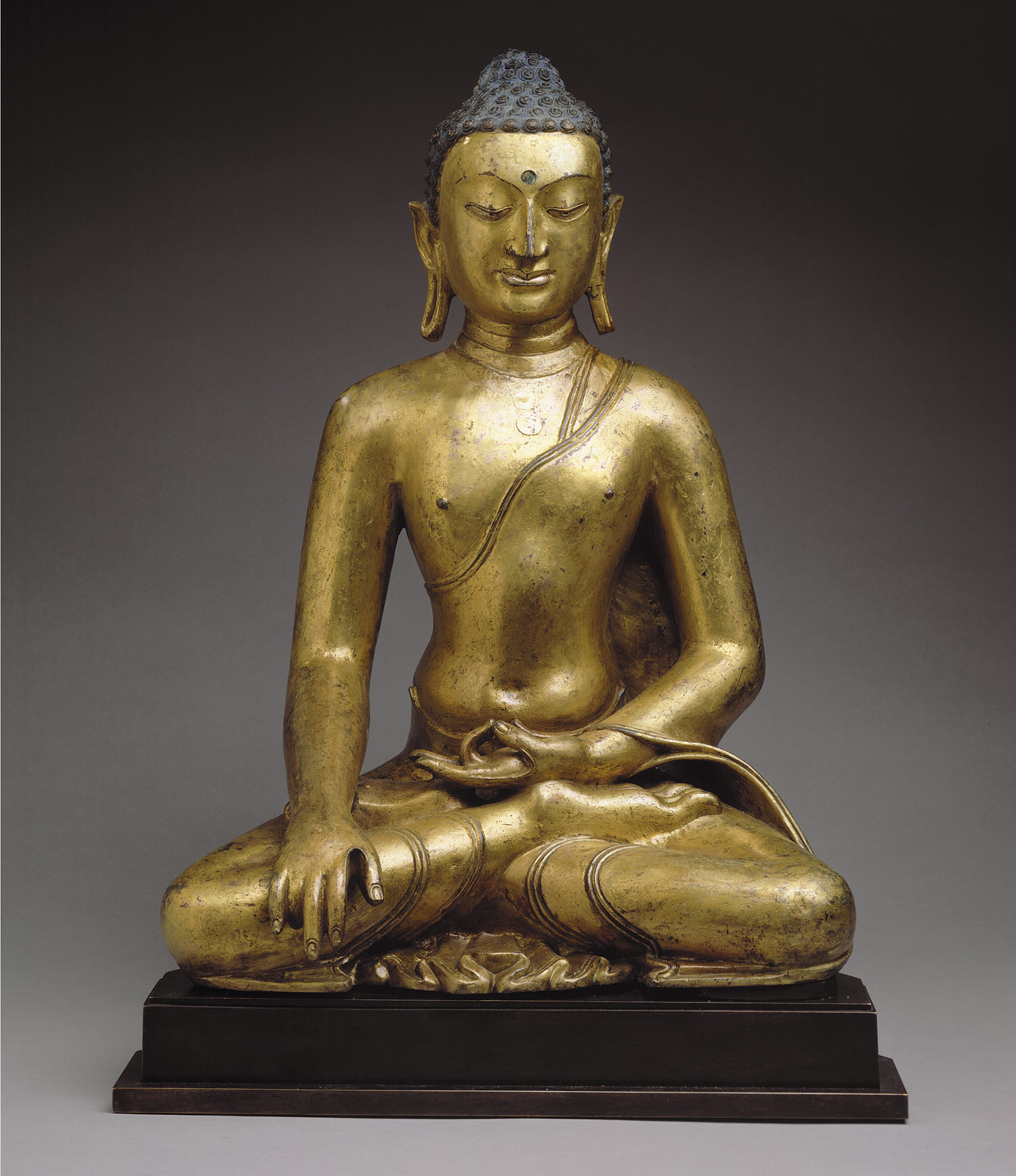
Sorry, but that doesn’t work in the context of this discussion. Let me refresh your memory. You advocated the destruction of an image of the Buddha, and defended this by appealing to the actions of ancient saints who destroyed the images of European deities. Furthermore, in post 89 you compared the statue of Buddha to “a statue of the devil,” arguing that if one should be destroyed then the other should as well. The only reasonable conclusion to draw is that for you there is no significant difference among Buddhism, ancient European paganism, and Satan worship with regard to the level of falsehood and evil found among them. That is the context in which I was interpreting your use of the term “false religion.” If you do not think that Buddhism as as false as Satanism or various forms of ancient European paganism (not that those two are by any means the same thing), then it is only your fault that I didn’t get the message.Concerning the latter there is no point in putting more meaning into the term than is necessary which only illustrates a certain level of misunderstanding or possibly bad will. Had I wanted to express the idea of a completely false religion I would have said so by use of the terms “utterly false religion” or “completely false”.
This is what we are arguing about: your explicit comparison of the veneration of Buddha to
a) the worship of ancient pagan deities and
b) the explicit and deliberate worship of Satan.
But what you have not done is make the case that Buddhism is analogous to a fruit in “an advanced stage of decay, inedible without bodily harm” rather than one that has some bad bits.I thought my apple anaolgy would get the point across but evidently that is not possible if you cannot tell the difference between a fruit that is “going bad” and one that is bad. The former consists of an advanced degree of ripening which some may not find suitable to their liking but nevertheless completely edible. The latter consists of an advanced stage of decay, inedible without bodily harm. My example was of the latter.
Again, you are using vague language. What do you mean by “leave it alone”? I certainly don’t think that Christians should refrain from talking about their faith to Buddhists. I don’t think human beings should ever “leave each other alone” in the sense of refraining from interacting with other human beings in a way that conduces to our mutual pursuit of truth, beauty, and goodness. And what Christians have to bring to that mutual pursuit is the message of the Gospel. Of course we should share it.The implication of your arguments would induce someone to believe that buddhism expresses enough truth that one should leave it alone; they’re well on their way.
And of course one can’t say that all Buddhists are “well on their way” to final union with God. Some may be treading the path of destruction. So may many Christians.
If “leave it alone” means that we shouldn’t go around destroying statues of Buddha (which is, after all, the subject of this thread), then yes, I think we should leave Buddhism alone. I don’t think we can say with confidence that the veneration of Buddha is a wicked thing analogous or equivalent to the worship of Satan. In fact, I think I can say with some degree of confidence that it isn’t.