
What level of responsibility do you feel for the negative impacts of anthropogenic climate change?

  • Thread starter Thread starter lynnvinc
  • Start date Start date
Status
Not open for further replies.
I’m not one that says we should advance “new” energy sources via subsidies and I oppose things like the hybrid tax credit and similar. But I also think that costs related to oil dependancy should be reflected in the cost of OIL so that the free markets DO eventually favor alternatives when they become viable. Our current approach artificially suppresses the cost of oil dependency and that can’t last much longer (we can’t afford the next trillion dollar war).
One needn’t worry about the next trillion dollar war. Even if China invades Canada, we probably won’t do anything about it. It’s one thing to throw missiles at feeble and divided Libya. It’s another to actually have a full-scale war.

There was oil in Libya. None in Afghanistan, of course. So, if one attributes all the wars to a desire for cheap oil, we’re two for one in recent years. In Vietnam, of course, we didn’t know there was oil in the South China sea in any quantity. There was none in Korea, and none in Germany or Japan.

In talking about how war costs should be incorporated into the cost of oil, one has to ask just who should be paying it. Should OPEC be encouraged to raise the cost of oil so the Germans are obliged to pay more for oil? Or should the U.S. forces in Germany simply take over the Bundesbank and take the money by force of arms? Or should our government simply tax Americans so our cost of oil is the highest on earth?

War or no war, OPEC charges what it thinks the market will bear. So does non-OPEC Canada, one of our major sources. So does non-OPEC Mexico, our other one. I don’t think any of them consider the cost of wars the U.S. has been in.

It can also be considered that in 2007, when the tax take was about the same as now, the deficit was about 1/10 what it is now on an annual basis, with two wars going full bore.

In thinking about that, one might consider other possibilities regarding the cost of petroleum, like perhaps inflationary overspending by a government that runs unprecedented deficits even when one war was shut down.
 
Ridge,

Don’t put words in my mouth. I never said all wars were about oil. But even as one who supported them at the time, hindsight prety clearly says that both Iraq wars were about preventing Sadaam from disrupting global oil sales. (Note that I’m NOT claiming we went to war to get oil for Exxon or whathaveyou). Our strategic interest there was ALL about oil both times.

No, we don’t buy much oil from the Middle East. But oil is a GLOBAL commodity. If the curtain goes up and the Persian Gulf is closed for business, guess what happens? Venezuelan, Canadian and even domestic oil prices go ballistic.

You’re right to point out that it’s unfair to burden US oil users with the cost of stabilizing the global oil trade. But you fail to realize that we’re ALREADY unilaterally bearing that cost via stealing from our grandchildren to pay for both Iraq wars. At least if we rolled it into the cost we paid for oil, we’d be SEEING what global reliance on oil really costs and maybe we’d choose something cheaper. Again, we ARE incurring those costs, we just currently pretend that they are unrelated to oil.
 
Ridge,

Don’t put words in my mouth. I never said all wars were about oil. But even as one who supported them at the time, hindsight prety clearly says that both Iraq wars were about preventing Sadaam from disrupting global oil sales. (Note that I’m NOT claiming we went to war to get oil for Exxon or whathaveyou). Our strategic interest there was ALL about oil both times.

No, we don’t buy much oil from the Middle East. But oil is a GLOBAL commodity. If the curtain goes up and the Persian Gulf is closed for business, guess what happens? Venezuelan, Canadian and even domestic oil prices go ballistic.

You’re right to point out that it’s unfair to burden US oil users with the cost of stabilizing the global oil trade. But you fail to realize that we’re ALREADY unilaterally bearing that cost via stealing from our grandchildren to pay for both Iraq wars. At least if we rolled it into the cost we paid for oil, we’d be SEEING what global reliance on oil really costs and maybe we’d choose something cheaper. Again, we ARE incurring those costs, we just currently pretend that they are unrelated to oil.
I think one could reasonably claim that Iraq War, phase I was about oil, and practically the whole world knew it and joined in the war. I don’t think one can reasonably say Phase II was about oil.

And most definitely the U.S. borrowed a lot of money to simultaneously have two wars and create new benefits like Medicare Part D, “No Child Left Behind” and so on.

But that’s not really what’s going on with the deficits we keep racking up presently. Current deficits are about attempted middle class welfare programs like Obamacare, “Cash for Clunkers” the “stimulus”, subsidies to unions, and the total refusal to keep payments to government programs from growing faster than inflation.

No matter what we do to make oil more expensive, it won’t cure any of that.
 
I certainly agree that making oil wars be paid for in the price of oil wouldn’t cure all our ills. But I DO assert that moving in the direction of making things cost WHAT THEY COST instead of massive shifting of costs is a STEP towards fiscal sanity we badly need. That applies to both oil AND health care (and a lot of other things).
 
My take on fossil fuel CO2 emissions is that the hysterical focus on this issue alone is similar to people wringing their hands and demanding laws and policies be enacted against New Orleans drunks from peeing off the levee during hurricanes since it could contribute to elevated water levels and subsequent overtopping of those levees!
Not really. When one focuses on reducing their CO2 or GHG emissions, the measures to do so also reduce other pollutants that cause health harms, etc, help save lives, save resources for future generations, reduce need for military conflicts, and most meaures also typically save people money (if done smartly).

And when one realizes that nearly every product has a CO2 (or GHG) component – water, for instance, takes energy to pump it and energy to heat it – then conserving water and other resources often has the effect of reducing CO2 emissions. Our $6 low-flow showerhead (with off-on soap-up switch) cut our hot water use in half (I did the bucket-stopwatch test)without us noticing the difference, saving us $2300 in the 23 years we’ve had it.

Aluminum is a biggy. Mining bauxite can be very harmful to rainforests, then it has to be shipped and processed into aluminum. Recycling saves 95% energy involved in mining, shipping, and processing bauxite into aluminum. Recyling one aluminum can saves enough energy to power a TV for one hour (as well as keeps it out of the landfill, and conserves a finite resource for future generations).

So really when one tackles climate change they tackle an enormous number of other problems. Climate change then is sort of like an umbrella issue, and a great inspiration to do something to mitigate it (due to dire projections), and by mitigating it, a great way to solve quite a few other problems.

If one were to find out one day that CC is not real (and that laws of physics underlying it are wrong), but we all mitigated anyway, it would be the best of all worlds – not having to face the dire consequences of CC (bec it wasn’t really happening) AND mitigating a host of other problems to boot.
 
I certainly agree that making oil wars be paid for in the price of oil wouldn’t cure all our ills. But I DO assert that moving in the direction of making things cost WHAT THEY COST instead of massive shifting of costs is a STEP towards fiscal sanity we badly need. That applies to both oil AND health care (and a lot of other things).
I definitely think people should pay for what they get, or at least as a nation we should do so. But when it comes to oil, I think it’s tough to assign the cost of, say, Iraq War Phase I to oil and somehow make it pay out, particularly when we would be competing with other countries industrially that wouldn’t have that burden.

Perhaps it would be better to just “pay as we go”. We’re already doing that, in effect, with Social Security. We’ll soon be short of that. If younger people have the expectation of having SS benefits, they should be told what it’s going to cost them for years and years to sustain those benefits via immediate tax increases, versus the losses to them in owned assets. Perhaps then they would vote for candidates who do not just push the problem into the future by borrowing.

Truth, of course, is in rather short supply in Washington.
 
I feel responsible but it is a complicit responsibility, a structural systemic responsibility.
Our daily life is saturated with plastic and gasoline.

I would love to ride my bike to work but it is not feasible and right now I cannot afford a hybrid. So I am burning the petrolium like most others.
 
I wish to keep this a discussion about CC impacts, and our responsibilities and ideas for mitigation and adaptation measures, but here is something for the skeptical people. On some of these sites you can ask questions of the scientists themselves and get answers…esp if it is something that has not been answered numerous times:
I hope the info, explanations, and insights on these websites will clear up any doubts, but if not, then you are free to start your own thread about “climate change is a hoax” or something.
 
I feel responsible but it is a complicit responsibility, a structural systemic responsibility.
Our daily life is saturated with plastic and gasoline.

I would love to ride my bike to work but it is not feasible and right now I cannot afford a hybrid. So I am burning the petrolium like most others.
Anyway, I’m thinking that auto manufacturers use a lot of oil generated energy to make hybrid cars, and then they are more expensive!
 
I wish to keep this a discussion about CC impacts, and our responsibilities and ideas for mitigation and adaptation measures, but here is something for the skeptical people. On some of these sites you can ask questions of the scientists themselves and get answers…esp if it is something that has not been answered numerous times:
I hope the info, explanations, and insights on these websites will clear up any doubts, but if not, then you are free to start your own thread about “climate change is a hoax” or something.
But you see, Lynnvinc, you are “stacking the deck”. The question as you wish it interpreted assumes the reality of MMGW, and nobody who feels zero obligation to ameliorate it because they don’t believe in it, can possibly respond to it the way you want it answered. Perhaps the thread should be “MMGW believers only: What responsibility do you feel…etc.” In that event, all responses would be variations on “I feel a lot of responsibility…”

I think you can agree that doing it the other way: “Those who don’t believe in MMGW only: What responsibility do you feel…etc.” would lead to zero responses because one who doesn’t believe in it would not feel any obligation to ameliorate it.

But just looking at the question the way it’s stated allows for both kinds of responses.
 
I feel responsible but it is a complicit responsibility, a structural systemic responsibility.
Our daily life is saturated with plastic and gasoline.

I would love to ride my bike to work but it is not feasible and right now I cannot afford a hybrid. So I am burning the petrolium like most others.
My first Lent when I finally understood that ACC is MY responsibility – it was shortly after I had become a secular Carmelite, OCDS, and a couple of years after moaning about “why don’t they do something about this problem”-- it was a pretty heavy time for me.

I felt caught in structures of causing harm, unable to get out. I felt like the good thief on the cross next to Jesus almost the whole of that Lent – repentant, but unable to do something about it. Then Holy Week I realized I was the Roman Soldier pounding in the nails, only I knew what I was doing. Then Easter came and I was filled with joy, bec Jesus did forgive me.

And the following week or so was Earth Day (the 20th anniversary). There wasn’t all this anti-environmentalism we see today, and people had a “can do” attitude. I went to the event in our local park & watched TV programs about environmental issues and solutions, and picked up all sorts of practical tips. Soon I was on my way to mitigating climate change and other env problems – one baby step after another.

I did ride a bike to offset my driving a bit for a number of years (which is also good for the health and spirit), but where I live now I gave it up due to some issues. I think there are 1000s of solutions when one starts looking (and praying), and one can pick and choose which ones are doable.

Like carrying a hanky to wipe hands in public restrooms, or getting used paper with blank sides from the library to reuse. Better than planting trees is not causing them to be chopped down in the first place 🙂 Garage sales, cloth napkins at home r/t paper napkins, caulking windows, etc.
REDUCE, REUSE, RECYCLE & BUY RECYCLED – these are still the basic principles.

God will show all sincere seekers the way out of these structures of environmental harm we are all caught in. And prayer really does work!

God bless you for your frankness and concern.
 
But you see, Lynnvinc, you are “stacking the deck”. The question as you wish it interpreted assumes the reality of MMGW, and nobody who feels zero obligation to ameliorate it because they don’t believe in it, can possibly respond to it the way you want it answered. Perhaps the thread should be “MMGW believers only: What responsibility do you feel…etc.” In that event, all responses would be variations on “I feel a lot of responsibility…”

I think you can agree that doing it the other way: “Those who don’t believe in MMGW only: What responsibility do you feel…etc.” would lead to zero responses because one who doesn’t believe in it would not feel any obligation to ameliorate it.

But just looking at the question the way it’s stated allows for both kinds of responses.
Of course he stacked the deck. We want to have a discussion about Global warming and what we can do to preserve/protect/improve the environment and combat global warming without derailing the thread into another fight on whether its real or not, because that’s not the intended subject. You want to discuss whether its real or not, as he said, you can start your own thread.
 
Oh, yes, :angel1:I see, you had said "other than grow my own vegetables!" But you are so right, from personal impact, we can make a difference! We used to grow lots of vegetables and may try it again. We can still do other things. Decisions we make every day might seem small, but what if everyone:yyeess: recycled and also contacted their representatives to make them know they are held accountable? I too am glad to see there are people here who care enough to do something that will make a difference! Awareness:getholy::heaven: is the best beginning.
God bless you for doing what you can! I think it’s great that you used to grow your own veggies & might try it again!! The more that people grow their own food, the less is shipped from faraway places, so that does cut back on carbon emissions! 👍 :). I live in a little condo with no garden space so I can’t really grow anything. But if we all do what we can, like you said, little differences can add up!

Even people who don’t believe in man-made global warming might be inspired to conserve energy just to save money, as the OP pointed out in one of her posts 👍 I know I’ve saved a lot of money by doing things like moving a lot closer to work so my commute is a lot shorter, switching to a much smaller, more fuel efficient car, and doing things like unplugging appliances when not in use, turning on lights only when necessary, reading instead of watching tv, etc.

And actually, I live so close to work now I could even walk, or take the bus. Maybe that’ll be my next step 🙂
 
Soon I was on my way to mitigating climate change and other env problems – one baby step after another.
It is worth it just for one’s conscience.

Currently it is still swimming against a very strong (and well financed) tide.
But Christianity has always been counterculture - God bless us.

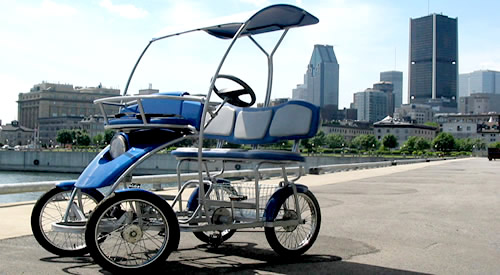
I thought about getting a quadcycle


A more practical answer is to move closer to where I work.

Did you see that little car popular in Italia? Doors are optional.
 
God bless you for doing what you can! I think it’s great that you used to grow your own veggies & might try it again!! The more that people grow their own food, the less is shipped from faraway places, so that does cut back on carbon emissions! 👍 :). I live in a little condo with no garden space so I can’t really grow anything. But if we all do what we can, like you said, little differences can add up!

Even people who don’t believe in man-made global warming might be inspired to conserve energy just to save money, as the OP pointed out in one of her posts 👍 I know I’ve saved a lot of money by doing things like moving a lot closer to work so my commute is a lot shorter, switching to a much smaller, more fuel efficient car, and doing things like unplugging appliances when not in use, turning on lights only when necessary, reading instead of watching tv, etc.

And actually, I live so close to work now I could even walk, or take the bus. Maybe that’ll be my next step 🙂
Wouldn’t that be wonderful if everyone lived a little closer to their offices! Yes, still so many “little” things we can do that add up when multiplied by many.

I just thought of something perhaps humorous in this very serious discussion: Some of the Hollywood types who talk about the importance of making a much smaller carbon imprint, yet they fly all over the world using up surreal amounts of jet fuel to get their message across and some live in mansions lit up like the NYC skyline!:rotfl:

Of course there are some great examples:angel1: everywhere, but I see some globetrotters :cool:accusing ordinary people of making too big a carbon imprint and there they go off in their private jets or cruise ships!

I wonder how many people in our country would go for a few months in the spring, summer and early autumn hanging clothes outside on a line instead of using an electric dryer? I did not even own a dryer until I turned fifty something, and only due to surgery did I succumb to using it! Lest you think it’s fun, try bringing in rain- soaked blankets after a sudden storm and hanging them all around the house. But if you can, it’s fun to get the family involved on sunny:heaven: days, and there’s nothing like line- dried clothes (when the bees don’t attack.) We can all find some way to cut back on fuel use and we can all plant a few trees! Best wishes everyone:-)
 
Wouldn’t that be wonderful if everyone lived a little closer to their offices! Yes, still so many “little” things we can do that add up when multiplied by many.

I just thought of something perhaps humorous in this very serious discussion: Some of the Hollywood types who talk about the importance of making a much smaller carbon imprint, yet they fly all over the world using up surreal amounts of jet fuel to get their message across and some live in mansions lit up like the NYC skyline!:rotfl:

Of course there are some great examples:angel1: everywhere, but I see some globetrotters :cool:accusing ordinary people of making too big a carbon imprint and there they go off in their private jets or cruise ships!

I wonder how many people in our country would go for a few months in the spring, summer and early autumn hanging clothes outside on a line instead of using an electric dryer? I did not even own a dryer until I turned fifty something, and only due to surgery did I succumb to using it! Lest you think it’s fun, try bringing in rain- soaked blankets after a sudden storm and hanging them all around the house. But if you can, it’s fun to get the family involved on sunny:heaven: days, and there’s nothing like line- dried clothes (when the bees don’t attack.) We can all find some way to cut back on fuel use and we can all plant a few trees! Best wishes everyone:-)
That is a great practical idea - I grew up being the ‘human clothes basket’ - hanging up clothes outside was the job of me and my sister I walked along with the basket - and she being taller, would hang the items up - and take them down - I think this will be a goal for us - we will add a clothes line this year -

I think it is always easy to find the speck in the other’s eye — yes, those ‘hollywod types’ who preach and then fly around - perhaps could do it better - but I guess I really should only worry about what I can do!!

I am way to lazy about some electricity use than I should be - my husband is much better - he uses the cords that have the on and off switch for all the chargers, and he unplugs the coffee pot and toaster when not in use…

The biggest change we made - and it was the issue of environmental / climate change that first drew my attention to this ---- was to move to a plant based diet - (local food as much as possible) forbes.com/sites/michellemaisto/2012/04/28/eating-less-meat-is-worlds-best-chance-for-timely-climate-change-say-experts/

From this: (which also talks about other issues which will FLARE this topic ---- because they even add the topic of population to the discussion - I hesitate to share it) - scientificamerican.com/article.cfm?id=10-solutions-for-climate-change because
University of Chicago researchers estimate that each meat-eating American produces 1.5 tons more greenhouse gases through their food choice than do their vegetarian peers. It would also take far less land to grow the crops necessary to feed humans than livestock, allowing more room for planting trees. — NOT to take this off topic - BUT this is where we have tried to recognize and act with a sense of personal responsibility.
 
Everything occurs in cycles. 99% of all species that ever lived are extinct. Extinct is normal. It is what happens. Humans have ascended and will use up the planet and then go away. Eschatological implications notwithstanding, we’re toast long-term. But it’s ok. People will not exchange their concrete wants for an abstract future benefit. People live existentially. No sense getting all stressed over something that will not change.
 
Everything occurs in cycles. 99% of all species that ever lived are extinct. Extinct is normal. It is what happens. Humans have ascended and will use up the planet and then go away. Eschatological implications notwithstanding, we’re toast long-term. But it’s ok. People will not exchange their concrete wants for an abstract future benefit. People live existentially. No sense getting all stressed over something that will not change.
I’m curious about this position - is it resignation that people won’t change or that any effort to change won’t make a difference?
 
I’m curious about this position - is it resignation that people won’t change or that any effort to change won’t make a difference?
I think the level of change necessary to mitigate AGW is just not possible. People want what they want, when they want it. We delude ourselves to achieve a certain comfort level. This is why we allow lethal deficits and public debt. The psychology is that each person must get their piece of the pie. Why should they sacrifice when others won’t and the benefit is uncertain? If people can do something to improve their existence today, in this moment, they will. Eat, drink, and be merry for tomorrow we die. This tendency is intractable.

Our economy will not be fixed of our own volition. It will equilibrate itself and we will be collateral damage. The same is true for our planet. It will do what it will, and we will be collateral damage as well.
 
None. I don’t believe in climate change and definitely feel no responsibility for it.
 
Status
Not open for further replies.
Back
Top