L
livingpeace
Guest
Where did we get the image of Jesus? Did it come from the bible? I am wondering because it is said that we are made in His image. So I wonder where *the image that we have of Him *came from.

the images you normally see come from the European painters. Pictures of Jesus in Japan have a asian flair…in Mexico a hispanic flair.Where did we get the image of Jesus? Did it come from the bible? I am wondering because it is said that we are made in His image. So I wonder where *the image that we have of Him *came from.
I wonder though then, is Jesus everything? Is he the people and the animals and the trees and everything on earth? Or does he just have a human form because that is what we painted so to speak. What made the painters paint him as He is? Is there a description of Him in the bible somewhere?the images you normally see come from the European painters. Pictures of Jesus in Japan have a asian flair…in Mexico a hispanic flair.
Close your eyes…what does Jesus look like to you.
No; He created them. We are His creations.I wonder though then, is Jesus everything? Is he the people and the animals and the trees and everything on earth?
No, He came to us as a human being. He was fully human and fully divine. He was born and grew up just like any human, but He is the son of God. We are God’s adopted children, but Jesus is His only begotten Son.Or does he just have a human form because that is what we painted so to speak.
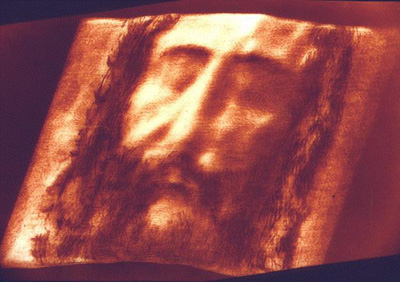
He looks older than what most pictures show and different kind of, can’t really explain it. It looks more like what I picture God to look like, kind of stern and scary. I picture Jesus to look more peaceful. I don’t know if I have ever seen that before. I feel like I have but to be honest I never heard of the Shroud of Turin before or Veronica’s Veil. I’m really in the dark on alot of this. Open to learning though.The Shroud of Turin, which inexplicably bears an image of a man who was scourged, crowned with thorns, crucified and pierced in the side, is believed by many to be the burial shroud of Jesus Christ. More info about the Shroud of Turin here.

NO. There is no physical description of Jesus in the Bible or in tradition.Where did we get the image of Jesus? **Did it come from the bible? **I am wondering because it is said that we are made in His image. So I wonder where *the image that we have of Him *came from.
I recall watching something on the Discovery channel about this, and from that program, anyway, I got the impression that it has been pretty much agreed upon by scholars that the Shroud of Turin was created several hundred years after Jesus died.The Shroud of Turin, which inexplicably bears an image of a man who was scourged, crowned with thorns, crucified and pierced in the side, is believed by many to be the burial shroud of Jesus Christ. More info about the Shroud of Turin here.
In 1988, the Shroud was subjected to radiocarbon dating, dating during the Middle Ages, approximately 1300 years after Jesus lived. However, this test has come under renewed attack. Follow-up analysis published in 2005, for example, claimed that the sample dated by the teams was taken from an area of the shroud that was not a part of the original cloth. The shroud was also damaged by a fire in the Late Middle Ages which could have added carbon material to the cloth, resulting in a higher radiocarbon content and a later calculated age.I recall watching something on the Discovery channel about this, and from that program, anyway, I got the impression that it has been pretty much agreed upon by scholars that the Shroud of Turin was created several hundred years after Jesus died.
Is that the consensus among Catholics, too? Or is it considered authentic by the Church?
Welcome livingpeaceHe looks older than what most pictures show and different kind of, can’t really explain it. It looks more like what I picture God to look like, kind of stern and scary. I picture Jesus to look more peaceful. I don’t know if I have ever seen that before. I feel like I have but to be honest I never heard of the Shroud of Turin before or Veronica’s Veil. I’m really in the dark on alot of this. Open to learning though.
That reminds me of the BBC reconstructing a 1st century Jewish man’s skull. This is what they came up with:One night I watched this special on the History channel, and they reconstructed a face of a typical middle eastern man of that time period, in trying to recapture what Jesus must have looked like, It was nothing the way we picture Him to look. He was a rough and tough looking man, with very extremely dark eyes, dark skin and a thick nose and lips with bushy eyebrows, and all of that was only their interpretation anyway. Not everyone looked the way they represented him. He might have been handsome or he might not have. This we will not know and it’s probably not even an issue or important to God about his physical appearance. It’s only by our human nature that we look for visual appearance of things.
I know one thing for sure. When we finally see Him, face to face, we will see Him in all His glory, and the things of this world will be wiped away from our minds. Probably the looks of us in heaven will have nothing even close to our looks right now, even with perfected bodies some day, I don’t think there will be a resemblance to our shells that we use on this earth. It will be perfection itself.
I wholeheartedly agree.Come Lord Jesus, Come!
:heaven:
Isaiah 53:NO. There is no physical description of Jesus in the Bible or in tradition.
That’s a prophecy- not a true description. Isaiah 's point was not to describe his face but who he was and people’s reaction to him.Isaiah 53:
1 Who hath believed our report? and to whom is the arm of the Lord revealed?
2 For he shall grow up before him as a tender plant, and as a root out of a dry ground: **he hath no form nor comeliness; and when we shall see him, there is no beauty that we should desire him. ** 3 He is despised and rejected of men; a man of sorrows, and acquainted with grief: and we hid as it were our faces from him; he was despised, and we esteemed him not.
4 Surely he hath borne our griefs, and carried our sorrows: yet we did esteem him stricken, smitten of God, and afflicted.
5 But he was wounded for our transgressions, he was bruised for our iniquities: the chastisement of our peace was upon him; and with his stripes we are healed.
dictionary comely:
1 : pleasurably conforming to notions of good appearance, suitability, or proportion
2 : having a pleasing appearance : not homely or plain
So are you saying you do not believe in the correctness of prophecy ? because the rest of the inline text is an accurate description of what the early peoples thought of him and the pains and suffering he did have? everything is correct except what he looks like ?That’s a prophecy- not a true description. Isaiah 's point was not to describe his face but who he was and people’s reaction to him.
“Created in the image and likeness of God” means that we have spiritual souls. God doesn’t have a material form.Where did we get the image of Jesus? Did it come from the bible? I am wondering because it is said that we are made in His image. So I wonder where *the image that we have of Him *came from.
I do not deny that one of the interpretations of this passage applies to Jesus, but then again this is more a prophecy than an actual description of His appearance. However, even if Jesus proved to actually be a short, squat, unattractive man with short or no hair and no beard (literally without hadar nor to’ar and contrary to popular depictions of Him) I hope that that should not shake my faith in Him.Isaiah 53:
1 Who hath believed our report? and to whom is the arm of the Lord revealed?
2 For he shall grow up before him as a tender plant, and as a root out of a dry ground: **he hath no form nor comeliness; and when we shall see him, there is no beauty that we should desire him. ** 3 He is despised and rejected of men; a man of sorrows, and acquainted with grief: and we hid as it were our faces from him; he was despised, and we esteemed him not.
4 Surely he hath borne our griefs, and carried our sorrows: yet we did esteem him stricken, smitten of God, and afflicted.
5 But he was wounded for our transgressions, he was bruised for our iniquities: the chastisement of our peace was upon him; and with his stripes we are healed.
dictionary comely:
1 : pleasurably conforming to notions of good appearance, suitability, or proportion
2 : having a pleasing appearance : not homely or plain