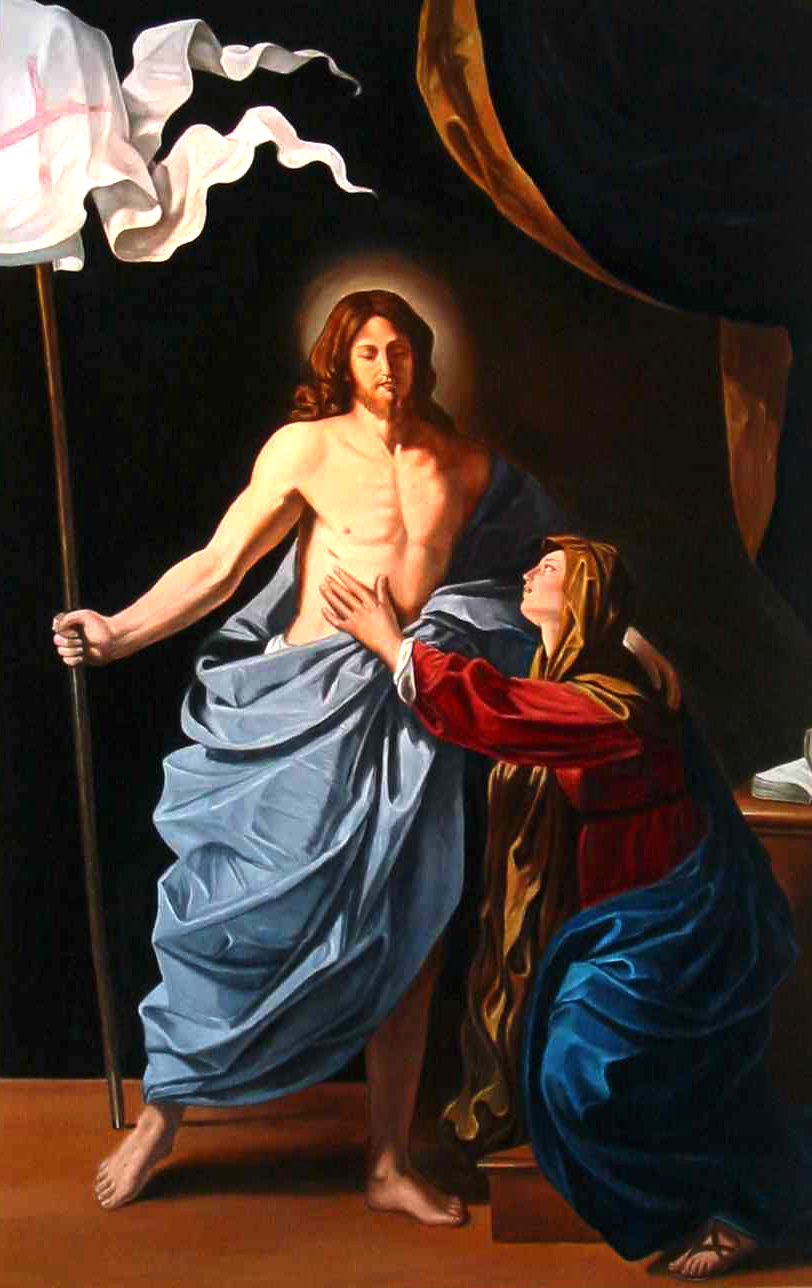
Agreda suggests that Mary-his-mother was the first to be visited. But that was private stuff.
Out of his public followers, Mary Magdalen and the other women were first, because they had believed in him and hoped in the Resurrection as some of his most ardent followers. So many of his disciples had scattered, or hid, or fled, or denied him, or whatever— but, like John and Mary, they had stayed steadfastly with him throughout and continued to believe.
So the women had the encounter with the angel, and then hurried away to inform the Apostles. (And the Apostles didn’t believe 'em.) John arrived first, but gave precedence to Peter. They saw the empty tomb, but they didn’t get the angel encounter. And then they leave.
Mary Magdalen sticks around to cry. Now she sees two angels. They ask her why she’s crying. She’s not all, “Woah! Angels!” but instead, she doesn’t get distracted, and answers their question-- because her mind is totally on her Master. Then Jesus comes up behind her and asks her the same thing-- and she doesn’t recognize him. She thinks he’s the gardener, and she answers him. It’s not until he says her name that she recognizes him. And then he sends her back off to the disciples as well.
And the Apostles continue to hesitate. It takes a firsthand experience for them to start believing— and even Thomas misses out on that experience, and he needs to have his own personal experience, because ten other people, plus the women, plus whoever, weren’t enough to convince him.
So you can see how each follower had their very own Resurrection experience-- their privileges were connected to their level of belief and trust and hope and constancy and fervor.
So if privilege is connected to those things— where do you think his mother, his most perfect disciple, would have ranked?
Rather than assuming he completely ignored her— it would be more natural to presume she got the most awesomesauce Resurrection experience of them all.