The “no sheep outside in the winter” argument was first propagated by an old Scottish killjoy, the Rev. Alexander Hislop, in a turgid little classic of anti-Catholic craziness he first published in 1853, “The Two Babylons: Or: The Papal Worship Proved to be the Worship of Nimrod and his Wife”, a screed filled with hate for all things associated with Catholicism and the source for most of those crazy “The Pope secretly worships Ba’al” things you find nowadays on websites full of typos and blurry photos. Hislop, a Free Church of Scotland Minister who had only a nodding acquaintance with history, anthropology, or, apparently, sanity, may have been thinking about the viciously cold Scottish winters of his homeland when writing that. Jerusalem can get cold, but not
Scottish cold. In addition to that kind of provincialism, Hislop filled his book with voluminous footnotes (many misquotes, out of context, or simply made-up) that convinced many of the credulous by sheer volume, but even Ralph Woodrow, who traffics in this sort of thing now, has disavowed Hislop’s poor scholarship.
I will note several things:
I live on about the same latitude line as Bethlehem, and the weather is about the same, at least nowadays. The coldest month of the year in Jerusalem, January, barely gets below freezing. It might have been a little chilly for the shepherds, but guess what? They had access to lots of WOOL, nature’s best insulator, which insulates even when wet. As did the sheep.
If you’d be okay with going out in a thick wool sweater on a cold night, so would the sheep.
The Navajo sheepherders, who face the same approximate weather as the sheepherders in 1st Century Palestine, do, in fact, keep their sheep out in the winter, and the shepherds stay with the sheep at night to prevent coyote attacks…which often come at dark. (And yes, I have actually asked real Navajo shepherds about this.) Like Navajo shepherds, I would presume the shepherds around Bethlehem would have some shelters they could throw up quickly, or that might have been set up permanently, like lean-tos or rock walls, to herd the sheep into if the winds got bad. In temperate climes, like the middle east, sheep are often kept outside year-around.
Sheep do quite well outside, and don’t like the dust that can build up inside standing barns. Keeping sheep inside in temperate coastal climes like Bethlehem is bad for the sheep’s feet, for their metabolic adjustment and it aids in the spread of disease. If you pen the sheep, you will also have to supply them with hay (which would have been in short supply and an additional cost for the owners of the herd in 1st century Palestine, who were probably poor men), it would have been more economical to leave them outside and let them graze. Like the shepherds, the sheep of 2000 years ago were presumably of tougher stock than modern breeds and more able to survive the cold.
You can still see Shepherds outside at night in winter in the Bethlehem area at Christmas time. Most of the time, they’re in short sleeves. Here’s a picture of sheep grazing outside on Christmas day in Jerusalem:
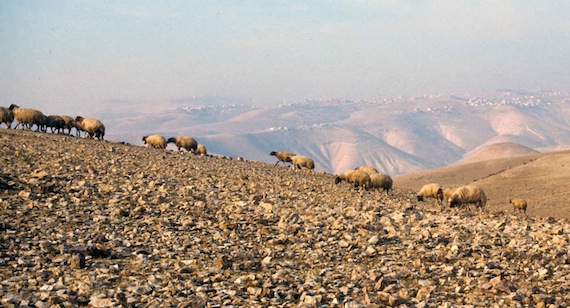
We also don’t know if the shepherds were Jews. They could have been Bedouins, who were nomadic and didn’t (and still don’t) keep their livestock penned, even in winter.
So there is no reasonable objection to the notion that Jesus could have been born on or about December 25. It’s certainly possible, despite what an old Scottish anti-Catholic crank said.
Every Internet expert (atheist or Puritan) who thinks they know about livestock loves to bring this up to try to disparage the the traditional Catholic celebration of Christmas. I think it’s something every Catholic should be able to defend.

