
E
Exorcist
Guest
I’m sorry you missed my main point – “churches should be primarily designed to best facilitate the faithful’s exposure (of all five senses) to the sacrifice taking place atop the altar.”Have you every read Pope Benedict’s “The Spirit of the Liturgy”?
If not, I think you should. It outlines what the CHurch is trying to accomplish during the Liturgy, and really, none of it involves actually seeing what is going on.
The Liturgy is about interior participation, how we listen to the Word spoke, the lessons of the Homily and the offering of one’s self as a Sacrifice along with the Sacrifice of the Altar offered by the priest.
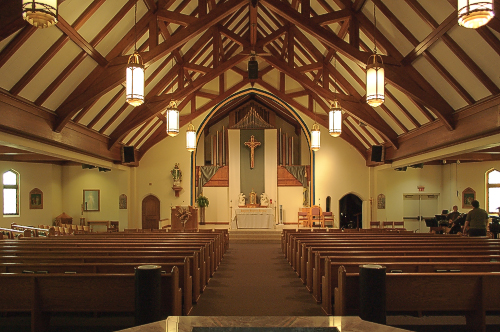
The long, straight, narrow naves which you object to correspond to the procession of the Church Militant towards the Heavenly promise made visible in the Sanctuary.
One of the great charataristics of the Gothic Cathedrals of Europe was the tremendous vertically of the architecture, it draws the eyes upwards to Heaven and reinforces the transcendant nature of the Mass.
So I think the elements of architecture that you are proposing that the Church emphasize are not really the one’s the Church itself ( as witnessed by Pope Benedict’s book) chooses to stress,.
Or, as I tell my 5 year old when she complains that she can’t see when she kneels down for the Consecration “You are supposed to look with the eyes of your heart, that is where the REAL excitement is happening”
And full disclosure, I’ve got my first degree in Engineering, the second one is a BA in Art History - Ecclesial Architecture

Anything else is simply an excuse for poor design or limited budgets.
 Enjoyed your post.