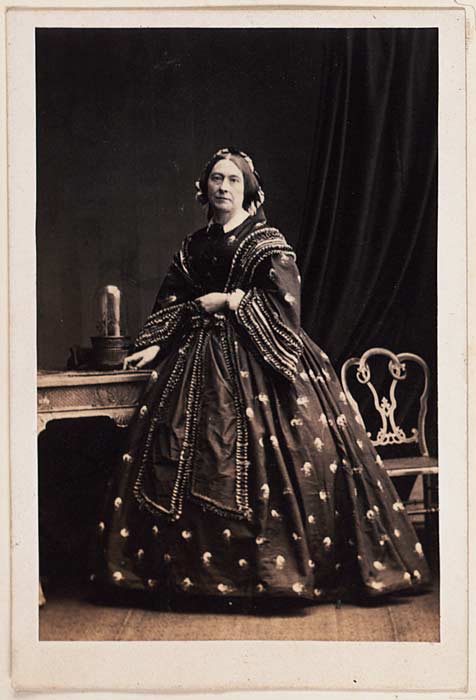
Take a close look at your photographs. All of the faces are badly washed out. That was the point I was trying to make.
None of them have resolution good enough to see the details of acne or smallpox scars (smallpox was widespread in that time), and none are showing their teeth. In truth, 19th and early 20th century photos really provide very little information on people’s overall health history.
I agree that it is an interesting subject, but I remain sceptical. I don’t see any reason why Jesus would have wanted to imprint His image on His own shroud. Corpses do not usually imprint their images on their shrouds—especially just three days after they had died! If He had wanted to tell us what He looked like, He could have fond a better way of doing it.
He could have found another way, true. He didn’t necessarily have to be crucified either. But that was the way God decided to do it.
I agree, ordinary corpses do not imprint images on shrouds. No one and nothing else has ever produced an image like this. That’s one element that makes this shroud so special.
Jesus actually spent less than 36 hours in the tomb. He was buried just before sunset on the First Day, and He arose during the pre-dawn hours of the Third Day. One of the points made repeatedly in the scientific analysis of the shroud is this: had the body in the shroud started to decay there would have been decomposition residue and corollary damage on the shroud. There is none.
In any case, the Bible says that Jesus’ face was covered with a facecloth, then He was wrapped in a shroud (John 20:7). This appears to have been the common practice among the Jews in preparing a body for burial (see John 11:44). So if He had wanted to imprint His image on anything, the facecloth would have been the more logical object to place it on. The whole thing looks very suspicious to me.
zerinus
The face-cloth you are talking about also exists. It is known as
The Sudarium of Oviedo. This cloth was placed on the face before He was taken down from the cross when the Romans released the body. This was done out of respect for the dead, for exactly the same reason we cover the faces of the newly deceased today. It was removed and set to the side when He was in the tomb and being wrapped in the shroud.
The Sudarium’s blood-type (AB positive), bloodstain locations, hair patterns, and the pollen grains imbedded in the cloth match the shroud.
More here.
It’s worth pointing out that the Sudarium’s blood-imprints of the face details are of the ordinary kind, the way that a “bloody handprint on a wall” would be ordinary. The Shroud also has ordinary blood-imprints. However, the extraordinary photographic quality image on the Shroud is not from bloodstains, but some other cause entirely, quite possibly the change Jesus’ body underwent at the moment of His resurrection.
Z, you are absolutely right to be suspicious when first introduced to the Shroud of Turin and the Sudarium of Oviedo. These relics have absolutely enormous religious and historical implications. Extremely close scruitiny and scientific study of the evidence is therefore essential.
I’d like to make this point: There is far, far more archeological and historical evidence for the authenticity of the Shroud of Turin as the actual burial cloth of Jesus than there is archeological and historical evidence for the Book of Mormon. You accept the latter as true based on faith. I would suggest that the same faith-consideration should be given to the former.
SAHM02:
This veil you reference is a 16th or 17th century painting of the shroud face. Other replicas also exist on cloth, medallions, tapestries, wood-cuts, and wall-art.
In fact, one of the most important pieces of supporting evidence for the age of the shroud is these same artistic reproductions of the shroud-face that date back to the 6th century.
Why only the 6th century? According to the historical record, the shroud was taken from Jerusalem to Edessa in the first century and presented to the king. He then had it sealed in a reliquary over the city gate to serve as a protective icon for the city. In the 6th century the gate was re-built, the reliquary was opened, and the histories of public displays of the shroud begin.
Nan