Catholic Church and freemasonary?

  • Thread starter Thread starter prexiousMary
  • Start date Start date
Status
Not open for further replies.
Don’t be mealy-mouthed Jharek.

You have gone out of your way to inflict damage upon a guest on this forum, and a fellow Christian, for one reason and one reason only. Because he is not a Roman Catholic.

Now, that is called “narrow minded prejudice”. I have no doubt that what you have tried is venal. All I can do is pray to God to ask Him to forgive you.

Please read Rudyard Kipling’s poem again. I selected it carefully for your benefit.

I really do hope that you learn from it. It is excellent advice, from a very fine poet.

Insufferable arrogance is not a particularly attractive personality trait.

Strictly according to the Laws of the Inner Temple, I was annointed, as of right, and in the proper manner on the 24th June 1969 when I was 21 years of age.

Once again I did not ask for your opinion on these, God’s laws.
 
(Please Note: This uploaded content is no longer available.)

An Céli Dé - Grand High Priest
"The Celtic Church in Ireland and in Scotland owed its origin not to Rome, but to Egypt and the East; its customs, traditions, methods, government came from Egypt through Athanasius of Alexandria, Hilary, Martin of Tours, Ninian, and through that religious channel, more than a little independent of Rome. (SOURCE: Paper delivered to the Ecclesiastical Society, Church life in the time of St Blane by the Very Rev’d Dr James Hutchison Cockburn, ecclesiasical historian and Minister of Dunblane Cathedral: 1959)
"S. Ninian, carrying from S. Martin at Tours the enthusiasm for monasticism and culture of the East, and, later, S. Patrick, likewise imbued with monastic zeal which he had acquired both at Lerins and at Tours - returned to their respective countries, Scotland and Ireland, and founded religious settlements which, before many years should elapse, were calculated to wield an influence universally felt not only in the British Isles but on the Continent of Europe. (SOURCE: The Celtic Church and the Influence of the East, Rev’d John Stirton, B.D., F.S.A. [Scot.], 1923)
 
Oh no, I am afraid that you are VERY mistaken here. The Moderns form of freemasonry allows a candidate for initiation to make his own mind up about what he believes in, including what he means by the word “God”. He is never asked about his “religion” and there is no point becuae there is no list of acceptable religions. Men of no religion have been admitted in their hundreds of thousands.

Now either you do not realise this, which I greatly doubt, or your are engaging in actos of misinformation and disinformation.
Peter, I probably didn’t make my intent clear. I realize Masons permit its members to make up thier own mind regarding who God is to them. I was simply stating that Masonry doesn’t state all religions valid…it simply permits members of all religions to join its ranks.

The overall point I was trying to make was Catholics have no ground to condemn Freemasonry on this precept, (as I’ve heard on Catholic Answers Radio) unless they’re ready to condemn a whole slew of other organizations who don’t consider religion as a point of contention…like the military, Boy Scouts, insurance companies, etc, etc.
 
And I agree with EVERY word that he says because he was a Moderns Freemason (post 1738) and knows nothing else.

We are NOT Moderns freemasons, we are religious pre-Moderns. The Papla authorities have not uttered one word that refers to us. Not one.
I’m afraid I don’t understand your delineation between modern Freemasons and your “religious pre-modern” claim. The Grand Lodge of All of England In York is the governing body for all Accepted York-rite lodges world wide.

Scottish rite, what I’m assuming you’re refering to as the modern Freemasonry, is a separate entity from the York rite, but still accepted.

Your own website showcases and honors the works of Albert Mackey grandlodgeofallengland.org/index.php?option=com_content&task=view&id=34&Itemid=47

who by the way was a 33 degree Scottish rite mason.

Perhaps you could clarify the differences?
 
Your own website showcases and honors the works of Albert Mackey grandlodgeofallengland.org/index.php?option=com_content&task=view&id=34&Itemid=47

Perhaps you could clarify the differences?
I am sure that you would not wish to mislead anyone, or create the wrong impression.

Albert Gallatin Mackey: Our website does not “showcase” or “honour” the works of Mackey at all. It uses relevant quotations from his writings, his historical work, and his legal opinion as a reliable source of reference. We use sourced references from literally hundreds of reliable sources, Masonic, non-Masonic, Church and State.

The Difference: The main religious differences between the Moderns AF&AM system and the Original religious Anglo-Saxon version are as follows:

The Moderns AF&AM system allows each member to decide for himself who or what is “a supreme being”. Apparently there is more than one.

This leads on to situations such as this:

“Prayers and invocations” are offered up on behalf of members of a Moderns AF&AM Lodge, to something that is called “a supreme being”, and then the word “God” is invoked “on all our undertakings”.

A Lodge Chaplain carries out this duty and then invokes the name of God “on all of the undertakings” throughout the proceedings and until the Lodge is closed.

This Lodge Chaplain could be a Wiccan Priest, offering up prayers and invocations on behalf of Roman Catholics in the Lodge, or on behalf of Jews in the Lodge, or on behalf of Muslims in the Lodge. That situation is CLEARLY anti-Christian, anti-Judaic and anti-Islamic. In fact, it is irreligious and blasphemous.

I am sure that I am not alone here in suggesting to you that this just might be considered to be anti-Catholic.

The Grand Lodge of All England does not practice this form of “symbolic” Masonry, It practices the original religious form of Anglo-Saxon Free Masonrie which requires a belief in God the Creator and the Preserver of all things, and the immortality of souls.

In addition, the GAOTU or GGOTU, or supreme being, or God of the Moderns Freemason is the God of the Enlightenment - the God of Baruch Spinoza - “Deus sive natura” - God and Nature" - Each the same and equal, indivisible and indistinguishable one from the other.

This philosophy which caused Spinoza to be the subject of a cherem denies God’s Creation of nature and denies the immortality of all natural things, and the resurrection of the soul, after death.

These are the essential differences.
 
“religious pre-modern” claim. The Grand Lodge of All of England In York is the governing body for all Accepted York-rite lodges world wide.
The “York Rite” has no connection or association whatsoever with either the City of York, or The Grand Lodge at York. Neither does it enjoy connection or association with the medieval Knights Templar.

The "York Rite"is a purely Moderns AF&AM system of added, extra, or “Appendant Degrees”, although its governing body does acknowledge the legitimacy of the Constitutions of Masonrie granted to the Free Masons of England by King Athelstane, at York, in the year of Our Lord AD 926.

It is just a pity that it does not use them or comply with them other than to give a false impression of antiquity and legality simply by using the name “York” as a device in its informal title. Its correct title is “The American Rite”.

The Grand Lodge at York has never engaged itself in any system of “degrees”. I hope that this clarifies the situation so that there may be no misunderstanding
 
That being said they are a group that allows any and all beliefs to join therefore they don’t believe in a single Truth like Catholics or Orthodox should believe in. This is why the Popes and Patriarchs have condemned Masonry-

I suppose then using your reasoning, college fraternities, insurance companies, fitness centers, the armed forces, charity organizations, and many more should be condemned by the Pope? After all, there are literally tens of thousands of groups who permit people from all faiths to join their ranks.

A common misconception is Masonry ‘accepts’ all religions as valid. This couldn’t be further from the truth. It accepts members from all religions.
I believe the Church–and Protestant and Orthodox as well–have looked closely at the ritual and other documents of Freemasonry and have concerns that Freemasonry promotes religious indifferentism–the concept that God is indifferent to the faith of a person so long as they hold to some sort of relgious faith.

Some Freemasons have argued this is a misapprehension and that Freemasonry is more of an ecumenical movement which bonds men of different faiths together for common causes/the common good. Without debating the merits of this assertion–the Catholic Church itself has apparently not yet been persuaded of this interpretation of Freemasonry. It has exercised it’s lawful authority to bind Catholics in conscience against membership in Masonic organizations.

Rome has spoken; the issue has been settled.
 
I believe the Church–and Protestant and Orthodox as well–have looked closely at the ritual and other documents of Freemasonry and have concerns that Freemasonry promotes religious indifferentism–the concept that God is indifferent to the faith of a person so long as they hold to some sort of relgious faith.
Quite right. Rome has spoken.

Rome has looked at the post-1730 rituals and documents of the Moderns system of Freemasonry only and has spoken about the Moderns system of Freemasonry only.

I agree with its assessment of the Moderns system of Freemasonry. It could not come to any other conclusion. The issue is settled.
 
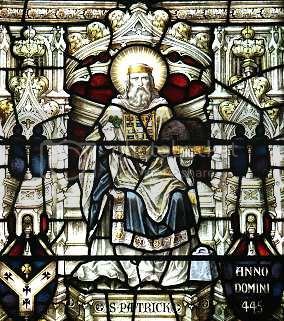
"If it can be shown that the Scotch-Irish bishops or pastors maintained a parity of rank and authority from their conversion until the twelfth century, then St. Patrick and Columba were both Scotch-Irish Presbyterians, notwithstanding the effort of some historians to claim them for the Church of Rome.

An Céli Dé

We need no further evidence that they were Culdees than the fact that when St. Patrick left Scotland, about A.D. 425, he began preaching and organizing Culdee Churches in Ireland. Archbishop Usher says: “We read in ‘Nennius’ that at the beginning St. Patrick founded three hundred and sixty-five Churches, and ordained three hundred and sixty-five bishops and three thousand presbyters or elders.” That is to say, one bishop or pastor and about eight elders for each Church, which is Presbyterianism pure and simple. Thus it is evident from Usher and others that as Patrick ordained one bishop for each Church, they were Presbyterian and not prelatic bishops.

It is, however, probable that before the death of St. Patrick he was induced, as some say, to accept the office of diocesan Bishop of Armagh. But there is nothing positive on this subject, for we have proof, as already stated, that he was organizing Culdee Churches up to his departure to Rome, A.D. 453, if he was ever in Rome at all.

“Alden’s Manifold Cyclopedia,” in speaking of St. Patrick, says: “The story that he went to France, where he became a monk, first at Tours, afterward in the celebrated monastery of Lérins, and that he went, A.D. 431, to Rome, whence he was sent by Pope Celestine to preach in Ireland, is entirely without evidence, although long the received account. Much obscurity has arisen from confusing two other men of the name “Patrician” with this saint. One of these, under the name “Palladius,” was sent by Pope Celestine, as bishop, to Ireland, A.D. 431. St. Patrick’s mission, on which he entered probably about A.D. 425, was eminently successful.”

It is probable that St. Patrick, before his death, in some way fraternized with the Church of Rome, in carrying on their mission work in Ireland, or else Catholic Ireland would never have accepted him after death as their patron saint.


An Céli Dé

We learn that Columba left Ireland A.D. 564, and established a Culdee college on Iona. Thus, then, if Columba and St. Patrick had any connection whatever with the Church of Rome during their missionary labors, why did they not preach the doctrines and polity of that Church, instead of teaching Presbyterianism, as is shown by Bishop Stillingfleet, when he says: “Some whole nations seem to have been without any bishops at all. So if we may believe the great antiquarians of the Church of Scotland, that Church was governed by their ‘Culdei,’ as they called their presbyters, without any bishop over them.”

In the year 650 the Prelate of Rome again renewed his effort to bring the Culdees into his fold. Finally, in the year 1150, by the aid of the secular power, popery was established in Ireland and Scotland. Culdeeism, however, was not overpowered until 1297, when the Culdees of St. Andrews were suppressed.

McLauchlin, an able historian, says: “It requires but little acquaintance with Scottish history to observe that the principles of the old Culdee Church never were eradicated; that during the reign of the Roman Church in the kingdom they continued to exist, exhibiting themselves occasionally in such outbreaks as the letter to King Robert Bruce and his nobles to Pope John, on the uprising of the Lollards of Kyle, and finally culminated in the events of the Scottish Reformation.”

(SOURCE: Proceedings of the Fourth Congress at Atlanta, GA., April 28 to May 1 1892, The Scotch-Irish America – Who are they? And what are they, by Dr A. Given, Louisville, Kentucky)
"This church and the civilization introduced by the Romans were swept away by the Picts and Saxons, and the members, called Culdees, were compelled to hide in the wilderness of Wales, Scotland, Ireland, and the small islands between Great Britain and Ireland; chiefly in Anglesey and Iona, where they preserved their Apostolic institutions, which were modeled after the most ancient Christian church, which, it is well known, was the secret or Masonic form. (SOURCE: The Mysteries of Britain: Secret Rites and Traditions of Ancient Britain Restored: 1905)
The Culdees of York were among the guardians of the Masonic tradition in the tenth century, and the Old Charges tell us that an assembly of Masons was held at York during the reign of King Athelstan, when a reorganization of the Craft took place. (SOURCE: A New Encyclopaedia of Freemasonry (Ars Magna Latomorum) and of Cognate Instituted Mysteries: Their Rites, Literature, and History, Arthur Edward Waite: 1921)

 
Continued from previous post …

Extant Old Charges: The Regius Manuscript, British Library Royal Manuscript Collection, catalogue reference 17 A. I. (c.1390); The Matthew Cooke Manuscript, British Museum, “Additional M.S. 23,198” (1420); The Ashmole Manuscript written for King Henry VI by John Laylande (c.1436); The Dowland’s Transcript (c.1500); The Landsdowne Manuscript (c.1560); The York Manuscript No.1 (1600); The Harleian Manuscript (1625); The Grand Lodge Manuscript (c.1632); The Sloane Manuscript 3848 (cert.1646); The Sloane Manuscript 3323 (cert.1659); The Harleian Manuscript 1942 (c.1660); The Aitcheson-Haven Manuscript (c.1666); The Edinburgh-Kilwinning Manuscript (c.1670); The York Manuscript No.5 (c.1670); The York Manuscript No.6 (c.1680); The Lodge of Antiquity Manuscript (cert.1686); The Scarborough MS (1693); The York Manuscript No.2 (cert.1693); The Alnwick Manuscript (cert.1701); The York Manuscript No.4 (cert.1704); Mr Wyatt Papworth’s Manuscript (c.1714); Dr Rev. Rawlinson’s Manuscript (c.1720); The Inigo Jones Manuscript, Worcester Masonic Library (1725); The Levander York Manuscript (1740).

A number of these old manuscripts known as the Old Charges (reference Arthur Edward Waite above) may be seen in the Royal Library of the British Museum.
 
No, but I enjoy letting people know that they are not fooling anybody. You know what I mean?

Silence is golden, but my eyes still see. 👍
 
You have had an EXACT answer. We cannot demand a letter from your Bishop of Rome. You can. Go ahead. The status quo remains until and unless he does, with his reasons.
What a tangled web we weave when first we practice to deceive.

Now why is it, Mr Clatworthy that we Catholics can demand this from our Pope and you can’t. According to your first post I quote:
** “Not true. Catholics cannot be Moderns freemasons. A very high percentage of our members are practicing Roman Catholics and there is NO reason why they should not be so.”
**So go ahead have your high percentage petition the Pope and let us know how that works out ok.
🤷
 
What a tangled web we weave when first we practice to deceive.

Now why is it, Mr Clatworthy that we Catholics can demand this from our Pope and you can’t. According to your first post I quote:
** “Not true. Catholics cannot be Moderns freemasons. A very high percentage of our members are practicing Roman Catholics and there is NO reason why they should not be so.”
**So go ahead have your high percentage petition the Pope and let us know how that works out ok.
🤷
Not a petition, a submission, Different.
“He who joyfully marches to music in rank and file has already earned my contempt. He has been given a large brain by mistake, since for him the spinal cord would surely suffice.”

*Albert Einstein *
 
Free Masons built your Abbeys, your Cathedrals and your Churches using Sacred Geometry under the direction of Masonic Priests and Monks. (See: Sacred Geometry: Symbolism and Purpose in Religious Structures by Nigel Pennick.) You could not have done so without us. Not very grateful are you?
Not very humble to say they couldn’t have done it without the Masons.
No other people knew how to build things?
And as to being grateful, if they did it for free, then a nice thank you is in order but no more because a gift is a gift. A gift given in expectation of compensation, is not really a gift.
And if they didn’t do it for free, then they were paid for their work. So why should they be overly grateful for work that they had to pay for?
 
Jharek, I suggest you read the snidy, sneering, abusive quote from a son of the Kirk, to which this was an appropriate answer. Our Fellows use the brain that God gave them.
 
So why should they be overly grateful for work that they had to pay for?
Ever heard of “Sacred Geometry?” Just be grateful to God, for the Sacred work of the Free Masons who dedicated their lives and their work to His glory.

You are so ignorant of the foundations and the history of your own religion, and of its sacred places, that it makes me wonder whether you actually went to school.
 
Ever heard of “Sacred Geometry?” Just be grateful to God, for the Sacred work of the Free Masons who dedicated their lives and their work to His glory.

You are so ignorant of the foundations and the history of your own religion, and of its sacred places, that it makes me wonder whether you actually went to school.
Here you go again with the Sacred Geometry. It is a Science there is nothing sacred about it, beyond the fact that it takes a brain to use. Here you go again trying to pass of your speculative Free Masonry as Operative Masonry. Huge difference. Now I am not saying that there were not Operative Masons in **Speculative Free Masonry **but lets not get the two groups confused.
 
Status
Not open for further replies.
Back
Top