Is Darwin's Theory Of Evolution True? Part Two

  • Thread starter Thread starter Techno2000
  • Start date Start date
Status
Not open for further replies.
Well, first of all, as omnivores, we are not highly dependent on apples for survival, so our apple-reaching ability is unlikely to affect our reproductive fitness.

Second, our “thing” is our intelligence: coordination in small groups, tool use, and so on. And it’s very clear from archaeological records that this is a trait that has improved over the past million years or so.
 
Yet the Origin of Species has God in it. It has to go.

How about only empirical science in the science classroom, that is observable, repeatable and predictable.

Evolution and ID in philosophy class.
 
Nothing wrong with eating grass. But it helps to be able to eat leaves when grass is unavailable.

It is not in abundance that animals will tend to evolve, but when evolutionary pressures lead to natural selection. The more strongly those pressures affect reproductive fitness, the faster the evolution can occur-- so long as they aren’t wiped out completely.
 
How about only empirical science in the science classroom, that is observable, repeatable and predictable.

Evolution and ID in philosophy class.
Because evolution is more than a hypothesis and ID doesn’t even qualify as a hypothesis.
 
Last edited:
I’m not talking about actual giraffe evolution. I’m giving an example of how small advantages and incremental changes can lead to big changes in an animal’s physical traits. I do not know how long it took for pre-giraffes to adapt to that degree.
That’s the the point, evolution takes too long for task at hand.
 
Last edited:
As I’ve said before, when you’re talking about simple changes in form or coloration, evolution doesn’t necessarily have to take hundreds of millions of years. Evolving from fish to lizards to mammals to humans-- THAT is going to take a massive amount of time and a very complex interaction among animals and the environment.

Just growing longer necks. . . that can take just a few thousand years, I’d suspect, in perfect conditions.

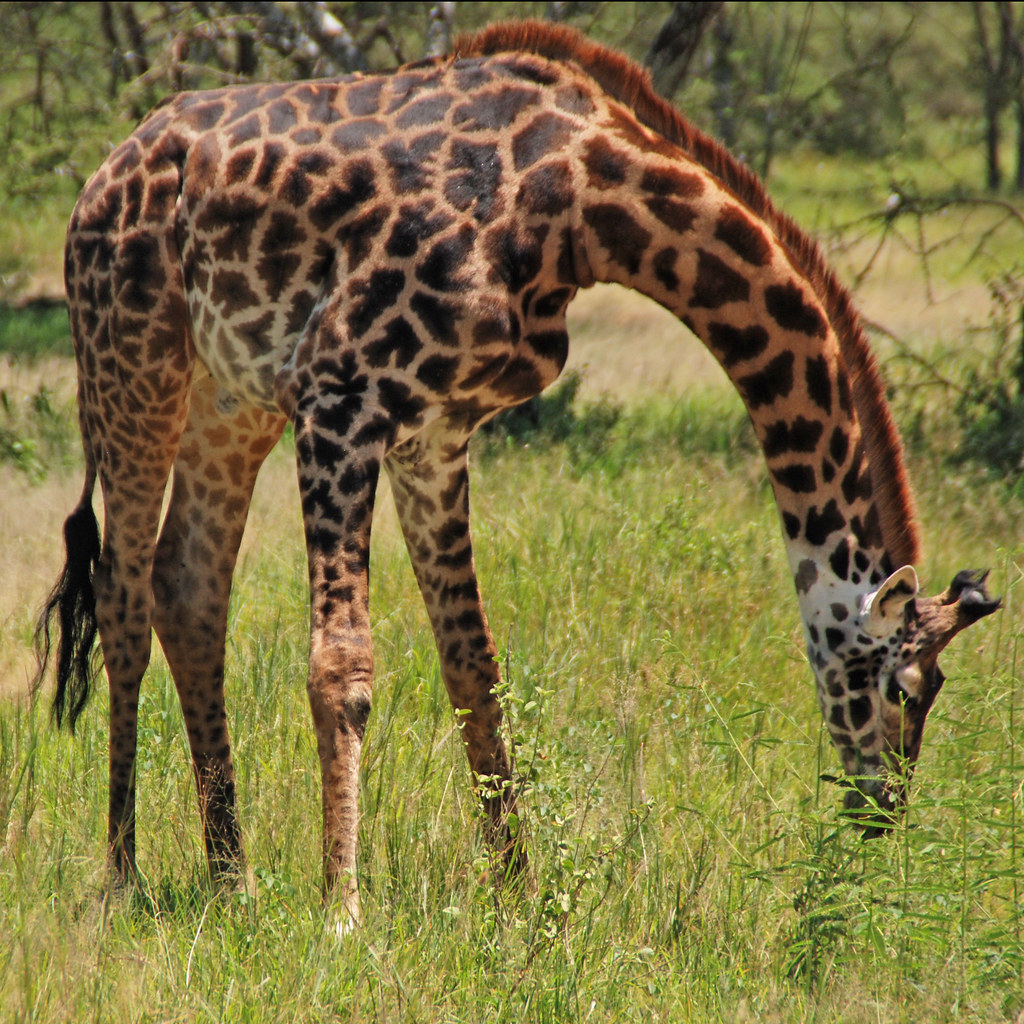
Giraffes seem to have evolved from short-necked ancestors to their full stature as modern giraffes, in about 6 million years. This sounds long, but represents only a short span of the time that animals have lived on Earth.
 
Last edited:
Obviously, some individual animals have longer necks than others. In times of hardship, those will have a selective advantage: they will thrive where shorter animals will perish. Then those longer-necked individuals will reproduce and have longer-necked babies.
 
Last edited:
  1. Is intelligent design science?
    Intelligent design (ID) is a scientific theory that employs the methods commonly used by other historical sciences to conclude that certain features of the universe and of living things are best explained by an intelligent cause, not an undirected process such as natural selection. ID theorists argue that design can be inferred by studying the informational properties of natural objects to determine if they bear the type of information that in our experience arise from an intelligent cause. The form of information which we observe is produced by intelligent action, and thus reliably indicates design, is generally called “specified complexity” or “complex and specified information” (CSI). An object or event is complex if it is unlikely, and specified if it matches some independent pattern. For further information, see Casey Luskin’s article on how intelligent design follows the scientific method and Stephen Meyer’s comments on why intelligent design is science.
 
40.png
Techno2000:
That’s the the point, evolution takes too long for task at hand.
I didn’t realize there was a set time scale
There is if you need to survive Now.
 
Giraffes all eat leaves. In times of shortage, those with longer necks will have a better chance to survive because they can reach more leaves. They will make baby giraffes, who because of similarity between parents and offspring will tend to have longer necks.

At no point is any species “waiting” for a new trait or behavior to magically pop up.
 
Status
Not open for further replies.
Back
Top