
Pope Francis: rigidity, worldliness a disaster for priests

  • Thread starter Thread starter gilliam
  • Start date Start date
Status
Not open for further replies.
I honestly thought better of most people. Silly me! I thought that people were ‘innocent until proven guilty’. I thought that people didn’t make snap judgments by appearance --and not even their own perception of appearance at that!-- but wanted to be fair and hear both sides of the story. I thought that most people, if they couldn’t say something nice about somebody, wouldn’t say it at all, and certainly wouldn’t gossip or snark. I certainly thought that priests of all people would be more merciful and respectful of all and certainly their brother priests.

Well, I guess that in this, as in so many other things in modern society, I’m just ‘wrong again’. I guess more people than I thought don’t really care about being fair, or kind; they only care about mocking anyone or anything that doesn’t lockstep to their own personal worldview. ( I do not mean the posters about this personally. I am using the 'universal 'people, not making a specific personal response.)
Do not be too harsh.

First, reading the same story different people will derive different information; so what for you might be a story with which reasonable doubt applies to both potential sides, for someone else might look like a story with enough information to arrive at a reasonably reliable evaluation;

e.g. here for example i had no good idea what price range this is about (failing to remember to use google) and hence interpreting “innocent until proving guilty” to assume some for the purpose and use and need reasonably priced items and therefore not understanding, why others being so much more critical; Don Ruggero on the other hand knew probably at once that the person in question was putting on clothing in the price range of 400+ euro, which somewhat supports the idea, that there might be an attitude problem.

Second; i think we have all somehow buttons/triggers in our mind, which in case of “activation” lead to a maybe to soon evaluation of a person’s behavior; some things are just so out of bounds for some, that one has a hard time avoiding rushing to early to an evaluation. So this maybe not so much an issue of people abondoning “innocent until proven guilty” but more an issue of the personal moral boundaries one sees.

E.g. some people might be very hard pressed to keep “innocent until proven guilty” in mind, when considering an abortionist doing 2000 abortions per year with 500 euro revenue per abortion; on the other hand, some other people might be very hard pressed to keep “innocent until proven guilty” in mind, when considering pro-life christians gathering before the abortion clinic to pray and offer help to women going there; some things are from a certain POV just so beyond the pale, that any reason to doubt guilt seems unwarranted.

(me, i have slight problems in the first example; somehow 1 million revenue per year by killing innocent and defenseless unborn humans intentionally does not add up well in my mind with the word “innocent”; on the other hand i have quite some problem to understand why some people consider such pro-life christians - at least the well behaving no “murder” screaming sort - to be such obviously guilty of something).
 
and they want the details to be accurate because accuracy matters.
In reading the Bible i came amusingly along some im my eyes pretty initially boring and uninteresting stuff, Ex 25 to 31 and 35 to 40.

In light of this discussion and your comment, it stopped being that boring and uninteresting, as it seems that the Bible is insofar on your side, that accuracy regrading worship even regarding clothing of then priests to be worn at all times (at least Ex 28:38 seems to indicate this) at least mattered during the Old Convenant; maybe different times require different so to say accuracy and neither is wrong nor right.
 
Living up to our calling:
11“But when the king came in to look over the dinner guests, he saw a man there who was not dressed in wedding clothes, 12and he said to him, ‘Friend, how did you come in here without wedding clothes?’ And the man was speechless. 13“Then the king said to the servants, ‘Bind him hand and foot, and throw him into the outer darkness; in that place there will be weeping and gnashing of teeth.’ 14“For many are called, but few are chosen.”
A wedding garment would not frivolous or ostentatious, but it would be appropriate for the occasion and the respect due.
 
Living up to our calling:

A wedding garment would not frivolous or ostentatious, but it would be appropriate for the occasion and the respect due.
I think you are taking literally the parable which is allegorical. The wedding garment is not a fashion statement but rather signifies repentance and a change of heart and mind. This is the condition for entrance into the kingdom.
 
Somehow I doubt that the young priest or seminarian intended to become the subject of a thread on Catholic Answers Forums or of a homily. Suffice it to say that none of us can judge what is in his mind and heart. I recall reading some comments by Fr. Z about the matter comparing various clerical styles, but it’s none of my business what priests wear.
 
In the modern age, to be against the world means to explicitly stand for something. …If a person’s dress expresses his unique state in life, whatever that might be, he is counter cultural in this age.
The priest’ unique state in life is evidenced by his uniform: the collar and cassock.
 
I think you are taking literally the parable which is allegorical. The wedding garment signified repentance and a change of heart and mind. This is the condition for entrance into the kingdom.
While it is always true that a spiritual depth lives in scripture, still the setting of the allegory is a wedding feast, which is a real occasion that asks for a real response on the part of the con-celebrant. The spiritual state of the con-celebrant looks like something, it’s not merely a disposition.

The Lord does not merely read his soul from a distance, the man expresses his spirituality, and it speaks to his respect for the feast and those others in attendance. The Lord does not rebuke him in the private recesses of his soul, he does it in the context of the gathering. It’s a rough passage for the man, who probably thought just showing up was enough.

Our response to the Lord looks like something, and that something is our best.
If we were merely spiritual creatures like angels, this would be a moot point.
We live in a world of God’s creation in which our best is due him out of respect for his calling.
(i’m not saying this because I am good at it, but because it is sorely lacking in our world of 2016)
 
The priest’ unique state in life is evidenced by his uniform: the collar and cassock.
Fair enough, it is. I’m glad that at least is becoming more acceptable for the vocation it signifies.
 
Frankly, as a priest, I find the comments in this thread remarkable – speculating about things as if they knew, yet with no practical experience, and moreover so little comprehension of what the Holy Father was actually saying in his homily . . .
Any priest who has actually done formation work knows extremely well and exactly the syndrome of which the Holy Father and the Monsignor allude. An over-fascination or interest in these baubles and externals should cause concern to any priest who is responsible for making determinations relative to formation. What the Pope describes is something to be extirpated, , ,I don’t choose something antiquated and from another century that, as I said, sends its own signal, and violates that sense of poverty and simplicity which has ever increasingly marked ecclesiastical wear since Blessed Pope Paul’s simplification.

I would regard a cleric attiring himself in the way the Pope described in his homily rather as I would a cleric who came in wearing a coat made of fur. Many of us, of a certain age, have items from a bygone era that we inherited from deceased confreres who were ordained years or decades before us and in days when such items were normal wear, just as my grandparents in the 19th century had their own type of attire; in both cases they are more items appropriate to a museum than today’s use. That’s entirely different from a man in his 20s acquiring these things
Father, for your service as a priest, all of us laity should be thankful to you.

That being said, all the above (and your later notes) are, with respect, simply your personal opinion, are they not?

Yes, you are an ‘elder statesman’ so to speak. But there are your fellow ‘elder statesmen’, priests, bishops, even Popes, who hold different views, even to this day.

And the last I knew, all those items above are accepted by the Church, yes? It is not considered wrong (at least not yet) to wear them, yes? It is equally acceptable for any given priest to hold the opinion that said items are acceptable as it is for you to hold the opinion that they are not, am I correct?

And again, was the person in question allowed to speak?
And indeed, why should the priest have to justify what he wears?
Since when is it a ‘crime’ to choose to wear certain items which are proper garments which priests have worn, do wear, and will wear, items which the Church approves?

I always find it strange that when it comes to things in which there are two or more choices, all of which The Church holds perfectly acceptable, that there are those who insist, not just that one choice is ‘preferable’, but that any who do not make that choice aren’t just making a ‘lesser’ choice, they’re making an actual flat out wrong choice!

I don’t think that is fair.
(Please excuse, this is not a personal attack, and I’m probably not at my best as I am fighting stomach flu).

But seriously, this reminds me of the OF and the EF. Both choices are perfectly acceptable according to the Church, but it has been rather pointedly stated by some that only one choice, the OF, is the ‘correct’ choice and that the other choice (again I state perfectly acceptable according to The Church) is not just a ‘lesser’ choice but a flat-out wrong choice and that the motives for choosing it are downright wicked and stupid.

It seems to me that again, this kind of idea that priests should ONLY wear one of several acceptable items, and that certain of the items are not just ‘less good’ but mark said priest as worldly, greedy, vain, etc., is that same kind of fallacious reasoning. And again, I do not think it is fair to anybody, not to the priests concerned, and not to us, the laity, who are witnesses of an ugly kind of internecine warfare that should not be, IMO.
 
Father, for your service as a priest, all of us laity should be thankful to you.

That being said, all the above (and your later notes) are, with respect, simply your personal opinion, are they not?

Yes, you are an ‘elder statesman’ so to speak. But there are your fellow ‘elder statesmen’, priests, bishops, even Popes, who hold different views, even to this day.

And the last I knew, all those items above are accepted by the Church, yes? It is not considered wrong (at least not yet) to wear them, yes? It is equally acceptable for any given priest to hold the opinion that said items are acceptable as it is for you to hold the opinion that they are not, am I correct?

And again, was the person in question allowed to speak?
And indeed, why should the priest have to justify what he wears?
Since when is it a ‘crime’ to choose to wear certain items which are proper garments which priests have worn, do wear, and will wear, items which the Church approves?

I always find it strange that when it comes to things in which there are two or more choices, all of which The Church holds perfectly acceptable, that there are those who insist, not just that one choice is ‘preferable’, but that any who do not make that choice aren’t just making a ‘lesser’ choice, they’re making an actual flat out wrong choice!

I don’t think that is fair.
(Please excuse, this is not a personal attack, and I’m probably not at my best as I am fighting stomach flu).

But seriously, this reminds me of the OF and the EF. Both choices are perfectly acceptable according to the Church, but it has been rather pointedly stated by some that only one choice, the OF, is the ‘correct’ choice and that the other choice (again I state perfectly acceptable according to The Church) is not just a ‘lesser’ choice but a flat-out wrong choice and that the motives for choosing it are downright wicked and stupid.

It seems to me that again, this kind of idea that priests should ONLY wear one of several acceptable items, and that certain of the items are not just ‘less good’ but mark said priest as worldly, greedy, vain, etc., is that same kind of fallacious reasoning. And again, I do not think it is fair to anybody, not to the priests concerned, and not to us, the laity, who are witnesses of an ugly kind of internecine warfare that should not be, IMO.
I tend to side with St Mother Theresa, St Francis and Clare, and St Therese to name a few. They always wore the cheapest, simplest, most worn out items allowed by their order. The vow of poverty means something here. That’s just my opinion, but something to consider.
 
Living up to
I think what he’s tried to do here is apply the parable to something we see in our culture today; that is, we spend money on beautiful garments for our weddings. My wife spent over $200 on her wedding dress, but it was modestly priced and she didn’t get anything too extravagant. But it was still very lovely, and much better than say, an $80 dress would’ve cost. I also recall a priest putting on a baseball cap on at the beginning of his homily following (if I remember correctly) this Gospel selection. He asked us if it was appropriate that he wear that hat there. Everyone shook their head “no.” He then asked if he should wear his full vestments to the Cubs’ game, again we shook our heads “no”. His point was that there was a time and a place to wear certain things, and he told us that the Mass is a wedding banquet, and since we are attending this wedding, we better dress nice!

Now, obviously saturnos aren’t worn during Mass, but there’s a time and a place to wear certain clerical garb, especially garb of the various traditions within the Catholic Church. Honestly, I don’t see the big deal in the hat costing $200. So what? We don’t know where he got the money from. We don’t even know if he’s buying it. It could’ve been a gift, just like I know many seminarians and priests receive money towards vestments or birettas. Could there be no practical reason for purchasing a saturno either (as I’ve heard several priests talk to the practicality of such garb)? One that the priest will wear for years? Perhaps the answer could be yes; perhaps the answer could be no. But I think many have jumped to rash judgement of a man’s character, something we are all guilty of at one time or another, myself included… but that doesn’t make it right.
I am quite pleased, for example, to have seen the transition from my youth to today…from pectoral crosses and rings of prelates of precious metals set with rubies, emeralds, sapphires or other precious stones to the pectoral cross and ring of Pope Francis, as an example…silver and devoid of precious stones but with simple engravings
I tend to side with St Mother Theresa, St Francis and Clare, and St Therese to name a few. They always wore the cheapest, simplest, most worn out items allowed by their order. The vow of poverty means something here. That’s just my opinion, but something to consider.
I’m reminded of a story about St. Francis de Sales, recounted by Fr. Francis Spirago in his “Anecdotes and Examples Illustrating the Catholic Catechism”:
Saint Francis of Sales, the bishop of Geneva, while on a journey during Lent, went to a church that was attached to the monastery of Capuchin friars. He arrived at sermon time; the preacher had taken ostentation in dress as his sermon’s theme and was inveighing vehemently against prelates and ecclesiastical dignitaries who, instead of setting an example of humility, wore splendid garments.
When the sermon ended, the bishop went into the sacristy and summoned the preacher. Once they were alone, Saint Francis said, “Reverend Father, your discourse was edifying. It may also be true that we who are in authority in the Church are guilty of sins from which the inmates of the cloister are exempt. Nevertheless, I consider it highly unwise to say such things as you did on this subject from the pulpit to the common people. Moreover, I wish to call your attention that for many reasons it is a matter of necessity that the princes of the Church should keep up an appearance befitting their rank. Besides, one never knows what may be hidden beneath a silken robe.”
Saint Francis unbuttoned the upper part of his purple cassock, and let the monk see that he wore a ragged hair shirt next to his skin.
“I show you this,” Saint Francis added, “so that you may learn that humility is quite compatible with the rich dress of one’s office. From henceforth, see that you are less harsh in your judgements and more prudent in your speech.
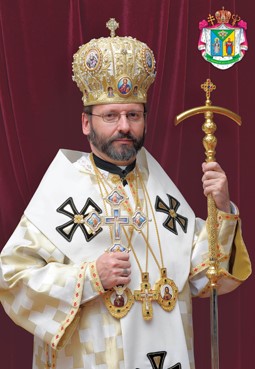
I won’t negatively judge any priest or prelate for their dress. Living and dressing simply as St. Francis of Assisi did is a beautiful thing, but humility is still compatible with dressing nice. So in response to the quotes before this story of St. Francis de Sales… I wonder then, if the miters worn by Byzantine Catholic prelates, is the wrong thing to do, and are to be considered worldly. I have this picture of Patriarch Sviatoslav Shevchuk on my refrigerator at home, right next to Pope Francis. When I look at it, I only think that his vestments and miter, his pectoral crosses and medallions, are all beautiful. It is certainly befitting to his rank. Does he need to transition to something less “gaudy”? Why or why not? Priests also often wear, at times, ornate, pectoral crosses.


Or I wonder if Cardinal Baselios Cleemis’ mudi thoppi and crosier make him “worldly” and “rigid,” His mudi thoppi looks very expensive, but I would certainly hope he would not be called “worldly”.

http://syromalankara.ie/wp-content/uploads/Cleemis-bava.jpg
 
Father, for your service as a priest, all of us laity should be thankful to you
I have never sought – nor frankly am I concerned – in the thankfulness of the laity. They have no concept what has been my life
That being said, all the above (and your later notes) are, with respect, simply your personal opinion, are they not?
Some things I wrote derive from subjective experiences…such as finding a coat warmer/more practical than a cape in winter. I’ve never conducted an empirical study of the issue among my confreres nor would I be so inclined

Other items derive from experience in formation, which does not happen in isolation. Whether working with other formators in one’s diocese (or institute of perfection) or, as academics, collectively forming those we were entrusted with teaching. Formators collaborate across lines of typical demarcation: geographic, academic, or state of life. In fact, one can travel to other countries, depending on what one is tasked to do
Yes, you are an ‘elder statesman’ so to speak. But there are your fellow ‘elder statesmen’, priests, bishops, even Popes, who hold different views, even to this day
I’m not an “elder statesman.” I’m a priest who held the offices and assignments I held
And the last I knew, all those items above are accepted by the Church, yes? It is not considered wrong (at least not yet) to wear them, yes? It is equally acceptable for any given priest to hold the opinion that said items are acceptable as it is for you to hold the opinion that they are not, am I correct?
That question must be answered by the man’s proper bishop. Beyond that, if the man has any prudence at all, he will look to his own presbyterate for how to comport himself
And again, was the person in question allowed to speak?
If one makes a choice that reflects badly upon oneself, one’s diocese, and one’s bishop…then that is what one has done. There is nothing to speak about
And indeed, why should the priest have to justify what he wears?
Since when is it a ‘crime’ to choose to wear certain items which are proper garments which priests have worn, do wear, and will wear, items which the Church approves?
One has to justify much more as a cleric. I’m from the day when my bishop decided if I could have facial hair or not. There are few things in my life that I might not need render account for or justify to my bishop. One decree can change the totality of my life
I always find it strange that when it comes to things in which there are two or more choices, all of which The Church holds perfectly acceptable, that there are those who insist, not just that one choice is ‘preferable’, but that any who do not make that choice aren’t just making a ‘lesser’ choice, they’re making an actual flat out wrong choice!
Among several things Rome holds as being “acceptable,” there may in fact be only one option left available, if the diocesan bishop is so disposed. It’s not your decision
I don’t think that is fair
What you think is or is not fair is utterly irrelevant
(Please excuse, this is not a personal attack, and I’m probably not at my best as I am fighting stomach flu).
But seriously, this reminds me of the OF and the EF. Both choices are perfectly acceptable according to the Church, but it has been rather pointedly stated by some that only one choice, the OF, is the ‘correct’ choice and that the other choice (again I state perfectly acceptable according to The Church) is not just a ‘lesser’ choice but a flat-out wrong choice and that the motives for choosing it are downright wicked and stupid
This is not a thread on the liturgy.
It seems to me that again, this kind of idea that priests should ONLY wear one of several acceptable items, and that certain of the items are not just ‘less good’ but mark said priest as worldly, greedy, vain, etc., is that same kind of fallacious reasoning. And again, I do not think it is fair to anybody, not to the priests concerned, and not to us, the laity, who are witnesses of an ugly kind of internecine warfare that should not be, IMO
It is not your decision. I find it rather ironic that someone I presume is American is making this declaration. I’m from where we quite freely wear the soutane on the street, should we decide to…as we always have. For the Americans, that has not been the case due to norms enacted at one of the plenary councils of bishops in the United States

Today, the disposition is that priests in the United States are mandated only to wear the black clerical…in Europe, we have a number of approved options, which the American bishops have obviated for their priests

Some dioceses in the United States, as I understand it since I have retired, are reserving grey clerical shirts for use by permanent deacons. This is a colour distinction without meaning to us in Europe

Permanent deacons in other dioceses in the United States face varying disposition about the use of ANY clergy attire which is completely alien to where I am…but they are to comply with the local directives they receive from their bishop in complete submission rather than follow what is in the Directory on the Ministry and Life of Priests/Directory on the Ministry and Life of Permanent Deacons

In the end, the answer to you is easily given in one phrase: I agree absolutely, positively, and unreservedly with what Pope Francis said in his homily…in every element, every assessment, and every aspect

A man can make choices that will reflect upon him with consequences he will have to bear and live with. I’m sure you would no doubt be surprised by events I could list as a formator that led to termination of a seminarian’s candidacy for Holy Orders

A methodology of confrontation would be at the top of the list
 
I’m reminded of a story about St. Francis de Sales, recounted by Fr. Francis Spirago in his Anecdotes and Examples Illustrating the Catholic Catechism:
Well, fortunately, since the decree of Blessed Pope Paul VI in 1969, Saint Francis de Sale would not confront the same situation.
So in response to the quotes before this story of St. Francis de Sales… I wonder then, if the miters worn by Byzantine Catholic prelates, is the wrong thing to do, and are to be considered worldly. I have this picture of Patriarch Sviatoslav Shevchuk on my refrigerator at home, right next to Pope Francis. When I look at it, I only think that his vestments and miter, his pectoral crosses and medallions, are all beautiful. It is certainly befitting to his rank. Does he need to transition to something less “gaudy”? Why or why not? Priests also often wear, at times, ornate, pectoral crosses.
That is a question for the hierarchs of those Churches, with the aid of the Congregation for the Oriental Churches.

I offer no advice to them nor would I ever solicit or accept advice from them about my Church.
 
I tend to side with St Mother Theresa, St Francis and Clare, and St Therese to name a few. They always wore the cheapest, simplest, most worn out items allowed by their order. The vow of poverty means something here. That’s just my opinion, but something to consider.
Personally, I would hope that the vow of poverty is not implicated in this situation…that the seminarian/cleric is a diocesan…although he could theoretically be from one of the missionary congregations. Let us hope not.

When I remember Mother and her simple saris and the denuded and simple houses of the Missionaries of Charity – dear Lord, how far removed we are from the mindset of the Saturno or the ferraiuolo! Those habits cost Mother Teresa next to nothing. the juxtaposition would be like crowing each of her daughter/missionaries of charity with a hat of mink fur.

I have known more than one bishop who simply banned the ferraiulo in his diocese. No cleric was to don it henceforth…and none dared, even the extern clergy complied. The prohibition is less extreme now that years have passed and so they get brought out rarely, as a curio, and then for some truly extraordinary occasion.

Honestly we never had to do that with the Saturno because it was such an extraneous item…far beyond the biretta. A Saturno was mismatched when someone would put it on with a clerical suit. It looked bizarre. It was part of one ensemble and one ensemble alone.

And when I was younger, it was one of those things where the clergy who were older set it aside as something outdated and the younger clergy saw it already as something like an antique. The only thing I could compare it to, when I visited the United States, was that distinctive top hat that President Lincoln made famous. It was so distinctive and elaborate such that no one used it anymore in contemporary dress…how could you?

I have seen the Saturno being worn by a priest from time to time over these many years, normally by an elderly priest who had clearly kept it…a sighting here or a sighting there…usually as something passing. The man realised that this is a bridge too far but one could pardon his nostalgia. It has an isolating effect on the younger man who chooses to wear it, especially in his own diocese. It makes things harder when he needs to turn to his brothers for help and they shy away from him on account of his “eccentricities” or else it sets the stage for latter problems.
 
I think what he’s tried to do here is apply the parable to something we see in our culture today; that is, we spend money on beautiful garments for our weddings. My wife spent over $200 on her wedding dress, but it was modestly priced and she didn’t get anything too extravagant. But it was still very lovely, and much better than say, an $80 dress would’ve cost. I also recall a priest putting on a baseball cap on at the beginning of his homily following (if I remember correctly) this Gospel selection. He asked us if it was appropriate that he wear that hat there. Everyone shook their head “no.” He then asked if he should wear his full vestments to the Cubs’ game, again we shook our heads “no”. His point was that there was a time and a place to wear certain things, and he told us that the Mass is a wedding banquet, and since we are attending this wedding, we better dress nice!

Now, obviously saturnos aren’t worn during Mass, but there’s a time and a place to wear certain clerical garb, especially garb of the various traditions within the Catholic Church. Honestly, I don’t see the big deal in the hat costing $200. So what? We don’t know where he got the money from. We don’t even know if he’s buying it. It could’ve been a gift, just like I know many seminarians and priests receive money towards vestments or birettas. Could there be no practical reason for purchasing a saturno either (as I’ve heard several priests talk to the practicality of such garb)? One that the priest will wear for years? Perhaps the answer could be yes; perhaps the answer could be no. But I think many have jumped to rash judgement of a man’s character, something we are all guilty of at one time or another, myself included… but that doesn’t make it right.

I’m reminded of a story about St. Francis de Sales, recounted by Fr. Francis Spirago in his “Anecdotes and Examples Illustrating the Catholic Catechism”:

I won’t negatively judge any priest or prelate for their dress. Living and dressing simply as St. Francis of Assisi did is a beautiful thing, but humility is still compatible with dressing nice. So in response to the quotes before this story of St. Francis de Sales… I wonder then, if the miters worn by Byzantine Catholic prelates, is the wrong thing to do, and are to be considered worldly. I have this picture of Patriarch Sviatoslav Shevchuk on my refrigerator at home, right next to Pope Francis. When I look at it, I only think that his vestments and miter, his pectoral crosses and medallions, are all beautiful. It is certainly befitting to his rank. Does he need to transition to something less “gaudy”? Why or why not? Priests also often wear, at times, ornate, pectoral crosses.

http://www.stjohn-nj.com/Images/UkrainianCatholicChurch/SviatoslavShevchuk.jpg

Or I wonder if Cardinal Baselios Cleemis’ mudi thoppi and crosier make him “worldly” and “rigid,” His mudi thoppi looks very expensive, but I would certainly hope he would not be called “worldly”.

http://syromalankara.ie/wp-content/uploads/Cleemis-bava.jpg
Wow. Again, it’s my opinion but such riches should not be adorning priests. I believe that extent of adornment belongs to Jesus alone.
 
I’m reminded of a story about St. Francis de Sales, recounted by Fr. Francis Spirago in his Anecdotes and Examples Illustrating the Catholic Catechism:
Perhaps he would not confront the same situation, but that’s not the point this anecdote is trying to make, Father. So it really doesn’t matter if he would confront that situation or not as the lesson here can be applied to us today. The lesson to be learned from this story is to not to judge based on appearances, and to not judge the character of others based on one passing interaction. Instead, we should be more prudent with our speech before condemning someone despite what appears to be happening. Especially if we’re receiving that story second hand, as we are in this homily by His Holiness.
So in response to the quotes before this story of St. Francis de Sales… I wonder then, if the miters worn by Byzantine Catholic prelates, is the wrong thing to do, and are to be considered worldly. I have this picture of Patriarch Sviatoslav Shevchuk on my refrigerator at home, right next to Pope Francis. When I look at it, I only think that his vestments and miter, his pectoral crosses and medallions, are all beautiful. It is certainly befitting to his rank. Does he need to transition to something less “gaudy”? Why or why not? Priests also often wear, at times, ornate, pectoral crosses.
That is a question for the hierarchs of those Churches, with the aid of the Congregation for the Oriental Churches.

I offer no advice to them nor would I ever solicit or accept advice from them about my Church.

Fair enough, but as a descendant of Ukrainian-Greek Catholics, your comments about being “pleased” at seeing a decline in beautiful and elegant liturgical and clerical dress seems a bit dismissive of the traditions that have developed in the other particular Churches of the universal Catholic Church. Convert in 99 also noted that, “it’s my opinion but such riches should not be adorning priests. I believe that extent of adornment belongs to Jesus alone.” Well,the Latin Church also has these traditions of liturgical dress as the various Eastern Catholic Churches do, for example, as seen in the papal tiara and pretiosa. The former, of course, hasn’t been used in a few decades, but the latter has been worn more recently. Just because the Latin Church has overwhelmingly decided to move away from such traditional dress, doesn’t mean that Byzantine and West Syrian Catholics must lose such traditions to, or that they are mistaken in holding on to such traditions.

I would hope since we are all part of the same universal Catholic Church, we can appreciate each others traditions, and come to realize we share a common tradition in exquisite liturgical and clerical dress. St. John Paul II told my cousin, a Ukrainian-Greek Catholic priest, to “keep your traditions”. They have been regaining their tradition more and more in recent years, but in contrast, we see the Latin Church losing many of its traditions instead of regaining them. This goes beyond, but certainly includes, liturgical and clerical dress. To put it simply, I would hate for Byzantine and West Syrian Catholics to be labeled as worldly, or to be thought of as doing something wrong simply because they have not given up their traditionally elegant and beautiful dress. I sincerely hope they are not being judged as “worldly” or “rigid”, as this young priest has been in comparison.
 
Wow. Again, it’s my opinion but such riches should not be adorning priests. I believe that extent of adornment belongs to Jesus alone.
For a time, I graduated wanting to sew vestments for priests. Then I realized I couldn’t compete with the cheap stuff coming from overseas, usually manufactured. There’s more than one angle to this, and sisters aren’t the only ones who feel inclined to contribute. Some people do have livelihoods based around this. (I personally believe there’s a fine line between beauty and excess.)

I’m deeply saddened that crafts are dying out. The Church used to understand the significance of it. Not everyone has the same charism, and some people are inclined to make beautiful things for God and his ministers. I ended up donating the chasubles I made, but at the expense of hundreds of dollars myself. There was one priest who paid me. These were pretty standard fare as far as chasubles go. It’s not that chasubles are overpriced either, it’s the cost of fabric and labor. Chasubles are quite simple compared with a man’s coat.

However, I certainly don’t want to see junk during the liturgy, if the option exists for beauty. The Church in the West desperately needs to appeal to beauty. Other forces do, and some of those forces are winning the imagination.
 
I tend to side with St Mother Theresa, St Francis and Clare, and St Therese to name a few. They always wore the cheapest, simplest, most worn out items allowed by their order. The vow of poverty means something here. That’s just my opinion, but something to consider.
Side with them?
The dress does not make the person humble or poor. The dress is to serve God. Everything we have and do is to serve God and his people.
A preoccupation, one way or the other, over clothing is not spiritually healthy.

Can we at least accept that Mother Theresa’s saree is uniquely expressive of the Missionaries of Charity. There is no mistaking them, and no bland “fitting in” out of false humility. It would be easy to call this ostentatious, but it is not.

It really is incidental that these sarees are inexpensive. They are inexpensive because the sisters love the poor and want to devote their resources to the poor, not because they are worried about how much they cost.
The saree itself signifies the riches of God’s mercy. So while it’s not properly called ostentatious, it is deeply expressive. And it’s part of their mission to “dress for the job”.
There are many orders who have cast off this type of uniquely expressive dress.
 
…The lesson to be learned from this story is to not to judge based on appearances, and to not judge the character of others based on one passing interaction…
The teaching is ***never ***judge the character of another no matter how many interactions one may have for we know nothing of their interior life.

Can you cite in this thread that anyone has negatively judged the young priest’s character? I think not. The act, yes; the man, no!
 
The teaching is ***never ***judge the character of another no matter how many interactions one may have for we know nothing of their interior life.
Of course, I totally agree with you. But the lesson is being applied to this specific instance of someone being admonished for just one passing interaction.
Can you cite in this thread that anyone has negatively judged the young priest’s character? I think not. The act, yes; the man, no!
Well, this is not an accusation, but depending on how one judges those in fur coats, this comment could be construed as such, but I don’t know how men in fur coats are particularly regarded, and there’s no qualification:
I would regard a cleric attiring himself in the way the Pope described in his homily rather as I would a cleric who came in wearing a coat made of fur.
And then, from the first page of the thread, there’s the text of the homily itself:
He then took the Saturno [wide-brimmed clerical headgear], he put it on and looked himself over. A rigid and worldly one.
This is not a negative judgement on a worldly act; this is a negative judgement on a worldly man, a worldly one. But as I said, this is something we are all guilty of, hastily judging someone by appearances, and not to mention, in a second-handed (and now third-handed!) manner. To quote another priest on this issue, “I honestly don’t know what His Holiness is trying to accomplish with these harsh gestures and words. It could be that – while they deal with things that are not his cup of tea – he says them before their possible impact is considered. BUT … Don’t we all do that? I know that I do, sometimes. And I regret it afterward. I suspect that Pope Francis does too.”
 
Status
Not open for further replies.
Back
Top