
P
patrick457
Guest
CLOTHING
Clothing is an extension of identity. Roman clothing was distinctive, and the Roman magistrate who wore Greek clothing in public was subject to ridicule, at least in Republican times. Romans mocked the crude clothing of the northerners (Celts and Germans), while the Greeks mocked the outlandish costumes of the Persians. 16 Slaves would normally be clothed in a distinctive manner, to distinguish them from free persons. Within Jewish society of rabbinic times, at least some rabbis wore distinctive clothing that marked them out as rabbis. 17
But Jews did not wear distinctive Jewish clothing. Second Maccabees reports that Jewish ephebes in Hellenistic Jerusalem wore the petasos, the broad-rimmed Greek hat worn by youths in the gymnasium, but no ancient author refers to a distinctively Jewish hat, or any other item of distinctively Jewish clothing. The archaeological finds of the Bar Kokhba period reveal that the Jews of Palestine in the first and second centuries C.E. wore clothing that was indistinguishable from that of non-Jews. 18 Tertullian, living in Carthage at the end of the second century C.E., writes that Jewish women could be recognized as Jews by the fact that they wore veils in public. I think it likely, or at least plausible, that Jewish women wore veils in public in the eastern Roman empire, but in the eastern Roman empire many women wore veils in public, and Jewish women would hardly have been distinctive for doing what many other women did. Perhaps in Carthage, a western town, the veils of Jewish women made them distinctive, but I know of no other evidence for the easy recognizability of Jews, either male or female, in antiquity. 19 On the contrary, there is much evidence that Jews, whether male or female, were not easily distinguished from gentiles.
Some examples follow. In the romantic and novelistic retelling of Scripture attributed to the Jewish writer Artapanus, the Egyptian king Chenephres “ordered the Jews to be clothed with linen and not to wear woolen clothing. He did this so that once they were so marked, they could be harassed by him.” Without such a publicly visible mark, there was no way to distinguish Jews from the rest of the population. 20 According to the novella known as 3 Maccabees, when Ptolemy Philopator ordered the Jews to be registered and marked as slaves, he wanted to have them branded with an ivy leaf, “the emblem of Dionysus”; here too without such a publicly visible mark there was no way to distinguish Jews from the rest of the population. 21 In the Alexandrian riots in the time of Caligula, the mob arrested Jewish women and brought them to the theater, but by mistake seized many non-Jewish women as well; obviously, Jewish women could not be easily distinguished from non-Jewish. 22 Similarly, the Babylonian Talmud reports that R. Ada b. Ahavah once spotted a woman in the market wearing a krabalta, an outlandish piece of clothing not precisely identifiable but obviously inappropriate for a daughter of Israel. The good rabbi, thinking the woman to be a Jew, tore off her krabalta, but was chagrined to discover that the woman was a gentile (and a member of the royal family). The rabbi was fined four hundred zuz. 23 At the opening of Justin Martyr’s Dialogue with Trypho the Jew, Trypho recognizes Justin immediately as a philosopher (because he is wearing the garb of a philosopher), but Justin has to ask Trypho, “Who are you?” and has to be told, “I am called Trypho and I am a Hebrew of the circumcision.” Without such a statement, Justin would not have known Trypho to be either a Jew or circumcised.
In sum, the silence of the texts indicates that Jews were not distinctive because of their clothing. 24 This silence is striking because ancient Jewish sources describe two distinctively Jewish items of clothing: tzitzit and tefillin. Jesus, the Pharisees, and presumably other pietists in the land of Israel wore tzitzit in public, tasseled fringes affixed to the four corners of one’s garment in accordance with the injunctions of Numbers 15:37-41 and Deuteronomy 22:12. Tzitzit of the period of Bar Kokhba have been discovered in the Judaean desert. The Pharisees and other pietists in the land of Israel also wore tefillin in public, usually called “phylacteries”—small leather containers strapped to the head and arm and containing several excerpts from the Torah, notably the Shema and (in some versions) the Ten Commandments. Tefillin have been discovered at Qumran. 25
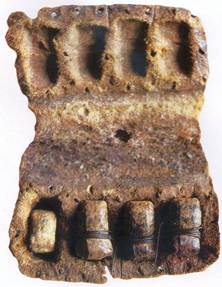

Tefillin from Qumran

Modern tefillin
Clothing is an extension of identity. Roman clothing was distinctive, and the Roman magistrate who wore Greek clothing in public was subject to ridicule, at least in Republican times. Romans mocked the crude clothing of the northerners (Celts and Germans), while the Greeks mocked the outlandish costumes of the Persians. 16 Slaves would normally be clothed in a distinctive manner, to distinguish them from free persons. Within Jewish society of rabbinic times, at least some rabbis wore distinctive clothing that marked them out as rabbis. 17
But Jews did not wear distinctive Jewish clothing. Second Maccabees reports that Jewish ephebes in Hellenistic Jerusalem wore the petasos, the broad-rimmed Greek hat worn by youths in the gymnasium, but no ancient author refers to a distinctively Jewish hat, or any other item of distinctively Jewish clothing. The archaeological finds of the Bar Kokhba period reveal that the Jews of Palestine in the first and second centuries C.E. wore clothing that was indistinguishable from that of non-Jews. 18 Tertullian, living in Carthage at the end of the second century C.E., writes that Jewish women could be recognized as Jews by the fact that they wore veils in public. I think it likely, or at least plausible, that Jewish women wore veils in public in the eastern Roman empire, but in the eastern Roman empire many women wore veils in public, and Jewish women would hardly have been distinctive for doing what many other women did. Perhaps in Carthage, a western town, the veils of Jewish women made them distinctive, but I know of no other evidence for the easy recognizability of Jews, either male or female, in antiquity. 19 On the contrary, there is much evidence that Jews, whether male or female, were not easily distinguished from gentiles.
Some examples follow. In the romantic and novelistic retelling of Scripture attributed to the Jewish writer Artapanus, the Egyptian king Chenephres “ordered the Jews to be clothed with linen and not to wear woolen clothing. He did this so that once they were so marked, they could be harassed by him.” Without such a publicly visible mark, there was no way to distinguish Jews from the rest of the population. 20 According to the novella known as 3 Maccabees, when Ptolemy Philopator ordered the Jews to be registered and marked as slaves, he wanted to have them branded with an ivy leaf, “the emblem of Dionysus”; here too without such a publicly visible mark there was no way to distinguish Jews from the rest of the population. 21 In the Alexandrian riots in the time of Caligula, the mob arrested Jewish women and brought them to the theater, but by mistake seized many non-Jewish women as well; obviously, Jewish women could not be easily distinguished from non-Jewish. 22 Similarly, the Babylonian Talmud reports that R. Ada b. Ahavah once spotted a woman in the market wearing a krabalta, an outlandish piece of clothing not precisely identifiable but obviously inappropriate for a daughter of Israel. The good rabbi, thinking the woman to be a Jew, tore off her krabalta, but was chagrined to discover that the woman was a gentile (and a member of the royal family). The rabbi was fined four hundred zuz. 23 At the opening of Justin Martyr’s Dialogue with Trypho the Jew, Trypho recognizes Justin immediately as a philosopher (because he is wearing the garb of a philosopher), but Justin has to ask Trypho, “Who are you?” and has to be told, “I am called Trypho and I am a Hebrew of the circumcision.” Without such a statement, Justin would not have known Trypho to be either a Jew or circumcised.
In sum, the silence of the texts indicates that Jews were not distinctive because of their clothing. 24 This silence is striking because ancient Jewish sources describe two distinctively Jewish items of clothing: tzitzit and tefillin. Jesus, the Pharisees, and presumably other pietists in the land of Israel wore tzitzit in public, tasseled fringes affixed to the four corners of one’s garment in accordance with the injunctions of Numbers 15:37-41 and Deuteronomy 22:12. Tzitzit of the period of Bar Kokhba have been discovered in the Judaean desert. The Pharisees and other pietists in the land of Israel also wore tefillin in public, usually called “phylacteries”—small leather containers strapped to the head and arm and containing several excerpts from the Torah, notably the Shema and (in some versions) the Ten Commandments. Tefillin have been discovered at Qumran. 25
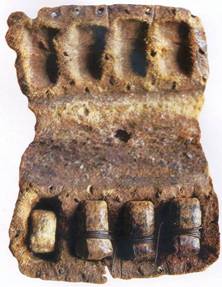

Tefillin from Qumran

Modern tefillin
 No, to be serious, the Jewish custom of covering the head with the tallit in prayer seems to have actually developed later, or at least we are uncertain as to whether this custom existed in Jewish tradition before around the 4th century. (One should note that as Goodman had said in the first quote, the original tallit was simply the rectangular cloak men wore as part of their everyday dress as opposed to the special ‘prayer shawl’ we are familiar with today.)
 It was kinda cool, the way it ws told me. But I dont remember exactly how it went. Anyway, I wondered about these beads mentioned in the story