Totalitarian Irrationality

  • Thread starter Thread starter edwest2
  • Start date Start date
Status
Not open for further replies.
There are a few things I want to go over on the article you referenced, which I’ll do in the next day or two.

From the article:
Reason, secularism asserts, must be restricted only to what is material and measurable. The mutilation occurs because secularism then assumes that what is not material and measurable is not real, or at best, merely a subjective fancy.
First, as an aside and a pet peeve, he’s using “secularism” synonymously with “non-religious”. He needs to realize that secularism means not showing favoritism to a particular religious viewpoint in the public sphere. One can be both devoutly religious and secular.

To the main point, I complete disagree with the notion that reason must be restricted to what is material and measurable and that anything outside of that is not real.

I’m going to throw out an analogy that, while not perfectly analogous, helps to define how we can rationally discuss the possibility of immaterial things.

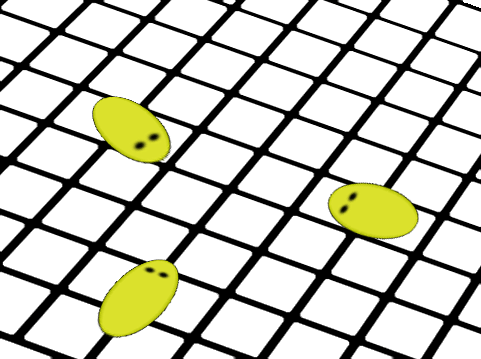
Let’s imagine there are creatures living on a geometric plane. They can only move about in two dimensions and can only perceive things in two dimensions. We’ll call them two-ders.
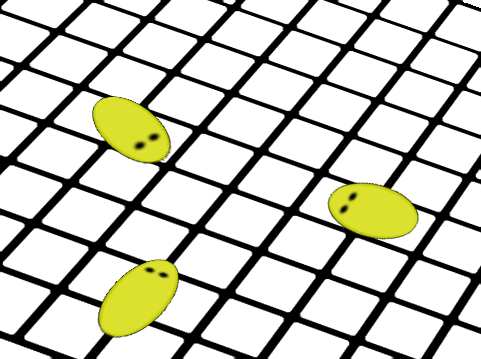


A two-der philosopher hypothesizes that there is more than that which they can perceive. He could suggest there are multiple planes all parallel to each other that act in the same way. But without being able to cross between planes it remains a hypothesis. It does not disprove the idea of parallel planes.

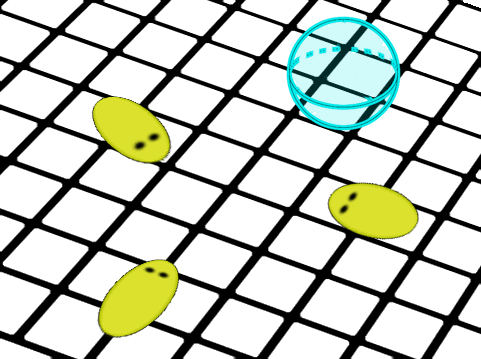
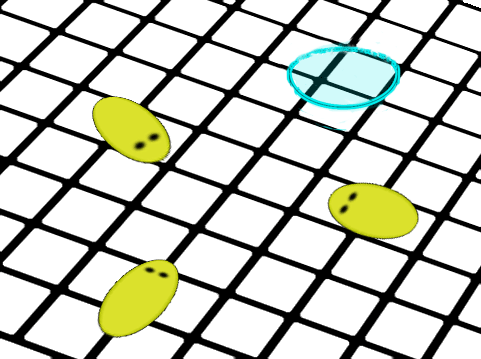
He could suggest that perhaps there are objects that are more complex than they can imagine. Take a sphere and have it cross our plane:


Any two-der watching it would only be able to perceive it as an small circle popping out of nowhere, growing larger (until it reaches the diameter of the sphere), then shrinking, and finally disappering.


The two-ders may misinterpret that as a normal function of their 2-d universe. They may see it as a sign. Two-der scientists may calculate how this proves the existence of a third dimension. But no matter what the fallout, in the end something from outside the perceivable interacted with the perceivable.

So let’s bring it back to our world. Often times on CAF, people will say that science can only study the material world and is out of it’s area when it tries to discuss the immaterial. Perhaps, but we may be able to study how the immaterial interacts with the material. Some might argue that the immaterial doesn’t interact with the material, but it must if we want to say it impacts us. Whether it be miracles, or mind-body dualism, or transubstantion, or any number of things, the religious say that the immaterial affects the material. We can try to study where the two are said to meet and see if they can be explained by a wholly material world or not.

Now with all of that being said, is it rational to say that there is only the material? Similar to what the two-ders think, there are three possibilities:

Possibility 1: There is no immaterial world.
Possibility 2: There is possibly an immaterial world, but we can only speculate since there has not been a proven instance of the immaterial interacting with the material.
Possibility 3: There is definitely an immaterial world, and it can be proven by (an answered prayer, an apparition, a miracle, deva vu, etc.)

Theists often will peg non-theists as only believing in possibility 1; but I think if you ask you’ll find that most (not all) will fall under possibility 2. We can’t necessarily rule out what is beyond our scope, but we can’t just take it on faith that there is something beyond our scope. We discount those things that some claim prove the existance of the immaterial. Obviously theists will find non-theists foolish for discounting those claims (or at least the specific ones they believe in) but I don’t think we’re going to make headway on that here 😃

Next up, I’ll try to refute the author’s argument that materialism leads to irrationality and totalitarianism.

 
Well, the problem that is immediately apparent to me is that most religions are not content to allow people to merely explore the possibilities of a spiritual realm that might or might not exist.

No, religions - and especially the monotheistic religions - assert knowledge of the spiritual realm. Monotheistic clergy claim to be in possession of absolute truths and to know at least some of the wishes of the one true god.

So totalitarianism naturally follows - if you believe the creator and controller of the universe has certain wishes, then there is no real freedom of choice to oppose those wishes, except at the risk of eternal damnation, which if that is the outcome, cannot be a rational choice in any case.

The reason Christopher Hitchens was so opposed to religion, especially the monotheistic variety, was exactly this - the tendency for monotheism to impose totalitarian principles.

Genuine secularism both is and is not opposed to religious faith. It is prepared to grant freedom to all religious believers to practise their faith, so long as it doesn’t harm others (although weak secularist governments tend to provide loopholes that allow religious communities to harm their own in the name of religious liberty) but it also implicitly denies that there is any such thing as ‘one true faith’, and so is deeply opposed to the fundamental principle of monotheism in particular, and religious faith in general.
 
Well, the problem that is immediately apparent to me is that most religions are not content to allow people to merely explore the possibilities of a spiritual realm that might or might not exist.

No, religions - and especially the monotheistic religions - assert knowledge of the spiritual realm. Monotheistic clergy claim to be in possession of absolute truths and to know at least some of the wishes of the one true god.

So totalitarianism naturally follows - if you believe the creator and controller of the universe has certain wishes, then there is no real freedom of choice to oppose those wishes, except at the risk of eternal damnation, which if that is the outcome, cannot be a rational choice in any case.

The reason Christopher Hitchens was so opposed to religion, especially the monotheistic variety, was exactly this - the tendency for monotheism to impose totalitarian principles.

Genuine secularism both is and is not opposed to religious faith. It is prepared to grant freedom to all religious believers to practise their faith, so long as it doesn’t harm others (although weak secularist governments tend to provide loopholes that allow religious communities to harm their own in the name of religious liberty) but it also implicitly denies that there is any such thing as ‘one true faith’, and so is deeply opposed to the fundamental principle of monotheism in particular, and religious faith in general.
In practice the secular state does not tolerate dissent because it rejects the right of minorities to live according to their beliefs and principles when they conflict with the views of the majority. China is an outstanding example of secular intolerance - in stark contrast to the teaching of the Catholic Church that our ultimate authority is our conscience.
 
Genuine secularism both is and is not opposed to religious faith. It is prepared to grant freedom to all religious believers to practise their faith, so long as it doesn’t harm others (although weak secularist governments tend to provide loopholes that allow religious communities to harm their own in the name of religious liberty) but it also implicitly denies that there is any such thing as ‘one true faith’, and so is deeply opposed to the fundamental principle of monotheism in particular, and religious faith in general.
And here lies a problem. This is an assumption made by secularism today, that there is some inherent “good” in not harming others. Secularism takes the same route as religion in making moral judgements. It says that certain actions and thoughts are better or worse than others; it makes assumptions that humans have value and that material suffering is “bad”. Yet secularism rarely provides a coherent philosophy explaining why these things must be assumed.

It would seem that humans have no value, no more than anything else. Likewise, it makes little difference whether we live pleasant lives or miserable ones; we will still proceed toward obliteration and it will be as if our suffering or happiness had never been. It makes no difference to me what happens during our brief, sensate existence.
 
And here lies a problem. This is an assumption made by secularism today, that there is some inherent “good” in not harming others. Secularism takes the same route as religion in making moral judgements. It says that certain actions and thoughts are better or worse than others; it makes assumptions that humans have value and that material suffering is “bad”. Yet secularism rarely provides a coherent philosophy explaining why these things must be assumed.

It would seem that humans have no value, no more than anything else. Likewise, it makes little difference whether we live pleasant lives or miserable ones; we will still proceed toward obliteration and it will be as if our suffering or happiness had never been. It makes no difference to me what happens during our brief, sensate existence.
If we are just walking bags of chemicals who only respond - positively or negatively - to outside stimuli, and whose only purpose is to reproduce, then how how are we different from a housefly? Just because we can talk and make things, so what?

Secularism has very few things under the “bad” or undesirable category. In the recent past, as now, we were told life was whatever you wanted, so, like animals, some of us did whatever, and avoided pain while being attracted to pleasure.

“It’s your thing. Do what you wanna do.”

“Hey man. If it feels good, do it.” Regardless of what “it” is.

Or, "Hey man. Your thing might not be my thing and my thing might not be your thing. But whatever your thing is, it’s cool.

Or a book titled:

“I’m OK, You’re OK”

Or

“It’s all good.”

Secularism offers arguments but most of these arguments are designed to “get my way or desired outcome,” nothing more. Right? Wrong? The point is: “I want what I want.”

“Religion just gets in my way.” How so? People around the world are living how they want right now. The secularist way is obsessed with the god/idol change.

“Liberals claim to want to give a hearing to other views, but then are shocked and offended to discover that there are other views.” William F. Buckley, Jr.

Peace,
Ed
 
If we are just walking bags of chemicals who only respond - positively or negatively - to outside stimuli, and whose only purpose is to reproduce, then how how are we different from a housefly? Just because we can talk and make things, so what?

Secularism has very few things under the “bad” or undesirable category. In the recent past, as now, we were told life was whatever you wanted, so, like animals, some of us did whatever, and avoided pain while being attracted to pleasure.

“It’s your thing. Do what you wanna do.”

“Hey man. If it feels good, do it.” Regardless of what “it” is.

Or, "Hey man. Your thing might not be my thing and my thing might not be your thing. But whatever your thing is, it’s cool.

Or a book titled:

“I’m OK, You’re OK”

Or

“It’s all good.”

Secularism offers arguments but most of these arguments are designed to “get my way or desired outcome,” nothing more. Right? Wrong? The point is: “I want what I want.”

“Religion just gets in my way.” How so? People around the world are living how they want right now. The secularist way is obsessed with the god/idol change.

“Liberals claim to want to give a hearing to other views, but then are shocked and offended to discover that there are other views.” William F. Buckley, Jr.

Peace,
Ed
My point is that it seems we are no different than a housefly. We both are assembled, as it were, from cosmic dust. And we are both heading towards the same end of non-existence. At least, non-thinking existence. Between our birth into sensate existence and our end in obliteration, what does it matter what happens to us during our life? When we cease to be, it will not be remembered. It will be as if it had never happened.

I am saying that just as I truly can’t say that something is “bad”, neither can I say that something is “good”. That is affixing moral judgements to meaningless things when I have no basis for making such a judgement. The only reason I can do anything is because I desire to do so; it does not make it good or evil, though. It is just something I choose to do. I can’t say that secularism and Catholicism are any better or worse than each other. There is no basis to make such a moral claim.

Those secularists who claim a morality are no different than you religious in thinking that there is some objective good to be heading towards. Even “doing what feels good” is not good in a moral sense, it is merely somthing done.
 
In practice the secular state does not tolerate dissent because it rejects the right of minorities to live according to their beliefs and principles when they conflict with the views of the majority. China is an outstanding example of secular intolerance - in stark contrast to the teaching of the Catholic Church that our ultimate authority is our conscience.
Our ultimate authority is the Teaching Authority of the Church and a well-formed conscience. We can’t say that while I’m personally opposed to something, I can’t force others to not do it.

ONE OF THE BIGGEST PROBLEMS with Catholic thinking today is that the Church is about FORCE. It never was. Just like you can’t force another human being to love you, God will not force you to love Him, and the Church will not force you to do anything either. I guarantee that a priest will not be pounding on your door Monday if you missed Mass on Sunday. We follow Church teaching because it makes sense. And God is a part of why Church teaching makes sense.

Today, we’ve got too many radical individualists running around and they are usually showing us the wrong way to live. Without shared values, we are all running off in our own direction. That is not a good way to have a functional society.

Peace,
Ed
 
My point is that it seems we are no different than a housefly. We both are assembled, as it were, from cosmic dust. And we are both heading towards the same end of non-existence. At least, non-thinking existence. Between our birth into sensate existence and our end in obliteration, what does it matter what happens to us during our life? When we cease to be, it will not be remembered. It will be as if it had never happened.

I am saying that just as I truly can’t say that something is “bad”, neither can I say that something is “good”. That is affixing moral judgements to meaningless things when I have no basis for making such a judgement. The only reason I can do anything is because I desire to do so; it does not make it good or evil, though. It is just something I choose to do. I can’t say that secularism and Catholicism are any better or worse than each other. There is no basis to make such a moral claim.

Those secularists who claim a morality are no different than you religious in thinking that there is some objective good to be heading towards. Even “doing what feels good” is not good in a moral sense, it is merely somthing done.
Wow. Then why bother getting out of bed? If life has no meaning, why bother?

For the record: Nihilism is bad and ignores the hopes and aspirations of each of us.

So if Martial Law was declared tomorrow and we were all hauled off to labor camps, you’d just think: “Eh. Whatever.”? Or if a crook put a gun to your head and demanded your money, you’d think: “Eh. Whatever.”?

Peace,
Ed
 
Wow. Then why bother getting out of bed? If life has no meaning, why bother?

For the record: Nihilism is bad and ignores the hopes and aspirations of each of us.

So if Martial Law was declared tomorrow and we were all hauled off to labor camps, you’d just think: “Eh. Whatever.”? Or if a crook put a gun to your head and demanded your money, you’d think: “Eh. Whatever.”?

Peace,
Ed
If martial law were declared, or if a gun was put to my head, I would be afraid. But it would be out of my own animal instinct to survive and avoid harm. There would be no greater purpose; there is no great reason for my existence. If I were threatened with death I would be afraid because my mind fears death, but I will die eventually anyway. It makes no difference in the scale of the universe whether I live or die, whether I continue to exist or never existed at all. I could not claim that it would be morally evil to kill me, though I may falsely make the claim in an attempt to spare my own life.

Why do I get out of bed? I don’t know. My human nature compels me to continue living. But I do not believe there is any purpose in my existence. No more reason to get out of bed than because it is what I want to do at the moment.
 
If martial law were declared, or if a gun was put to my head, I would be afraid. But it would be out of my own animal instinct to survive and avoid harm. There would be no greater purpose; there is no great reason for my existence. If I were threatened with death I would be afraid because my mind fears death, but I will die eventually anyway. It makes no difference in the scale of the universe whether I live or die, whether I continue to exist or never existed at all. I could not claim that it would be morally evil to kill me, though I may falsely make the claim in an attempt to spare my own life.

Why do I get out of bed? I don’t know. My human nature compels me to continue living. But I do not believe there is any purpose in my existence. No more reason to get out of bed than because it is what I want to do at the moment.
Wow.

Peace,
Ed
 
Our ultimate authority is the Teaching Authority of the Church and a well-formed conscience. We can’t say that while I’m personally opposed to something, I can’t force others to not do it.

ONE OF THE BIGGEST PROBLEMS with Catholic thinking today is that the Church is about FORCE. It never was. Just like you can’t force another human being to love you, God will not force you to love Him, and the Church will not force you to do anything either. I guarantee that a priest will not be pounding on your door Monday if you missed Mass on Sunday. We follow Church teaching because it makes sense. And God is a part of why Church teaching makes sense.

Today, we’ve got too many radical individualists running around and they are usually showing us the wrong way to live. Without shared values, we are all running off in our own direction. That is not a good way to have a functional society.

Peace,
Ed
I agree with your other statements but am confused by the three negatives in:
We can’t say that while I’m personally opposed to something, I can’t force others to not do it.
🙂
 
I agree with your other statements but am confused by the three negatives in:

🙂
It’s common here. Here’s how it breaks down.
  1. I’m a Catholic and I believe abortion is evil.
  2. Others believe abortion is not evil and is (A) a woman’s right to choose, (B) a reproductive right, or (C) the removal of an unwanted blob of tissue that is not a baby/human being.
  3. If I go to the voting booth and see a proposal that abortion should be limited in some way, like banning partial birth abortion or abortion after the second trimester, I can’t vote against it. If I did, I would be forcing my beliefs on others.
This ignores the biological fact that once the sperm and egg unite, a genetically human being is in its first stage of development. Ask any embryologist and he’ll tell you it’s a human being. What else can it be?

If we, as Catholics, know this is fact, we cannot be silent. We are required to limit the evil - the killing of the unborn - by law if given that opportunity. The body count is in the millions.

We can’t be personally opposed and not act. Even if it amounts to telling people the truth on forums like these.

Peace,
Ed
 
It’s common here. Here’s how it breaks down.
  1. I’m a Catholic and I believe abortion is evil.
  2. Others believe abortion is not evil and is (A) a woman’s right to choose, (B) a reproductive right, or (C) the removal of an unwanted blob of tissue that is not a baby/human being.
  3. If I go to the voting booth and see a proposal that abortion should be limited in some way, like banning partial birth abortion or abortion after the second trimester, I can’t vote against it. If I did, I would be forcing my beliefs on others.
This ignores the biological fact that once the sperm and egg unite, a genetically human being is in its first stage of development. Ask any embryologist and he’ll tell you it’s a human being. What else can it be?

If we, as Catholics, know this is fact, we cannot be silent. We are required to limit the evil - the killing of the unborn - by law if given that opportunity. The body count is in the millions.

We can’t be personally opposed and not act. Even if it amounts to telling people the truth on forums like these.

Peace,
Ed
Couldn’t agree more! 👍
 
It’s common here. Here’s how it breaks down.
  1. I’m a Catholic and I believe abortion is evil.
  2. Others believe abortion is not evil and is (A) a woman’s right to choose, (B) a reproductive right, or (C) the removal of an unwanted blob of tissue that is not a baby/human being.
  3. If I go to the voting booth and see a proposal that abortion should be limited in some way, like banning partial birth abortion or abortion after the second trimester, I can’t vote against it. If I did, I would be forcing my beliefs on others.
This ignores the biological fact that once the sperm and egg unite, a genetically human being is in its first stage of development. Ask any embryologist and he’ll tell you it’s a human being. What else can it be?

If we, as Catholics, know this is fact, we cannot be silent. We are required to limit the evil - the killing of the unborn - by law if given that opportunity. The body count is in the millions.

We can’t be personally opposed and not act. Even if it amounts to telling people the truth on forums like these.

Peace,
Ed
I entirely agree with you. We should vote against abortion but not try to compel others to act against their conscience.
 
I entirely agree with you. We should vote against abortion but not try to compel others to act against their conscience.
No, we shouldn’t force anyone. But we should engage others in the public square, including forums like this one.

Peace,
Ed
 
No, we shouldn’t force anyone. But we should engage others in the public square, including forums like this one.
Peace,
Ed
If they won’t listen to reason, Ed, all we can do is hope and pray they will reconsider their assumptions.
 
I would argue that Reason – an abstract idea or generality which we are expected to value for its own sake – is an idol. A result of that general revival of Plato’s polytheistic theology which began in the 13th century. Reason has nothing to do with our ability to reason (as a verb).

To save others from this error we must first avoid it ourselves.

Society, Democracy, Equality, Tolerance, Diversity… idols.

Ever wonder how many chinese people Mao sacrificed for The Chinese People?
 
Status
Not open for further replies.
Back
Top