Vatican proposes EU as example of Social Doctrine

  • Thread starter Thread starter Vouthon
  • Start date Start date
Status
Not open for further replies.
What can hardly be denied, however, is that the independence of the indigenous nations was destroyed when they were conquered by the expanding US. The result of such a system is called an empire.
What kind of empire allows all of its ‘subjects’ (ie citizens) to vote? Who is the emperor of this so-called empire?
 
What kind of empire allows all of its ‘subjects’ (ie citizens) to vote? Who is the emperor of this so-called empire?
In all fairness Tomarin, I’m not sure African Americans (for one) would agree with you. It took until the 1960s for their enfranchisement to be fully enabled in practice.

And as it is, Filipinos never had any right to vote or receive representation in the U.S. Congress before their independence in 1946, when their nation was an American colony from 1898.

Till this day, residents in Puerto Rico and other U.S. territories (which are effectively remnants of the old overseas American Empire) do not have voting representation in the US Congress and are not entitled to electoral college votes for the presidency. They are ‘citizens’ of the US and under its sovereignty though - much like Gibraltar in relation to the UK.

Puerto Ricans are thus technically citizens, but citizens who are disenfranchised at the national level - in other words, akin to colonial subjects just like the Filipinos used to be.

So, in fact, there have been millions upon millions of American ‘subjects’ historically who couldn’t vote, and to this day there are still millions in Puerto Rico and other territories who have no electoral representation at the national level.
 
Last edited:
But they vote for the ‘emperor’ in his purple robes, don’t they?
 
Last edited:
Well, the point is that Filipinos never consented to their country becoming a colony of the US in 1898 (after the war with Spain), anymore than the Indians did the British. Imperialism is imperialism.

Filipinos originally thought that America would ‘liberate’ them from Spanish rule and formed the First Philippine Republic, which the U.S. then crushed and colonised in the Philippine-American War (1899-1902).

The autonomous Native American tribes, likewise, never consented to having their lands and sovereign communities forcibly overtaken and displaced after the Indian Removal Act of 1830, as the United States expanded from eastern seaboard to the far west.

And as for African Americans, they were discriminated second-class citizens who couldn’t vote in much of the country due to various disqualifications, gerrymandering and outright intimidation until the Civil Rights Movement.
 
Last edited:
I’m not saying we didn’t dabble in imperialism (the best example being the Philippines) but I don’t think the few remaining territories that are a legacy of that era (from the Spanish-American War to WWI) an empire make. By the time of the Second World War the U.S. was ardently in favor of dismantling empires; quite a few U.S. servicemen in fact resented putting their lives on the line for the sake of the British Empire (which they saw as obsolete).
 
We can debate nomenclature to no end, but what is the substantive difference in kind between British rule in Hong Kong, which was governed as a British Dependent Territory until 1997 (and that year is said to mark the definitive end of ‘the British Empire’) and Puerto Rico today in relation to the US?

Prior to the transfer back to China:
All citizens of the British Empire, including Hongkongers, previously held a common nationality.[8] Citizens of the United Kingdom and Colonies (CUKCs) had the unrestricted right to enter and live in any British territory.[9]
But despite this, Hong Kongers had no voting rights to the UK Parliament or representation of their territory at Westminster. A governor appointed by the British government was the Head of State.

And everyone recognizes Hong Kong as having been the last major British colony, with a population of 6 million people.

Compare with Puerto Riccans:
Puerto Ricans have been citizens of the United States since 1917, and enjoy freedom of movement between the island and the mainland.[23] As it is not a state, Puerto Rico does not have a vote in the United States Congress, which governs the territory with full jurisdiction under the Puerto Rico Federal Relations Act of 1950. However, Puerto Rico does have one non-voting member of the House called a Resident Commissioner. As residents of a U.S. territory, American citizens in Puerto Rico are disenfranchised at the national level and do not vote for president and vice president of the United States

Puerto Rico has 8 senatorial districts, 40 representative districts and 78 municipalities. It has a republican form of government with separation of powers subject to the jurisdiction and sovereignty of the United States. Its current powers are all delegated by the United States Congress and lack full protection under the United States Constitution . Puerto Rico’s head of state is the President of the United States
Why should British Hong Kong be called a colony but Puerto Rico something else?
 
A relevant article:

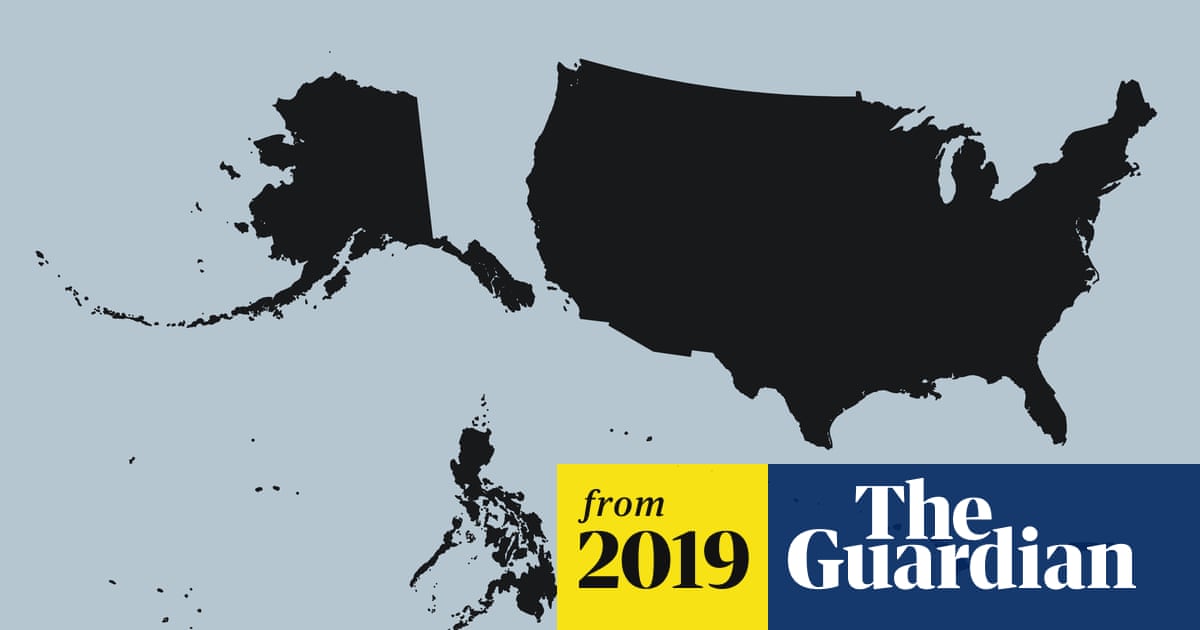
The logo map is not only misleading because it excludes large colonies and p(name removed by moderator)rick islands alike. It also suggests that the US is a politically uniform space: a union, voluntarily entered into, of states standing on equal footing with one another. But that is not true, and it has never been true. From its founding until the present day, the US has contained a union of American states, as its name suggests. But it has also contained another part: not a union, not states and (for most of its history) not wholly in the Americas – its territories.

What is more, a lot of people have lived in that other part. According to the census count for the inhabited territories in 1940, the year before Pearl Harbor, nearly 19 million people lived in the colonies, the great bulk of them in the Philippines. That meant slightly more than one in eight of the people in the US lived outside of the states. For perspective, consider that only about one in 12 was African American. If you lived in the US on the eve of the second world war, in other words, you were more likely to be colonised than black.
 
Last edited:
You must have missed the invasions of Hungary and Czechoslovakia and all the conflicts in the Balkans
All due to communism. Demonstrates my point that ideologies have been the problem.
You speak of WWII as though it were an age ago.
Well, it was 74 years ago. Far and away most people presently in Europe were not born then.
The safety of Western Europe has been guaranteed by NATO and the alliance with the US. The absence of conflict has been a feature of the growing European experiment, bringing former fascist and communist states into a free democratic association. It’s been that post-war cooperation, trans-Atlantic and cross-European, that has produced the absence of conflict which Western Europe has enjoyed and the benefits of which we have tried to spread.
I acknowledge the salubrious effect association with the U.S. has had on Europe. But it still needs to be recognized that no European state other than Russia (and Belarus…“white Russia”) actually embraced communism or it’s fascist doppelganger. The rest of the “communist” states were unwillingly so.

You and I apparently have a fundamental disagreement about Europeans. It appears I think they’re better people than you do.
 
But it still needs to be recognized that no European state other than Russia (and Belarus…“white Russia”)
Both of which are the last explicitly autocratic states in Europe, one of which is still revanchist-minded militarily under the present regime and neither of which are on a path of integration with the EU, unlike almost every other part of the continent.

A coincidence?

There is no communism today fuelling the war in Ukraine, which is a conflict entirely on European soil and fought over for entirely traditional European ‘nationalist’ reasons.

As with the Russian war with Georgia (which had wanted to join the EU) in 2008.

The only difference is that the European states presently enjoying peace are all integrated within the EU, whereas the ones that are at least semi war-torn aren’t. Kosovo - Serbia and Armenia - Azerbaijan are other examples, all with deep-set nationalist disputes going back centuries in origin and none of them at the time, or yet, within the EU.

So we have an image of what Europe could like like without the EU in modernity, in those parts of Europe that don’t yet have the EU.

It looks like this:

The Four-Day War [a] or April War ,https://en.wikipedia.org/wiki/2016_Nagorno-Karabakh_clashes#cite_note-28 began along the Nagorno-Karabakh line of contact on 1 April 2016 with the Artsakh Defense Army, backed by the Armenian Armed Forces, on one side and the Azerbaijani Armed Forces on the other. The clashes occurred in a region that is disputed between the de facto Republic of Artsakh and Azerbaijan.

The history of Europe prior to the European Union has always been like this. And its like it still in the caucuses where the EU hasn’t yet reached, although Georgia intends to become an EU member state (as does Serbia and the other countries in the Balkans, such as Montenegro, Albania, Macedonia, Kosovo etc.).

When Communism collapsed as a “glue” ideology in Yugoslavia, that country erupted into a million different NATIONALIST fragments with deeply-felt territorial and ethnic animosities that have been bubbling since the days of the old Hapsburg Empire, which had kept them all in check for centuries.
 
Last edited:
I acknowledge the salubrious effect association with the U.S. has had on Europe. But it still needs to be recognized that no European state other than Russia (and Belarus…“white Russia”) actually embraced communism or it’s fascist doppelganger
The fascist dictatorships of Spain and Portugal and Greece will do as examples of nations brought to democracy with the assistance of EU membership.
 
By the time of the Second World War the U.S. was ardently in favor of dismantling empires
Except the one it had established by seizing other people’s land from one side of the continent to the other.
 
And its ‘hidden’ overseas territories, involving millions of subjects, that never got a look in at all on the continental map.
 
Last edited:
Going to chime in about the US Indians here: there are a couple of other aspects to the Indians and their populations that have been overlooked here.

While there was never anything closely approximating a census until much later we do know that there were considerable Indian populations in North America before Columbus and that this population was severely decimated by a 25 year drought that took place just before Columbus sailed for the first time. This drought centered in the American southwest but extended to all parts of the country. So the populations that were run into in the westward expansion were never that big to begin with and were decimated further by diseases brought in by the Spanish and then the northern European explorers both French and British.

The second aspect that is commonly ignored is the inability of the remaining Indian tribes to unite and remain united in the face of the threat posed by the Europeans. The Comanche and the Apache tribes are just two examples of this inability of many tribes to play well with other tribes, hence making it extremely easy to divide and conquer. One speculates what might have happened had the Iroquois and the Algonquin tribes been able to maintain their confederation to confront the initial settlements in New England. One can only conclude after reading accounts of these wars in the 16th through 19th centuries that the Indians were often as savage as the Europeans who conquered them. I’m not excusing the Europeans here, just saying that good guys and bad guys are not so black and white.
 
The shadows of European violence are, indeed, visible in much of Europe. But that does not mean Europeans are somehow an accursed people, doomed to self-immolate. Europe’s better angels are also visible, and one might ask why such a people could turn to those darker practices.
I think we also have to be aware of the history of European leaders and despots who have tried to unite large parts of Europe only to cause fighting and instability sometimes for decades and even centuries. Napoleon, annexation of Ireland, WW1 and WW2, Yugoslavia, the USSR etc.

Sometimes the worst of European history is because of the reverse reason of trying to make a big Europe.

I would prefer to see a peaceful; Czech Republic and Slovakia living side by side instead of a united Belgium where the people are divided, for example.
 
Last edited:
The land seizures in Ukraine, Georgia and Moldova have nothing to do with nationalism. They’re imperialist moves on the part of Russia.

The other conflicts you mentioned are due to ethnic and religious antipathies that have existed for centuries, and are not “nationalist”.

The European states that are presently at peace are at peace because they’re at peace, not because they’re members of the EU, and those that are in conflict are not welcome in the EU for that reason. The EU is not the cause of peace anywhere. And Armenia and Azerbaijan are part of Central Asia, not Europe.
 
And Armenia and Azerbaijan are part of Central Asia, not Europe.
Actually, they are part of the caucuses alongside Georgia, and nations from this region are eligible to join the EU.

Georgia intends to do so, while Armenia was about to sign an association agreement with the EU before Russia compelled it to do otherwise.

Cyprus, an EU member state, is technically in Asia but is considered a European country.

Europe is not a continent clearly demarcated by oceans. There really is no Europe geographically - we are actually, technically, Asia Minor (a subcontinent of Asia). It’s a continent formed by cultural and religious borders.
 
Last edited:
I think I would need to see evidence of that before believing it. Franco himself, in the case of Spain, set the calendar for democracy and restoration of the monarchy. I remember when Portugal got rid of its dictator. It followed upon the loss of Angola.
 
My impression is that, historically, Asia Minor is said to begin at the east side of the Dardanelles. Despite its heritage, some now consider Greece a de facto “Middle Eastern” country, not really European. I do think the EU is going to regret some of its “acquisitions”. Interesting that it would bypass Turkey to consider taking in Azerbaijan and Armenia.
 
Last edited:
You are correct that ‘Asia Minor’ is technically contiguous with Anatolia.

My point, though, was that what we call “Europe” is actually part of one huge, continuous supercontinent with Asia. I used ‘Asia Minor’ loosely to imply that Europe is really just an extension of Asia, a kind of subcontinent almost.

There is no actual line in the sand demarcating the two - Europe is a cultural, historical and religious concept/idea of the classical Greek chroniclers and Latin Christendom, rooted in identity. It’s not a firmly demarcated geographical continent like North America, Africa or Asia.

Pope St. John Paul II recognised this in a 2002 Apostolic Exhortation, Ecclesia in Europa:

http://w2.vatican.va/content/john-p...hf_jp-ii_exh_20030628_ecclesia-in-europa.html
The Church’s concern for Europe is born of her very nature and mission. Down the centuries the Church has been closely linked to our continent…

Modern Europe itself, which has given the democratic ideal and human rights to the world, draws its values from its Christian heritage. More than a geographical area, Europe can be described as “a primarily cultural and historical concept , which denotes a reality born as a continent thanks also to the unifying force of Christianity, which has been capable of integrating peoples and cultures among themselves, and which is intimately linked to the whole of European culture”.

Today’s Europe however, at the very moment is in the process of strengthening and enlarging its economic and political union
For that reason, there is always a question of what constitutes “Europe” that can never be settled by simply pointing at a geographic region on a map, although geographic ‘closeness’ to the mainland of Europe is certainly one of the qualifying factors that need to be ticked off.

Greece, by the way, is firmly integrated within the EU and is regarded as European, both for its classical and Byzantine heritage, and everything both of those have bequeathed to the world. Hence why it was admitted to the Union. It ticks every box in being geographically, culturally, linguistically and historically European.

Turkey is one of those ‘disputed’ nations. The majority of Europeans desire economic ties with Turkey but don’t regard it as European, and now with its government becoming increasingly autocratic, its candidacy (stalled since the 1960s) is further away than ever of being admitted. It’s an open secret that it’s never going to happen and that the present status quo (with Turkey having a customs union) is likely to stay in place for a long, long time into the future.

Georgia and Armenia, though, are regarded as European, as are all the Balkan states, and Georgia very much wants to join the EU and likely will when this can be done without provoking further Russian annexations and incursions.

 
Last edited:
Status
Not open for further replies.
Back
Top