How significant was Socrates?

  • Thread starter Thread starter tonyrey
  • Start date Start date
Status
Not open for further replies.
Yes, and that raises a question: Someone in this discussion thread (not sure if it was you) suggested that Socrstes was opposed to science. And it makes me wonder: If true scientists–like true philosophers–seek truth, how could he or any lover of truth be opposed to science?
It certainly wasn’t me because I don’t believe there is any evidence for that conclusion.
 
It certainly wasn’t me because I don’t believe there is any evidence for that conclusion.
Yes, it must have been someone else. So then, let us return to your opening post and see if we have answered your questions sufficiently:

Was his contribution to human thought worthless? If so why? If not why not?

I think we might now say Socrates’ contribution was his method as a means to discovering the truth about why one should believe. I suppose a critic, such as Aristotle, and Saint Aquinas who studied Aristotle’s written works, would say a method of obtaining truth only has worth in proportion to its effectiveness in obtaining truth.

Aquinas quotes Aristotle’s Ethics as proof that Socrates believed sin was cognition rather than volition. One does what is wrong only when she is ignorant of the truth about the wrongness of the act. Convince her of the truth and she will stop doing the wrong. Aristotle’s and Aqinas’ answer to this is that experience tells us that those who know fullwell what is wrong sometimes do the wrong they know they should never do. Since Socrates’ method failed to show acquire the truth about sin, the worth of that method is in question, Aristotle, Aquinas and other critics might say.

Should we agree with them? I guess we should if this is what Socrates actually taught, but I wonder whether he really did teach this. Would you like to hear why I wonder?
 
You might find it interesting. When the kings of old said they ruled for their god that’s what they meant. Socrates was Hera. In human form of course. The Greeks murdered their own goddess. 😦
Fascinating! Please tell me why you believe the Greeks believed Socrates was Hera incarnate.
 
Yes, it must have been someone else. So then, let us return to your opening post and see if we have answered your questions sufficiently:Was his contribution to human thought worthless? If so why? If not why not?I think we might now say Socrates’ contribution was his method as a means to discovering the truth about why one should believe. I suppose a critic, such as Aristotle, and Saint Aquinas who studied Aristotle’s written works, would say a method of obtaining truth only has worth in proportion to its effectiveness in obtaining truth.
Socrates anticipated the art of cross-examination which barristers use very successfully in obtaining the truth from witnesses.
Aquinas quotes Aristotle’s Ethics as proof that Socrates believed sin was cognition rather than volition. One does what is wrong only when she is ignorant of the truth about the wrongness of the act. Convince her of the truth and she will stop doing the wrong. Aristotle’s and Aquinas’ answer to this is that experience tells us that those who know full well what is wrong sometimes do the wrong they know they should never do. Since Socrates’ method failed to show acquire the truth about sin, the worth of that method is in question, Aristotle, Aquinas and other critics might say.
Should we agree with them? I guess we should if this is what Socrates actually taught, but I wonder whether he really did teach this. Would you like to hear why I wonder?
Of course. My view is that he was astute enough to realise there are degrees of knowledge and ignorance. That is why we recognise ignorance as a mitigating circumstance which distinguishes manslaughter from murder.
 
spock
**
Was his contribution to human thought worthless? If so why? If not why not?**

The contribution of Socrates was not at all worthless. He influenced Xenophon enough to write a biography about him. He influenced Plato enough to write many dialogues in which he is the chief and most brilliant character. We are told by Plato that the method he used was invented by Socrates. The problem here is that it becomes very difficult to know when Socrates is speaking and when Plato (as Socrates complained) was putting words in his mouth. So we must not deny Socrates his due, but we must not give him more than his due if Plato (as I suspect) is the real Socrates in many of the dialogues.

You may want to peek into this other thread that Tony has started.

forums.catholic-questions.org/showthread.php?t=814628
 
spock
**
Was his contribution to human thought worthless? If so why? If not why not?**

The contribution of Socrates was not at all worthless. He influenced Xenophon enough to write a biography about him. He influenced Plato enough to write many dialogues in which he is the chief and most brilliant character. We are told by Plato that the method he used was invented by Socrates. The problem here is that it becomes very difficult to know when Socrates is speaking and when Plato (as Socrates complained) was putting words in his mouth. So we must not deny Socrates his due, but we must not give him more than his due if Plato (as I suspect) is the real Socrates in many of the dialogues.

You may want to peek into this other thread that Tony has started.

forums.catholic-questions.org/showthread.php?t=814628
http://kevingriggs.files.wordpress.com/2011/08/scarecrow.jpg

Thanks for the reply, Charelmagne. I was unaware Socrates accused Plato of putting words in his mouth. Please give me the name of the written work from where this idea comes, if you recall it.

The question you ask makes me wonder: Are Plato’s words the only ones in Socrates’ mouth? Is it probable Aristotle’s words are there, too? If it is probable, then isn’t also likely Saint Aquinas is arguing not against the true opinions of Socrates but instead against Aristotle’s straw man misrepresentation of him?

🙂
 
Socrates anticipated the art of cross-examination which barristers use very successfully in obtaining the truth from witnesses.

Of course. My view is that he was astute enough to realise there are degrees of knowledge and ignorance. That is why we recognise ignorance as a mitigating circumstance which distinguishes manslaughter from murder.
By saying, “Of course,” do you mean, “Of course Aquinas was right in his opinion of what Socrates truly believed,” or do you mean something else?
 
You might find it interesting. When the kings of old said they ruled for their god that’s what they meant. Socrates was Hera. In human form of course. The Greeks murdered their own goddess. 😦
Not necisarily accurate. Although many, if not most, monarchies make divine right claims not all do. In addition, being a polythiest I do think the gods may have manifested themselves as people but I’m very hesitant about giving people the title of living god. In Socrates work he seams to make it very clear he is but a mortal man, and he constantly refers to how unwise he is.

“Not at all alike are the race of immortal gods, and the race of men who walk apon the earth.” -Homer
 
I am answering your question:

🙂


Then let’s imagine Socrates is on trial, and you and I are his legal counsel. Aristotle, Aquinas, Kierkegaard and Nietzsche have all testified against our client and were unanimous in their accusation that he believed sin and virtue a matter of mere cognition and not volition.

Our client says this is not true, and we’ve agreed to allow him to take the stand and speak in his own defense. So he does, repeating his words from Phaedrus. He begins by using an analogy to describe the dual natures of each human soul:

Of the nature of the soul, though her true form be ever a theme of
large and more than mortal discourse, let me speak briefly, and in a
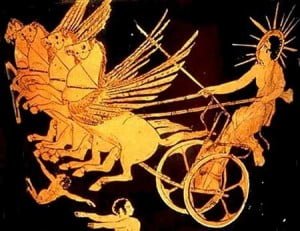
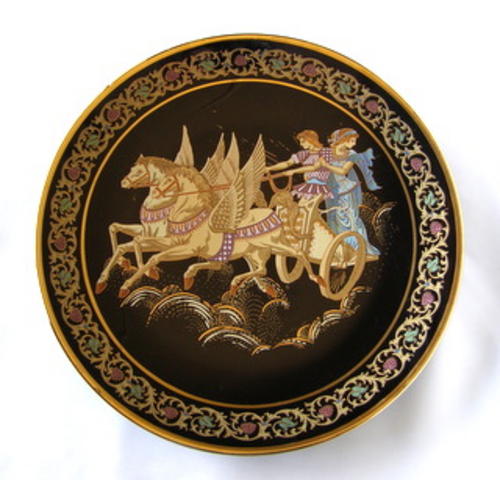
figure. And let the figure be composite-a pair of winged horses and
a charioteer. Now the winged horses and the charioteers of the gods
are all of them noble and of noble descent, but those of other races
are mixed; the human charioteer drives his in a pair; and one of
them is noble and of noble breed, and the other is ignoble and of
ignoble breed; and the driving of them of necessity gives a great deal
of trouble to him. I will endeavour to explain to you in what way
the mortal differs from the immortal creature.

The soul in her totality has the care of inanimate being everywhere,
and traverses the whole heaven in divers forms appearing–when perfect
and fully winged she soars upward, and orders the whole world; whereas
the imperfect soul, losing her wings and drooping in her flight at last
settles on the solid ground-there, finding a home, she receives an
earthly frame which appears to be self-moved, but is really moved by
her power; and this composition of soul and body is called a living
and mortal creature. For immortal no such union can be reasonably
believed to be; although fancy, not having seen nor surely known the
nature of God, may imagine an immortal creature having both a body and
also a soul which are united throughout all time. Let that, however,
be as God wills, and be spoken of acceptably to him. And now let us
ask the reason why the soul loses her wings!

He then describes the good and evil nature of each soul:

As I said at the beginning of this tale, I divided each soul into
three-two horses and a charioteer; and one of the horses was good
and the other bad: the division may remain, but I have not yet
explained in what the goodness or badness of either consists, and to
that I will proceed. The right-hand horse is upright and cleanly made;
he has a lofty neck and an aquiline nose; his colour is white, and his
eyes dark; he is a lover of honour and modesty and temperance, and the
follower of true glory; he needs no touch of the whip, but is guided
by word and admonition only. The other is a crooked lumbering
animal, put together anyhow; he has a short thick neck; he is
flat-faced and of a dark colour, with grey eyes and blood-red
complexion; the mate of insolence and pride, shag-eared and deaf,
hardly yielding to whip and spur.
 
http://imgc.allpostersimages.com/im...eptune-with-his-chariot-and-winged-horses.jpg

He follows this with a description of how the good and evil natures of the soul war against each other when dealing with the sin of lust:

Now when the charioteer beholds the vision of love, and has his
whole soul warmed through sense, and is full of the prickings and
ticklings of desire, the obedient steed, then as always under the
government of shame, refrains from leaping on the beloved; but the
other, heedless of the pricks and of the blows of the whip, plunges
and runs away, giving all manner of trouble to his companion and
the charioteer, whom he forces to approach the beloved and to
remember the joys of love. They at first indignantly oppose him
and will not be urged on to do terrible and unlawful deeds; but at
last, when he persists in plaguing them, they yield and agree to
do as he bids them.

And now they are at the spot and behold the flashing beauty of the
beloved; which when the charioteer sees, his memory is carried to
the true beauty, whom he beholds in company with Modesty like an
image placed upon a holy pedestal. He sees her, but he is afraid
and falls backwards in adoration, and by his fall is compelled to pull
back the reins with such violence as to bring both the steeds on their
haunches, the one willing and unresisting, the unruly one very
unwilling; and when they have gone back a little, the one is
overcome with shame and wonder, and his whole soul is bathed in
perspiration; the other, when the pain is over which the bridle and
the fall had given him, having with difficulty taken breath, is full
of wrath and reproaches, which he heaps upon the charioteer and his
fellow-steed, for want of courage and manhood, declaring that they
have been false to their agreement and guilty of desertion.

Again they refuse, and again he urges them on, and will scarce yield
to their prayer that he would wait until another time. When the appointed
hour comes, they make as if they had forgotten, and he reminds them,
fighting and neighing and dragging them on, until at length he, on the
same thoughts intent, forces them to draw near again. And when they
are near he stoops his head and puts up his tail, and takes the bit in
his teeth. and pulls shamelessly. Then the charioteer is worse off
than ever; he falls back like a racer at the barrier, and with a still
more violent wrench drags the bit out of the teeth of the wild steed
and covers his abusive tongue and-jaws with blood, and forces his legs
and haunches to the ground and punishes him sorely.

And when this has happened several times and the villain has ceased
from his wanton way, he is tamed and humbled, and follows the will of
the charioteer, and when he sees the beautiful one he is ready to die
of fear. And from that time forward the soul of the lover follows the
beloved in modesty and holy fear.


And he ends by explaining the benefits to those who conquer such lust:

When he is with the lover, both cease from their pain, but when he is
away, then he longs as he is longed for, and has love’s image, love for
love (Anteros) lodging in his breast, which he calls and believes to be
not love but friendship only, and his desire is as the desire of the
other, but weaker; he wants to see her, touch her, kiss her, embrace
her, and probably not long afterwards his desire is accomplished. When
they meet, the wanton steed of the lover has a word to say to the
charioteer; he would like to have a little pleasure in return for many
pains, but the wanton steed of the beloved says not a word, for she
is bursting with passion which she understands not; she throws her
arms round the lover and embraces him as a dearest friend; and, when
they are side by side, she is not in it state in which he can refuse
the lover anything, if he ask her; although her fellow-steed and the
charioteer oppose her with the arguments of shame and reason.

After this their happiness depends upon their self-control; if the
better elements of the mind which lead to order and philosophy
prevail, then they pass their life here in happiness and
harmony-masters of themselves and orderly-enslaving the vicious and
emancipating the virtuous elements of the soul; and when the end
comes, they are light and winged for flight, having conquered in one
of the three heavenly or truly Olympian victories; nor can human
discipline or divine inspiration confer any greater blessing on man
than this.

And the consequences for those who do not resist such temptation:

If, on the other hand, they leave philosophy and lead the lower life of
ambition, then probably, after wine or in some other careless hour,
the two wanton animals take the two souls when off their guard and
bring them together, and they accomplish that desire of their hearts,
which to the many is bliss; and this having once enjoyed they
continue to enjoy, yet rarely because they have not the approval of
the whole soul. They too are dear, but not so dear to one another
as the others, either at the time of their love or afterwards. They
consider that they have given and taken from each other the most
sacred pledges, and they may not break them and fall into enmity.

At last they pass out of the body, unwinged, but eager to soar, and
thus obtain no mean reward of love and madness. For those who
have once begun the heavenward pilgrimage may not go down again
to darkness and the journey beneath the earth, but they live in light
always; happy companions in their pilgrimage, and when the time
comes at which they receive their wings they have the same plumage
because of their love.

And so you might question our client while he is on the stand:

TONY: Socrates, some would accuse you of saying resisting temptation is a matter of merely cognition–those who resist are those who are wise, and the only reason others do not resist is that they know no better. How would you answer them?

SOCRATES: I’d remind them of what I just said–that there are two winged steeds–Pegasuses, if you will–to every soul. One knows what is right and wrong, and the other desires not the right, but the wrong. The charioteer decides which steed will have his way.

TONY: Are you saying, then that resisting temptation is not a matter of merely cognition?

SOCRATES: Yes, indeed. It’s both, you see. One Pegasus flies upward, according to wisdom, and does wants to pull the chariot toward what it knows is right–toward the heavens and the God of Wisdom, where the other gods dwell. The other pulls downward, wanting to drive the charioteer away from God and toward the depths of depravity. The charioteer, by an act of volition, decides whether to do as his cognition tells him, or whether to give in to his baser, beastly instincts.

 
http://t0.gstatic.com/images?q=tbn:ANd9GcTARrymzqv_q89eI5hBR-xnfB1phXFksV2fO1xzlGyMX8jFYQCr5Q

So what do you think of Socrates’ testimony, Tony? Are his own words from Plato’s *Phaedrus *enough to sway the jury to acquittal of the charge against him? Or do you think they’d still find him guilty beyond any reasonable doubt?
The key sentence is:
After this their happiness depends upon their self-control.
The author of that statement cannot possibly believe sin and virtue are “a matter of mere cognition and not volition” - unless self-control is limited to amoral decisions (which would be inconsistent with his emphasis on integrity and justice!)
 
http://www.monasteryicons.com/graphics/products/regular/428.jpg

Indeed, but perhaps we should not rest our case just yet. Juries are often too easily swayed by the testimonies of famous men, and other expert witnesses, and the accusations of a few remain unanswered.

Let’s call Saint Aquinas to the witness stand and cross examine him–with all the gentleness and respect the revered saint clearly deserves.

As you recall from his testimony earlier, Aquinas said in his Summa Theologica:

This was the opinion of Socrates, who said “every virtue is a kind of prudence,” as stated in Ethic. vi, 13. Hence he maintained that as long as man is in possession of knowledge, he cannot sin; and that every one who sins, does so through ignorance.

summatheologica.info/summa/questions/?q=177&a=890

Aquinas clearly says Socrates believed “that as long as man is in possession of knowledge, he cannot sin.” What shall we say in our cross examination? Shall we respectfully and kindly ask him where he received this idea, since he actually never spoke with Socrates, who died hundreds of years before him?
 
(Please Note: This uploaded content is no longer available.)

I’d say we should inquire as to where Aquinas got the idea that Socrates believed the apparently absurd idea that it is impossible for those who know to sin. Do you agree? Or do you think we should approach the hostile witness with a different line of questioning?
 
I’d just like to say I love reading this thread. Great debate.
Glad you like it, Skadi. I might be more of a discussion than a debate, but fun nonetheless! Please tell me what you love about the discussion thread.

🙂
 
Glad you like it, Skadi. I might be more of a discussion than a debate, but fun nonetheless! Please tell me what you love about the discussion thread.

🙂
The wonderful combination of history and philosophy. My to favorite subjects. We read quite a bit of Socrates in one of my classes last year and I loved it. I’ve read alot of philosophy from many cultures but he has to be one of my favorites.
 
Let’s call Saint Aquinas to the witness stand and cross examine him–with all the gentleness and respect the revered saint clearly deserves.

As you recall from his testimony earlier, Aquinas said in his Summa Theologica:
This was the opinion of Socrates, who said “every virtue is a kind of prudence,” as stated in Ethic. vi, 13. Hence he maintained that as long as man is in possession of knowledge, he cannot sin; and that every one who sins, does so through ignorance.

summatheologica.info/summa/questions/?q=177&a=890Aquinas clearly says Socrates believed “that as long as man is in possession of knowledge, he cannot sin.” What shall we say in our cross examination? Shall we respectfully and kindly ask him where he received this idea, since he actually never spoke with Socrates, who died hundreds of years before him?
There is no conflict of their beliefs if knowledge in this context is interpreted as full knowledge of the truth. It is in no one’s interest to sin because every vice incurs its own punishment. That is why Jesus said:
Be perfect, therefore, as your heavenly Father is perfect.
Matt 4:48

Truth, goodness, freedom, justice, beauty and love are all aspects of divine perfection.
 
Status
Not open for further replies.
Back
Top