Latin and You. Wherein Fr. Z Rants

  • Thread starter Thread starter yankeesouth
  • Start date Start date
Status
Not open for further replies.
Well you did kind of suggest that for 1500 years the Catholic Church was basically discriminating.

 
intentional discrimination or exclusion was never in Church teaching. Because of man’s fallen nature, has it been observed over time? Of course. I was “just sayin” that those of limited language skills benefit more from the vernacular mass.

The requirement of Latin almost prevented Saint John Vianney and Blessed Solanus Casey from receiving holy orders. We can debate that ad nauseam, or until the parousia, but life is too short.
 
The requirement of Latin almost prevented Saint John Vianney and Blessed Solanus Casey from receiving holy orders. We can debate that ad nauseam, or until the parousia, but life is too short.
Yes! Fr. Z’s contention that too many priests are being ordained with too little Latin carries with it the unexamined assumption that every one of those priests would have still been ordained had Fr. Z’s reading of the Latin requirements been in effect. I don’t think that is a very good assumption, at least not in the United States.

Having said that, I have heard that the Archdiocese of Portland has now put in an expectation that all seminarians be fluent in English prior to ordination and at least attempt fluency in one of the other prevalent languages of the faithful, which are Spanish, Vietnamese and Filipino/Tagalog. (Fluency in English is required prior to beginning seminary studies, from what I gather.) As far as I know, all priests already ordained who seek to be incardinated in the archdiocese also have to be fluent in English. I think they had accepted a few too many in the past who weren’t intelligible to the faithful in English-speaking parishes.

In other words, Latin is great, but the need for priests is so great that many dioceses are thankful to have priests coming in from other parts of the world who speak a vernacular language fluently enough to be intelligible. Put another way: Latin? Please tell me that my pastor and I can understand each other in English!! Yes, everyone could learn the Latin Mass, but people confess in their native tongue and always have.
 
Last edited:
There is this assumption going around that if the prominence of Latin hadn’t gone down, we wouldn’t have a priest shortage, or at least I have heard that sentiment. In other words, the priest shortage can all be blamed on changing the Mass. No, I think the Mass was changed for the same reasons that we have a priest shortage: namely, the lingering effects of two brutal World Wars and the Cold War and the political lines of thought that lead to them. Those are wars whose repercussions, both good and bad, were felt even in countries where physical battles weren’t being fought. Let’s face it: the world has never seen a century so brutal, nor one that went through such enormous societal upheaval or technological change. Even when the upheaval brings on good changes, it puts a great stress on society and the social order.

I would point to the Greek Orthodox Church as the control experiment on the effect of hanging on to language and ritual through the 20th century. Yes, they have a serious shortage of priests, too, even though Greek is a more ancient language of Christianity and the Greek Orthodox have held on to their rituals of the ages over the centuries even more strictly than the Roman Rite. Based on that, I don’t see a reason to believe that teaching all the children Latin is going to flood our seminaries with candidates for the priesthood.

Latin is valuable in its own right. It doesn’t have to deliver loads of priests to the seminaries in order to have that value. If it does, that is great, but that is not the only reason that Latin has value in the Roman Rite. I’m only cautioning against overselling what a wider appreciation of Latin would accomplish.

(Ironically, by the way, most people understand the cultural value of maintaining native dialects such that there are heirs to those languages who can use them fluently: in other words, people see the value in not letting languages die out from use. Those same cultural arguments also apply to Latin with regards to the religious culture of the Roman Rite of the Catholic Church.)
 
Last edited:
Concern for Latin is so missing the point Jesus tried to make.
Indeed, there’s nothing formally wrong with Latin, and the large patrimony of sacred music in Latin we’ve accumulated and it’s quite laudable to want to preserve that.

But when we allow that to take precedence over our own inner conversion to the Gospel message and charity, then we have a problem similar to a certain Jewish sect that always seemed to be the target of Jesus’s anger. We have to then ask if Latin isn’t in fact an obstacle to actually living the Gospel.
 
And I like it. I have studied Latin and enjoy praying the Psalms with it and listening to chant. But it is an accessory not a necessity.
 
Last edited:
The thing is, people act as though a concern for the proper use of Latin (as mandated by the Church itself) and by extension, the Church’s history, patrimony, etc. is something ‘in opposition to Jesus’ points, as though time spent in study, discussion, education, etc. of same is somehow taking time ‘away’ from ‘Jesus’ real points’.

It’s true, we have only a finite amount of time in our lives. But as any mom (or grandmom, or for that matter dad or grandpa) can tell you, you CAN do two (or more) things at once. Just as you can love two (or more) children just as much as one, even though you have to ‘split’ the time you spend with each, you can be concerned with the ‘entire’ Church, not just what you personally like/are used to/expect/think ‘important’ right now, and still pray, give alms, fast, volunteer, etc. etc.
 
So why don’t we learn some Latin AND go to the Latin Mass at the same time?
I’ve done the first one by going to an OF Mass that uses Latin (and singing in a schola), for the second one, are you paying for the gas? 😉

(nearest TLMs for me, non-SSPX: 100 km to the west, 160 km to the east).
 
We have never lived anywhere near a church that offers Latin mass either.
 
I’ve done the first one by going to an OF Mass that uses Latin (and singing in a schola), for the second one, are you paying for the gas? 😉
The OF Latin Mass should be good enough to learn some Latin, I would think.

Have you run out of gas already?
 
Have you run out of gas already?
Retirement budget. Twice a week to the abbey (160 km), 3x per month to choir rehearsals/liturgies, 600 km total, once every couple of weeks to Montreal, 200 km each time… not much room left to got to an EF Mass 😉
 
He does not. Allow me to put in the last paragraphs from his post.
*> Fathers, we need you to work on Latin. Yes, it’s going to be hard. What about this thing we are in is easy? Don’t we want more? *
*> *
> Yesterday, I posted an amazing line from a sermon for Easter by Gregory the Great:
*> *
> [A]mánti semel aspexísse non súfficit: quia vis amóris intentiónem multíplicat inquisitiónis.
*> *
> For one who loves one glance is not enough: for the force of love greatly increases love’s longing.
*> *
> When you love, you want more not less. When you love you go the extra distance, you make the hard call, you put in all your effort and even makes sacrifices.
 
So does Catholic Answers. But neither he nor they demand it.
I feel like every personal request for money is preceded by like five requests for donations to other causes (a seminarian trying to pay off his bills, getting birettas for priests, cool Catholic stores, vestments for the TLM society in Madison, etc.).
 
Exactly. In fact, I rewrote that post about 12 times because I thought that by emphasizing how many charitable causes he promoted I’d get slammed by, yes BUT look at the Amazon wish list etc. You know what it’s like here.
 
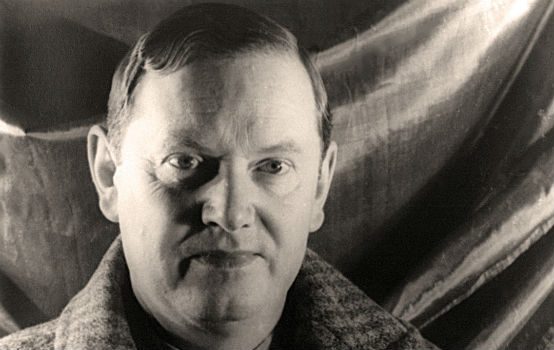
One of Waugh’s most persistent criticisms of the liturgical changes is that progressive, elitist-driven experimentation hurts ordinary people the most, undermining their confidence in important institutions. Vatican II represented, in Waugh’s mind, a rejection of the needs and opinions of local people. “A vociferous minority has imposed itself on the hierarchy and made them believe that a popular demand existed where there was in fact not even a preference,” he warned.
Nor were parish priests, the local leaders who best understand the common man, sufficiently consulted. Waugh wrote: “I know of none whose judgment I would prefer to that of the simplest parish priest. Sharp minds may explore the subtlest verbal problems, but in the long routine of the seminary and the life spent with the Offices of the Church the truth is most likely to emerge.”
 
Status
Not open for further replies.
Back
Top