If i forgive you, must i make amends with you

  • Thread starter Thread starter vstead
  • Start date Start date
Status
Not open for further replies.
Thanks for the explanation. I think I understand a bit better now.
You are welcome.

🙂
Interesting connection. However, I think that Love and mercy, while not the same thing, are still hopelessly interconnected.
The only thing I can say is that we know that Love is the overarching requirement for all of the Law and All of the Prophets (Mt 22:36-40). Mercy is a necessary part of Love. It is like the old argument about faith vs works. In reality faith and works are not opposed but rather faith, if it is real and of God, leads to works. Same with Love and Mercy, Love for God must lead to Merciful actions toward others on our part.
…
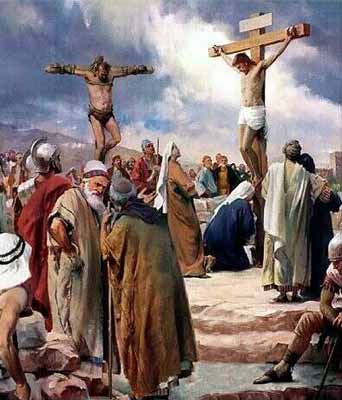
How is God the Father’s love for His Son connected to Mercy for His Son?

http://michaeljamesstone.files.wordpress.com/2009/06/passion-of-christ.jpg
**
About the ninth hour Jesus cried out in a loud voice,
“My God, my God, why have you forsaken me?”
(Matthew 27:46)**
 
Dear James,

Yes, I agree that politeness and rising above sin is the way to go. “Friendly” meant to go towards being friends. There are mental health issues that are triggered for her when she sees me and anyone like my kids, which at one time I thought was really unusual but I have since found at least one other person that had a sibling 8 years older than they who resented them for being born too and the resentment still goes on even though the younger of the to is in their 70’s. Similar situation although it was younger brother instead of two sisters.

Anyway…I sincerely pray for my sister to be able to be in front of God in Heaven and find the peace she needs to get there while still here on earth.
Amen.
 
*Yes, Margaret, I agree. And I see that the same Spirit of Truth who spoke to Saint Paul the Apostle spoke to you!

And the Lord’s servant must not quarrel; instead, he must be kind to everyone, able to teach, not resentful. Those who oppose him he must gently instruct, in the hope that God will grant them repentance leading them to a knowledge of the truth, and that they will come to their senses and escape from the trap of the devil, who has taken them captive to do his will.

(2 Timothy 2:24-26)*

Dear Spockartes,

Thanks for the encouragement…👍
You are very welcome! Don’t give up.

Let us not become weary in doing good, for at the proper time we will reap a harvest if we do not give up.

(Galatians 6:9)
 
But is offering something the same thing as giving something?

Is being offered something the same thing as receiving something?
One does not “offer” forgiveness in this way. One either chooses to forgive or not.
If you offer your hand in forgivenss to one you are astranged to, will you withdraw your forgivenss and go back to anger if your hand is refused?
Consider this example:
I’m on a hunger strike and dying of starvation. You offer me some food. I refuse to take it, saying I’d rather die than accept food from you. Later that day I do indeed die from lack of food. Would you then claim that you fed me? If not, then doesn’t this mean that offering food is not the same as feeding?
If this is true, how then is offering forgiveness the same as forgiving?
It is a false example. There is no way in which I can “feed” you. Only you can do that. I can bring food, and I can even leave the food there. However I cannot force the food into you.
This does not change my desire (forgiveness) that you accept proper nourishment.

Now - If I bring food and you are too weak to feed yourself you may indicate by some manner that you would accept food from me. Then I can help you to eat - feed you as it were. But I can only do that if you are willing to accept it.
**
Is offering food the same as feeding?
Is offering forgiveness the same as forgiving?**
First we forgive. Then we “offer” (communicate) that forgiveness to the other. If they have also forgiven they will reciprocate by offering (communicating) forgiveness back to us.

Peace
James
 
One does not “offer” forgiveness in this way. One either chooses to forgive or not.
If you offer your hand in forgivenss to one you are astranged to, will you withdraw your forgivenss and go back to anger if your hand is refused?

It is a false example. There is no way in which I can “feed” you. Only you can do that. I can bring food, and I can even leave the food there. However I cannot force the food into you.
This does not change my desire (forgiveness) that you accept proper nourishment.

Now - If I bring food and you are too weak to feed yourself you may indicate by some manner that you would accept food from me. Then I can help you to eat - feed you as it were. But I can only do that if you are willing to accept it.

First we forgive. Then we “offer” (communicate) that forgiveness to the other. If they have also forgiven they will reciprocate by offering (communicating) forgiveness back to us.

Peace
James
(Please Note: This uploaded content is no longer available.)

James:

I’m trying to understand you, but am having difficulty seeing that an offer of forgiveness is the same as forgiving. Please forgive me for being so slow to grasp your concept of forgiveness! What I’m thinking is that (o3) cannot possibly be actual forgiveness, but only potential forgiveness. Though it is likely actual mercy.

Maybe if you can come up with an example of how a person who refuses to be forgiven is in fact forgiven by you I would be able to understand. Or maybe this other example will help me understand you:

A man is madly in love with a woman. He proposes to her, offering marriage. She declines. Has he married her?

Compare this example:

A man is madly in love with a woman to whom he is married. But she has wronged him by having sexual relations with another man, and their relationship is strained. He proposes to restore the relationship, offering forgiveness. She declines. Has he restored their relationship?

You see, I’m thinking of forgiveness in the sense of restoration. But there might be other ways to forgive. So please explain: If he has not restored their relationship, then in what way has he forgiven? Describe the exact nature of his forgiveness.

🤷
 
James:

I’m trying to understand you, but am having difficulty seeing that an offer of forgiveness is the same as forgiving. Please forgive me for being so slow to grasp your concept of forgiveness! What I’m thinking is that (o3) cannot possibly be actual forgiveness, but only potential forgiveness. Though it is likely actual mercy.

Maybe if you can come up with an example of how a person who refuses to be forgiven is in fact forgiven by you I would be able to understand. Or maybe this other example will help me understand you:

A man is madly in love with a woman. He proposes to her, offering marriage. She declines. Has he married her?

Compare this example:

A man is madly in love with a woman to whom he is married. But she has wronged him by having sexual relations with another man, and their relationship is strained. He proposes to restore the relationship, offering forgiveness. She declines. Has he restored their relationship?

You see, I’m thinking of forgiveness in the sense of restoration. But there might be other ways to forgive. So please explain: If he has not restored their relationship, then in what way has he forgiven? Describe the exact nature of his forgiveness.

🤷
You are exactly right - You are looking at forgiveness as restoration. It is not. Restoration can only occur by mutual forgiving.

The best example I can think of is Christ on the Cross when He asked the Father to, “Forgive them for they no not what they do”. Was Christ’s forgiveness conditional on their acceptance?
We know that some, probably most, of those who Crucified Him did not repent, Do you think that Christ, or the Father, withdrew His forgiveness, or an offer of restoration because they failed to take advantage of it?

From “Dictionary.com”, Forgive is thus defined:
  1. to grant pardon for or remission of (an offense, debt, etc.); absolve.
  2. to give up all claim on account of; remit (a debt, obligation, etc.).
  3. to grant pardon to (a person).
  4. to cease to feel resentment against: to forgive one’s enemies.
You will note in the above that action or inaction of another is not necessary for forgiveness. It does not matter what the other person does or does not do for me to forgive.

Peace
James
 
You are exactly right - You are looking at forgiveness as restoration. It is not. Restoration can only occur by mutual forgiving.

The best example I can think of is Christ on the Cross when He asked the Father to, “Forgive them for they no not what they do”. Was Christ’s forgiveness conditional on their acceptance?
We know that some, probably most, of those who Crucified Him did not repent, Do you think that Christ, or the Father, withdrew His forgiveness, or an offer of restoration because they failed to take advantage of it?

From “Dictionary.com”, Forgive is thus defined:
  1. to grant pardon for or remission of (an offense, debt, etc.); absolve.
  2. to give up all claim on account of; remit (a debt, obligation, etc.).
  3. to grant pardon to (a person).
  4. to cease to feel resentment against: to forgive one’s enemies.
You will note in the above that action or inaction of another is not necessary for forgiveness. It does not matter what the other person does or does not do for me to forgive.

Peace
James
Jesus said, “Father, forgive them, for they do not know what they are doing.”

(Luke 23:34)

I think I’m getting closer to understanding you. Thanks for taking the time to explain. What you appear to be saying is that forgiveness is unconditional and unilateral. It does not depend at all on what the one forgiven decides, says, or does. Am I understanding you correctly?
 
You are exactly right - You are looking at forgiveness as restoration. It is not. Restoration can only occur by mutual forgiving.

The best example I can think of is Christ on the Cross when He asked the Father to, “Forgive them for they no not what they do”. Was Christ’s forgiveness conditional on their acceptance?
We know that some, probably most, of those who Crucified Him did not repent, Do you think that Christ, or the Father, withdrew His forgiveness, or an offer of restoration because they failed to take advantage of it?

From “Dictionary.com”, Forgive is thus defined:
  1. to grant pardon for or remission of (an offense, debt, etc.); absolve.
  2. to give up all claim on account of; remit (a debt, obligation, etc.).
  3. to grant pardon to (a person).
  4. to cease to feel resentment against: to forgive one’s enemies.
You will note in the above that action or inaction of another is not necessary for forgiveness. It does not matter what the other person does or does not do for me to forgive.

Peace
James
But please forgive me, James for being so rude as to ask another question of you before answering your question!

:o

My answer is this: I believe you are correct that Christ was *not *asking His Father to forgive based on the condition of repentance. For a person to repent, he must first realize that what he has done is wrong. Jesus, from His words on the cross, indicate that the ones who should be forgiven in no way knew that what they were doing to Him was wrong, for He said:

“Father, forgive them, for they do not know what they are doing.”

(Luke 23:34)

They did not know what they were doing was wrong, so they would not know of their need to repent. They were soldiers executing who they believed to be a criminal and someone deserving of suffering and death for his crimes against the Empire. St. Paul appears to agree, for he wrote:

No, we speak of God’s secret wisdom, a wisdom that has been hidden and that God destined for our glory before time began. None of the rulers of this age understood it, for if they had, they would not have crucified the Lord of glory.

(1 Corinthians 2:7-8)

The question, then, is whether the forgiveness Christ asked the Father to grant was unconditional, or based on some condition. I believe it was based on some condition, that condition being ignorance. If a person is unaware of his sin, such lack of awareness may be grounds for forgiveness. Christ Himself teaches this, for He says in a conversation with His enemies:

Jesus said, “For judgment I have come into this world, so that the blind will see and those who see will become blind.”

Some Pharisees who were with him heard him say this and asked, “What? Are we blind too?”

Jesus said, “If you were blind, you would not be guilty of sin; but now that you claim you can see, your guilt remains.”

(John 9:39-41)

“If you were blind [to your sin], you would not be guilty,” Jesus told them. “But now that you claim you can see [the truth about your sin], your guilt remains.” Unlike the Roman guards who were ignorant of their sin, the Jewish religious authorities knew full well that God sent Jesus to be their Messiah. Thus, their guilt remained in rejecting Him and bringing about His suffering and death.

So, James, I would answer your question by saying this: Jesus’ word’s on the cross, “Father, forgive them, for they don’t know what they are doing [is wrong],” were intended for the Roman guards, but His words were not for the Jewish authorities who threatened the Roman governor Pilot to force him to give Jesus the death sentence. For these guilty men, the only hope of forgiveness would be to meet the requirement of repentance. However, as I mentioned, the forgiveness for the Roman executioners was not unconditional, either. It was based on the condition of being unaware of the existence and gravity of their own sin of crucifying the Lord of Glory.

So far, then, you and I have discovered that forgiveness (at least sometimes) is conditional, and based on a condition that the one forgiven must first meet. For sometimes the condition of repentance must be met, and other times the condition of ignorance must be met. But can you give me just one example of our Lord, or of one of His disciples, forgiving unconditionally?
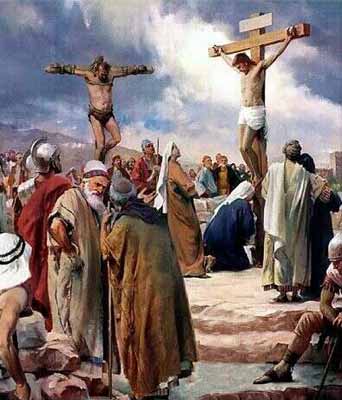


What conditions did those who were
responsible for Christ’s crucifixion
have to meet to be forgiven?

 
To put it more concisely, and I hope more cogently: When a person is confronted with doing wrong, she likely says either (1) she didn’t know it was wrong, or (2) she was wrong, and is sorry, and will try not to do it again. People are aware that these are two obvious responses when confronted with their obvious sin.

So Jesus says that you and I must forgive:


  1. *]if one is truly ignorant of one’s sin, or
    *]if one truly repents of one’s sin

    But can you, James think of any example where there is NO IF (that is, no condition required) to be forgiven?

    🤷
 
You have posted some very interesting thoughts here my friend. It may take a bit of time for me to sort through them so forgive me if my responses are either 1) slow in coming, or 2) somewhat disjointed.

First of all in response to This
Jesus said, “Father, forgive them, for they do not know what they are doing.”

(Luke 23:34)

I think I’m getting closer to understanding you. Thanks for taking the time to explain. What you appear to be saying is that forgiveness is unconditional and unilateral. It does not depend at all on what the one forgiven decides, says, or does. Am I understanding you correctly?
The answer is yes you are understanding me correctly.

As to some of the other points you’ve raised about conditions for forgiveness, I must give it some thought. I think that we are confusing ourselves a bit, (or maybe it’s just me) because we are flitting between the idea of God’s forgiveness of us and our forgiveness of each other. These two things have an essential difference in that God, knowing all and Loving all perfectly, has a “leg up” on us who are imperfect in both knowledge and Love of our fellow creatures.
I’ll have to be careful in how I consider these issues because Jesus also wants us to become “Perfect” in our Love. It is much to consider.
I’ll try to write more in a bit.

Peace
James
 
You have posted some very interesting thoughts here my friend. It may take a bit of time for me to sort through them so forgive me if my responses are either 1) slow in coming, or 2) somewhat disjointed.

First of all in response to This

The answer is yes you are understanding me correctly.

As to some of the other points you’ve raised about conditions for forgiveness, I must give it some thought. I think that we are confusing ourselves a bit, (or maybe it’s just me) because we are flitting between the idea of God’s forgiveness of us and our forgiveness of each other. These two things have an essential difference in that God, knowing all and Loving all perfectly, has a “leg up” on us who are imperfect in both knowledge and Love of our fellow creatures.
I’ll have to be careful in how I consider these issues because Jesus also wants us to become “Perfect” in our Love. It is much to consider.
I’ll try to write more in a bit.

Peace
James
Yes, we should be careful, but not timid.

Pray also for me, that whenever I open my mouth, words may be given me so that I will fearlessly make known the mystery of the gospel… .

(Romans 8:26)

(BTW, I find it fascinating that the people to whom St. Paul wrote this letter would later see him live it in their own city.)

For the sake of speaking fearlessly, but with caution, I think it wise to begin with the words of Christ you partially quoted:

Be perfect, therefore, as your heavenly Father is perfect.

(Matthew 5:48)

You fearless one, you! Just as I thought we could not dive any deeper into the murky depths of the mysterious Love and Forgiveness of God, you pull us further down! We are not to be merely perfect as human beings can be. No, Jesus’ words have far more fascinating depth than that: We are to be perfect AS GOD HIMSELF is perfect. I must confess, I cannot top that! We are in so deep now into the darkness of the mysteries of Christ that it’s hard to see which way is up. But take heart, my good diving instructor. With God’s help we will find the sunken treasure of truth we desire and bring it safely to the surface of everyday life!

http://www.titanic-nautical.com/images/sunkentreasure/SunkenTreasure.jpg
**
The deeper we go, the greater the potential for reward!**
 
To put it more concisely, and I hope more cogently: When a person is confronted with doing wrong, she likely says either (1) she didn’t know it was wrong, or (2) she was wrong, and is sorry, and will try not to do it again. People are aware that these are two obvious responses when confronted with their obvious sin.

So Jesus says that you and I must forgive:


  1. *]if one is truly ignorant of one’s sin, or
    *]if one truly repents of one’s sin

    But can you, James think of any example where there is NO IF (that is, no condition required) to be forgiven?

    🤷

  1. I think you have listed an ill defined term in the above when you say we are to forgive someone who is “Truly ignorant” of ones sin. “Truly ignorant” is a rather vague term and highly subjective, but I will accept it on it’s face.

    I will also offer an additional case where we forgive because we must remember that there are two components, two relationships, that we must consider. The first is our relationship with God, which is harmed if we harbor ill will toward our neighbor, the second is our relationship with our neighbor to whom we are to project, not man’s love, but God’s Love.
    Thus I will forgive - because I do not wish to bear a grudge; because I do not wish to continue in my anger and feelings of ill will towards another - even my enemy. I do this out of Love for God and a desire not to harbor anything in my heart that would hinder my relationship with The Father and also hinder my ability to project God’s Love into the world.
    I will hold such fogiveness in my heart, and even express such forgiveness to others, such that, should my “enemy” repent, and wish to restore our relationship I will be immediately ready to receive him back as friend and brother/sister in Christ.

    I believe this is how The Father holds forgiveness for us. He has already forgiven us in that He knows we are ignorant, and selfish, and prideful, but He also knows that we are His Children and as such cannot hate us. He holds that forgiveness in His heart and only waits for us to “repent” and wish to restore our relationship with Him. Then His forgiveness and His grace can immediately flow into us and restore us fully to him.
    In this way - Not only could Jesus ask forgivenss of the Roman soldiers acting under orders and for the crowds, who were also mostly ignorant, BUT also for the high priest, pharasees and others who actively sought His death. He could ask that God forgive them so that, should any of them repent later, there would be no hinderence to God’s receiving them back into His Grace.
    Those who did not repent, of course, did not restore their relationship and paid the price by seperating themselves permanently from God in this life and in the next.

    So - in a nutshell - I don’t see “ignorance” or “repentance” as the only two conditions under which we are to forgive another, though it could certainly be argued that “ignorance”, of some sort is always at play in each and every “wrong” that is perpetrated between peoples.
    However I continue to believe that forgiveness, is unilateral, if only to remove any impediments (anger, envy, pride) to our relationship with God. Then when our enemy “unilaterally” repents he too can be fully restored to God’s grace - Even if he and I were never to meet again in this life.
    This last is an important consideration that just occurred to me.
    Case - A person converts to Christianity from Atheism at the age of 40 years. He knows in his conversion that he has committed many sins against others over the years. Even some people who are dead or people he has no way of contacting. Yet he repents of these sins and also forgives any who have sinned against him. This is the best example of unilateral forgiveness and repentance I can think of. His repentance and forgivenss are real and not conditional on what others do.

    Sorry if any of the above is disjointed. Best I can do for now.

    Peace
    James
 
Be perfect, therefore, as your heavenly Father is perfect.

(Matthew 5:48)

Since we’re down this far, we might as well get a closer look before fleeing to the air and safety of the surface. Don’t you think? If we are to be perfect in the same way that God is perfect I suppose that extends to His Love, and the more specific types of His Love we call Mercy and Forgiveness. In other words, Jesus is telling you and me right now:

Be perfect [in forgiving], therefore, as your heavenly Father is perfect [in forgiving].

(Matthew 5:48)

That’s both a fascinating and frightening command; wouldn’t you agree? But there is no turning back now, my good SCUBA partner! As Mother Teresa of Calcutta once wisely said:

Once you see truth, you can’t unsee it!

Since we cannot unsee that we must forgive exactly as God forgives, we are forced to attempt to understand the pressing gravity and dizzying mystery of St. Paul’s words:

Be imitators of God, therefore, as dearly loved children 2and live a life of love, just as Christ loved us… .

(Ephesians 5:1-2)

O, why did I ever follow you so far down? The pressure is closing in on every side and my head is starting to swim! Be brave, young Spock, be brave. Let calm, cool and collected reason guide you, now. Don’t give into emotion and the temptation of blind fear! Think, man! What would Jesus do? For as He does, so should you. And what would He say to you even now? What does He remind us all at every Mass?

Forgive us our debts, as we also have forgiven our debtors.

(Matthew 6:12)

There is that word AS again! How should God forgive us? In the same way as we forgive one another. How are we to forgive one another? In the same way as He forgives us. Do you see the same sunken treasure of truth I see, James? Or is the pressure of the deep mystery making me delusional?
 
I think you have listed an ill defined term in the above when you say we are to forgive someone who is “Truly ignorant” of ones sin. “Truly ignorant” is a rather vague term and highly subjective, but I will accept it on it’s face.

I will also offer an additional case where we forgive because we must remember that there are two components, two relationships, that we must consider. The first is our relationship with God, which is harmed if we harbor ill will toward our neighbor, the second is our relationship with our neighbor to whom we are to project, not man’s love, but God’s Love.
Thus I will forgive - because I do not wish to bear a grudge; because I do not wish to continue in my anger and feelings of ill will towards another - even my enemy. I do this out of Love for God and a desire not to harbor anything in my heart that would hinder my relationship with The Father and also hinder my ability to project God’s Love into the world.
I will hold such fogiveness in my heart, and even express such forgiveness to others, such that, should my “enemy” repent, and wish to restore our relationship I will be immediately ready to receive him back as friend and brother/sister in Christ.

I believe this is how The Father holds forgiveness for us. He has already forgiven us in that He knows we are ignorant, and selfish, and prideful, but He also knows that we are His Children and as such cannot hate us. He holds that forgiveness in His heart and only waits for us to “repent” and wish to restore our relationship with Him. Then His forgiveness and His grace can immediately flow into us and restore us fully to him.
In this way - Not only could Jesus ask forgivenss of the Roman soldiers acting under orders and for the crowds, who were also mostly ignorant, BUT also for the high priest, pharasees and others who actively sought His death. He could ask that God forgive them so that, should any of them repent later, there would be no hinderence to God’s receiving them back into His Grace.
Those who did not repent, of course, did not restore their relationship and paid the price by seperating themselves permanently from God in this life and in the next.

So - in a nutshell - I don’t see “ignorance” or “repentance” as the only two conditions under which we are to forgive another, though it could certainly be argued that “ignorance”, of some sort is always at play in each and every “wrong” that is perpetrated between peoples.
However I continue to believe that forgiveness, is unilateral, if only to remove any impediments (anger, envy, pride) to our relationship with God. Then when our enemy “unilaterally” repents he too can be fully restored to God’s grace - Even if he and I were never to meet again in this life.
This last is an important consideration that just occurred to me.
Case - A person converts to Christianity from Atheism at the age of 40 years. He knows in his conversion that he has committed many sins against others over the years. Even some people who are dead or people he has no way of contacting. Yet he repents of these sins and also forgives any who have sinned against him. This is the best example of unilateral forgiveness and repentance I can think of. His repentance and forgivenss are real and not conditional on what others do.

Sorry if any of the above is disjointed. Best I can do for now.

Peace
James
Yes, that makes good sense to me, James. Thank you! Now let’s compare this treasure you have recovered from the deepest sea to the definition of Forgiveness you offered earlier from Dictionary.com:

Forgive is thus defined:
Code:
1. to grant pardon for or remission of (an offense, debt, etc.); absolve.
2. to give up all claim on account of; remit (a debt, obligation, etc.).
3. to grant pardon to (a person).
4. to cease to feel resentment against: to forgive one's enemies.
It seems to me you are saying that we should always and unilaterally and unconditionally forgive in the sense of definition (4). However, we should only sometimes and multilaterally and conditionally forgive in the sense of (1) and (2) and (3).

Is this fair assessment of the valuable truth about Forgiveness (both God’s and our own) we’ve discovered down here thus far?
 
And I pray that you, being rooted and established in love, may have power, together with all the saints, to grasp how wide and long and high and deep is the love [and forgiveness] of Christ, and to know this love [and forgiveness] that surpasses knowledge—that you may be filled to the measure of all the fullness of God.

(Ephesians 3:17-19)

Let us not give up meeting together, as some are in the habit of doing, but let us encourage one another [to better understand the truth]—and all the more as you see the Day approaching.

(Hebrews 10:25)


Deep sea treasure hunters

I should say, James, that although it is risky diving so deep into the Loving Mercy and Forgiveness of God and ourselves, I’m glad to have you swimming at my side.

🙂
 
Be perfect, therefore, as your heavenly Father is perfect.

(Matthew 5:48)

Since we’re down this far, we might as well get a closer look before fleeing to the air and safety of the surface. Don’t you think? If we are to be perfect in the same way that God is perfect I suppose that extends to His Love, and the more specific types of His Love we call Mercy and Forgiveness. In other words, Jesus is telling you and me right now:

Be perfect [in forgiving], therefore, as your heavenly Father is perfect [in forgiving].

(Matthew 5:48)

That’s both a fascinating and frightening command; wouldn’t you agree? But there is no turning back now, my good SCUBA partner! As Mother Teresa of Calcutta once wisely said:

Once you see truth, you can’t unsee it!

Since we cannot unsee that we must forgive exactly as God forgives, we are forced to attempt to understand the pressing gravity and dizzying mystery of St. Paul’s words:

Be imitators of God, therefore, as dearly loved children 2and live a life of love, just as Christ loved us… .

(Ephesians 5:1-2)

O, why did I ever follow you so far down? The pressure is closing in on every side and my head is starting to swim! Be brave, young Spock, be brave. Let calm, cool and collected reason guide you, now. Don’t give into emotion and the temptation of blind fear! Think, man! What would Jesus do? For as He does, so should you. And what would He say to you even now? What does He remind us all at every Mass?

Forgive us our debts, as we also have forgiven our debtors.

(Matthew 6:12)

There is that word AS again! How should God forgive us? In the same way as we forgive one another. How are we to forgive one another? In the same way as He forgives us. Do you see the same sunken treasure of truth I see, James? Or is the pressure of the deep mystery making me delusional?
I believe you are spot on here. Christ, in just a few simple words and defintions - In just two commandments - laid before us something so simple and yet so difficult that we are still trying to understand it all. The Church has volumes of explanation from the fathers, the saints and other doctors and theologens all trying to capture and explain the essence of Christ’s “simple” command. Drink in the understanding my friend.

Peace
James
 
Yes, that makes good sense to me, James. Thank you! Now let’s compare this treasure you have recovered from the deepest sea to the definition of Forgiveness you offered earlier from Dictionary.com:

Forgive is thus defined:
Code:
1. to grant pardon for or remission of (an offense, debt, etc.); absolve.
2. to give up all claim on account of; remit (a debt, obligation, etc.).
3. to grant pardon to (a person).
4. to cease to feel resentment against: to forgive one's enemies.
It seems to me you are saying that we should always and unilaterally and unconditionally forgive in the sense of definition (4). However, we should only sometimes and multilaterally and conditionally forgive in the sense of (1) and (2) and (3).

Is this fair assessment of the valuable truth about Forgiveness (both God’s and our own) we’ve discovered down here thus far?
Sorry to toss a wrench in here but - -
I do not see a distinction in forgiveness (in Godly, Christian Love) between any of the definitions above.
If I truly and perfectly forgive, I grant pardon in my heart and will express that pardon gladly should it be asked for. That accounts for (1) and (3).
I give up all claims I might have against the other. This I do because I cease to feel any resentment. This accounts for (2).

In trying to place “conditions” upon forgiveness you once again get into, not the idea of forgiveness per se, but rather the idea of restoration of a relationship between two people.
In this sense, I would agree that there is only so much one can do to restore a relationship. It the other does not repent and thus does not wish to be restored, there is nothing you can do. Just as there is nothing God can do for us if we refuse His Love and forgiveness. If we “Choose” not to be restored.

Peace
James
 
I believe you are spot on here. Christ, in just a few simple words and defintions - In just two commandments - laid before us something so simple and yet so difficult that we are still trying to understand it all. The Church has volumes of explanation from the fathers, the saints and other doctors and theologens all trying to capture and explain the essence of Christ’s “simple” command. Drink in the understanding my friend.

Peace
James
That I will! (And sorry for being away so long. Projects at work and reinstalling Windows at home kept me busy.)
 
Sorry to toss a wrench in here but - -
I do not see a distinction in forgiveness (in Godly, Christian Love) between any of the definitions above.
If I truly and perfectly forgive, I grant pardon in my heart and will express that pardon gladly should it be asked for. That accounts for (1) and (3).
I give up all claims I might have against the other. This I do because I cease to feel any resentment. This accounts for (2).

In trying to place “conditions” upon forgiveness you once again get into, not the idea of forgiveness per se, but rather the idea of restoration of a relationship between two people.
In this sense, I would agree that there is only so much one can do to restore a relationship. It the other does not repent and thus does not wish to be restored, there is nothing you can do. Just as there is nothing God can do for us if we refuse His Love and forgiveness. If we “Choose” not to be restored.

Peace
James
Forgive me for seeing your wrench and raising you a torque driver! But the reason I’m thinking that there are conditions for some levels of forgiveness is not because that is my opinion. It’s the opinion of Christ:

“If your brother sins, rebuke him, and if he repents, forgive him. If he sins against you seven times in a day, and seven times comes back to you and says, ‘I repent,’ forgive him.”

(Luke 17:3-4)

Isn’t our Lord saying that repentance is a condition the offender must meet before we forgive her?

🤷

I mean, notice what Jesus does NOT say:

“If your brother sins, rebuke him, and if he [does not repent], forgive him. If he sins against you seven times in a day, and seven times comes back to you and says, ‘I [do not] repent,’ forgive him.”

(Luke 17:3-4)
 
Status
Not open for further replies.
Back
Top